Bechara Maalouf’s ‘What Still Holds’ Exhibition Explores Lebanese Heritage Through Design at NYC Design Week
Designer Bechara Maalouf presents 'What Still Holds' during NYC Design Week, an exhibition featuring laser-cut metal lamps and a triptych informed by Lebanese window guards and personal reflections on his ancestral home. The show, hosted by fashion retailer Komune, incorporates recycled materials and innovative fabrica
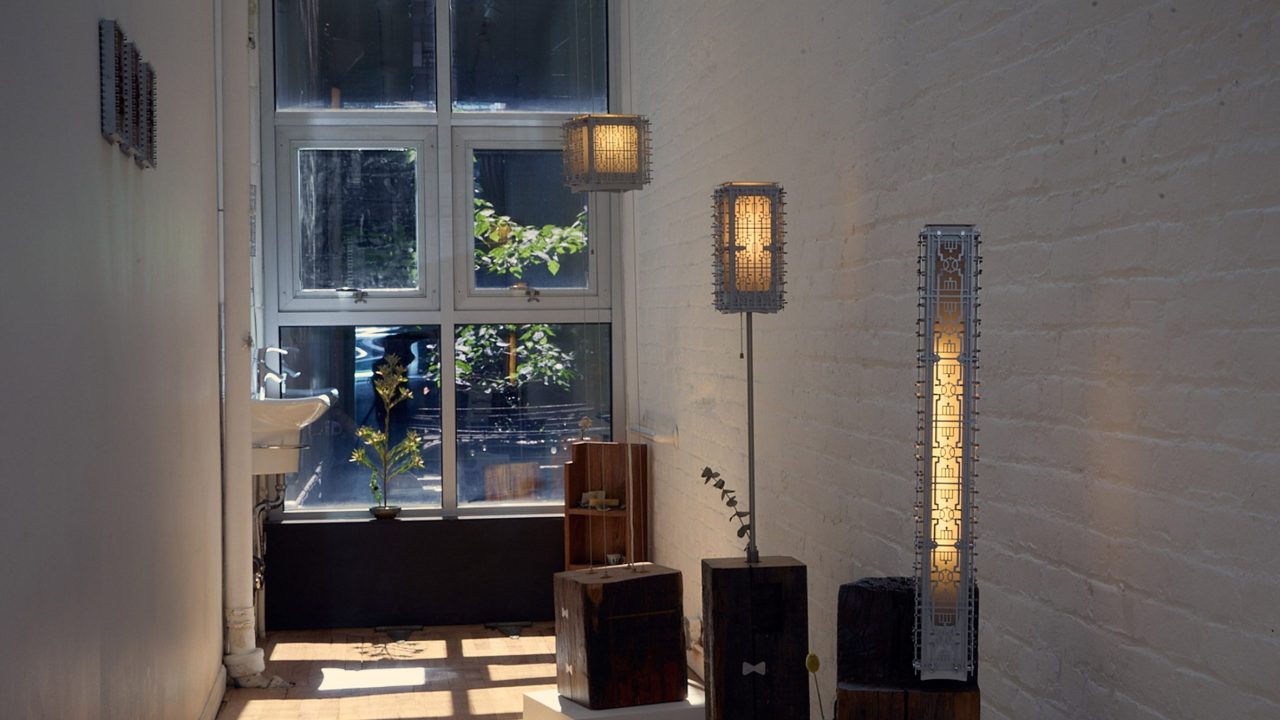
New York-based designer Bechara Maalouf is presenting “What Still Holds,” an exhibition at a gallery space adjacent to fashion retailer Komune’s New York flagship, as part of NYC Design Week. The show features laser-cut metal lamps mounted on recycled-wood bases, alongside a mirror and a triptych, all drawing inspiration from the intricate wrought-iron window guards of Maalouf’s family home in Kfertay, Lebanon. This exhibition serves as an exploration of Maalouf’s personal connection to his Lebanese heritage, a dialogue between his upbringing in the US and his ancestral roots.
The exhibition opened on May 15 and will run until June 8 at 92 Orchard in the Lower East Side. It comprises three distinct lamps, a mirror first created by Maalouf in 2025, a newly unveiled triptych, and a small collection of personal artifacts. The installation represents a deeper engagement with Maalouf’s identity, acknowledging both his longing for and occasional disconnection from his ancestral home, particularly amidst ongoing geopolitical events in Lebanon. The designer explicitly states his intention to portray the beauty and resilience of Lebanon, rather than focusing solely on conflict.
Key facts
- Detail: Description
- Exhibition: What Still Holds by Bechara Maalouf
- Location: 92 Orchard, Lower East Side, New York City (adjacent to Komune flagship)
- Dates: May 15 – June 8, 2026
- Focus: Lamps, mirror, triptych inspired by Lebanese window guards and heritage
Design Philosophy and Materiality
The core of the exhibition lies in the three lamps, each featuring a unique lattice pattern directly derived from the bright red wrought-iron gates of Maalouf’s family residence in Kfertay. These metal forms are supported by blocks of wood sourced from buildings in the Lower East Side, which Maalouf obtained from a local lumber yard. This material choice not only grounds the pieces in their immediate New York context but also represents a reconnection with wood, a material Maalouf previously worked with in a cabinet shop.
For this series, Maalouf employed a magnetic stainless steel alloy, a departure from his usual aluminum, allowing for innovative interactive elements. Each lamp is paired with small, magnetic fly-shaped accents that can be repositioned on the metal surfaces. These flies, which can also hold small items like flowers, introduce a “cute level of interaction” according to the designer, and symbolize the enduring vitality and natural beauty he associates with Lebanon. The choice of material and the inclusion of these interactive elements reflect Maalouf’s desire to infuse his work with life and a sense of ongoing presence.
Craft and Cultural Narratives
The fabrication process for the lamps involved laser-cutting the metal, but Maalouf also incorporated hand-bending the tabs along the perimeter of the lamps. This manual intervention, encouraged by Komune creative director Brandon Fogarty, was a deliberate effort to introduce a handmade quality into the otherwise CNC-produced pieces. This process is described as both meditative and painstaking, allowing the designer to “manipulate the form a little more after I received the parts.” This blending of digital fabrication with traditional craft techniques is a recurring theme in contemporary design, aiming to imbue objects with a unique human touch.
The exhibition also features a triptych, which similarly incorporates hand-bent borders around planes of wood. Within the triptych, pixel-like motifs depict significant elements from Kfertay: a local church, a spiral design from a pita press, and a cedar tree. Each tiny square of these motifs is filled with a fragment of a 5,000 Lebanese lira note. This particular detail is rich with meaning, appreciating the aesthetic quality of the currency while simultaneously serving as a poignant reminder of Lebanon’s recent economic crisis and the severe depreciation of its currency. This integration of cultural symbols and economic commentary elevates the triptych beyond mere decoration, making it a powerful narrative piece.
Exhibition Context and Future Prospects
The “What Still Holds” exhibition is a result of an expanded commission following a similar wall sconce by Maalouf already installed within the Komune store. The collaboration involved Maalouf and Fogarty transforming a former office space into the temporary gallery. During the preparation, they uncovered existing architectural features like a small sink, which provided an ideal spot for Maalouf’s mirror, also adorned with ornate metallic screens.
The Komune team is exploring various possibilities for the gallery space after the exhibition concludes, including the potential for it to become a small tailor shop run by a Komune sales associate. This adaptability of space highlights a growing trend in retail and exhibition design, where spaces are designed to be flexible and serve multiple functions. Maalouf’s work has also been featured in other significant design events, such as the Shine lighting exhibit by NYCxDesign and Design Milk, underscoring his rising profile in the design community.
For architects, designers, and enthusiasts of the built environment, Maalouf’s exhibition offers insights into how personal heritage and global events can inform contemporary design practice. It demonstrates the creative potential of combining traditional motifs with modern fabrication, and the power of design to convey complex cultural narratives. The use of recycled materials, the tactile interaction elements, and the thoughtful integration of personal history provide a compelling example of design that is both aesthetically engaging and deeply meaningful.
Source: Dezeen, https://www.dezeen.com/2026/05/19/bechara-maalouf-lamps-lebanese-heritage-nyc-design-week/
Source
Dezeen Original publication: 2026-05-19T17:00:49+00:00
Related news
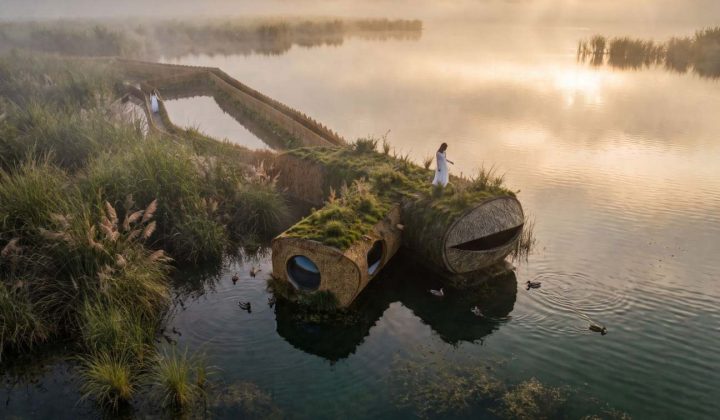
MIV Architects Proposes Wetland Pavilion That Prioritizes Non-Human Habitats Over Human Comfort
The Spanish firm’s “Nidos de Agua” concept for the Albufera natural park in Valencia aims to rebalance the relationship between building and…
Read more
Nelson Byrd Woltz Begins Construction on Restorative Eagle Courtyard at Walter Reed Medical Center
Construction has started on a redesigned Eagle Courtyard at Walter Reed National Military Medical Center, led by Nelson Byrd Woltz Landscape Architects.…
Read more
London’s listening bar boom reflects a deeper shift in hospitality design and music culture
A wave of Japanese-inspired listening bars is reshaping London’s nightlife, but owners and critics are asking whether the concept can survive commercial…
Read more
Performing Colonial Toxicity Exhibition in Valencia Examines Architecture’s Role in Nuclear Colonialism
From 24 October to 1 November 2026, Aguas Internacionales in Valencia hosts Samia Henni’s exhibition on French nuclear testing in the Algerian…
Read moreRelated wiki
Adaptive Reuse in Architecture
Reference page for reuse, retrofit, conversion, embodied carbon and design constraints.
Read more