
Bourgeois / Lechasseur Architectes Completes L’Échouage Residence in Saint-Augustin-de-Desmaures
Bourgeois / Lechasseur architectes has completed L'Échouage Residence, a project on the north shore of the St. Lawrence River in Saint-Augustin-de-Desmaures, Canada. The design involved preserving and extending an existing summer cottage, integrating new pavilions that respond to the unique waterfront site and its envi
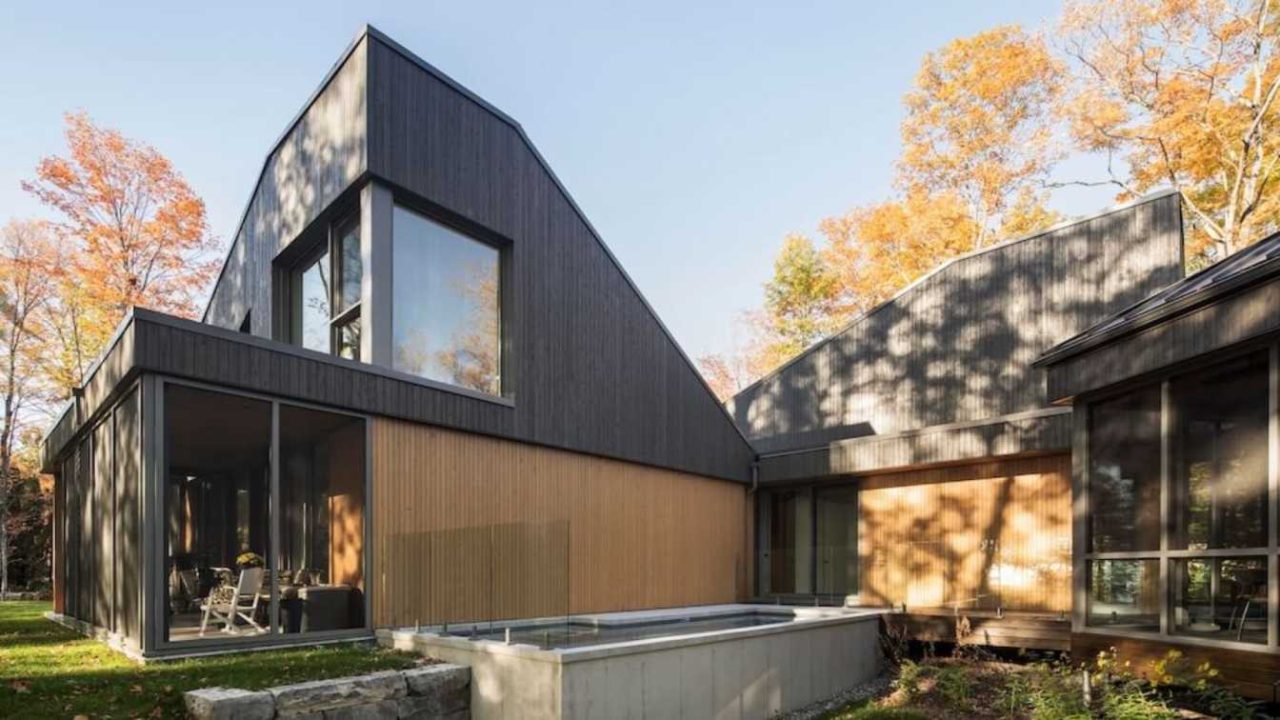
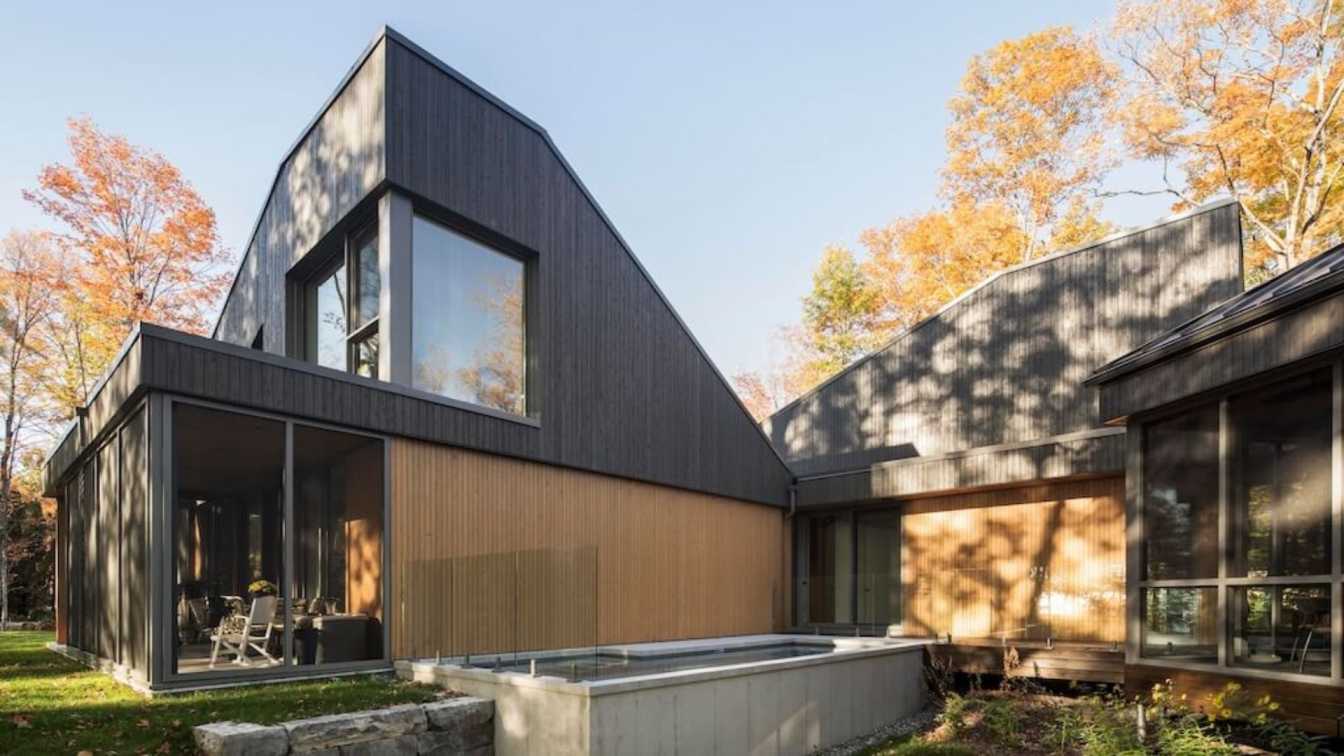
Bourgeois / Lechasseur architectes has completed the L’Échouage Residence, a distinctive project situated on a narrow point of land along the north shore of the St. Lawrence River in Saint-Augustin-de-Desmaures, Canada. The project skillfully navigates a complex site, characterized by its immediate proximity to the water, scattered erratic boulders, and significant environmental constraints related to rising water levels and shoreline protection setbacks. Rather than demolishing an existing summer cottage, the architects opted for a strategy of preservation and thoughtful extension, creating a dialogue between the site’s history and contemporary design.
The initial brief called for the demolition of the existing cottage and the construction of a new residence. However, during their first site visit, the architects were influenced by the existing structure’s direct relationship with the river, its cantilevered position over the tides, and the intimacy provided by the surrounding maple grove. This led to a strategic shift: to restore the original cottage and extend it discreetly through an addition connected by a bridge. This decision preserved the cottage’s grandfathered rights, allowing it to maintain its nonconforming position hovering above the river, a spatial and sensory legacy central to the project’s development.
Key facts
- Location: Saint-Augustin-de-Desmaures, Canada
- Architects: Bourgeois / Lechasseur architectes
- Project Type: Residential, Renovation, Extension
- Context: Waterfront, St. Lawrence River
Preservation and Resilience
The preservation of the existing cottage required substantial interventions to ensure its long-term viability and resilience against environmental factors. The structure was lifted to install new piles, and its floors, walls, and roof were reinforced. The building envelope was fully insulated, enhancing energy performance and occupant comfort. Raising the cottage also provided improved resilience against fluctuations in water levels, a critical consideration for a structure so close to the St. Lawrence River. This approach not only maintained the historical presence of the cottage but also adapted it to contemporary standards and future environmental challenges.
The architectural concept is based on a programmatic sequence of distinct pavilions connected by a floating walkway. This walkway spans above the regulatory setback, effectively linking the original cottage with the new additions. The original cottage now houses the main living spaces, which are fully oriented towards the river and designed to maximize natural light. This orientation capitalizes on the unique views and the direct connection to the water that initially captivated the architects.
Fragmented Composition and Programmatic Zoning
The site’s generous size is juxtaposed with severe limitations on the buildable area due to rising water levels and irregular shoreline protection setbacks. These constraints led to a fragmented composition, with distinct pavilions located within the permitted zones. This volumetric articulation enables harmonious cohabitation while ensuring privacy for each unit. The east pavilion, subtly rotated to capture the morning sun, contains the primary bedroom, set apart from the communal areas. A third volume accommodates an accessory dwelling unit for the client’s parents, oriented towards the western bay. This separation allows different generations or user groups to coexist with a degree of independence.
The massing of the new pavilions draws inspiration from the articulation of the cottage’s rooflines. The forms evoke both beached boat hulls and the rocks scattered across the site by the movement of the tides, grounding the new structures in the local landscape. The fragmentation of volumes also preserves a modest, domestic scale. At ground level, the ensemble reads as a small cottage, an intentional design choice that minimizes the perceived impact of the intervention. Only an aerial view reveals the true extent of the project, highlighting the careful integration of new and old elements.
Outdoor Spaces and Materiality
The placement of the volumes generates a sequence of distinct outdoor spaces. A first courtyard marks the approach to the building, gathering the entrances to both residences. To the west, the angling of the pavilions creates a sheltered inner courtyard, which is open towards the river and protected from prevailing winds. This area accommodates a swimming pool, forming an intimate, sunlit outdoor room with river views, concealed from the interior spaces and ideally positioned within the regulatory setbacks. This thoughtful arrangement of outdoor spaces enhances the living experience, providing varied environments for relaxation and interaction.
Inside, the project unfolds as a sequence of framed views and cross-perspectives between the pavilions. Each opening reveals a different facet of the landscape, creating a dynamic visual experience. The bridge connecting the old and new structures introduces a moment of transition and surprise leading toward the original cottage. The living spaces within the original cottage highlight its existing wooden structure, which has been revealed and reinterpreted through a contemporary lens. This establishes a dialogue between memory and new intervention, honoring the cottage’s history while modernizing its functionality and aesthetic.
Materiality plays a central role in both the reading of the project and its anchoring within the site. All volumes are clad in cedar siding, expressed in two tones. A darker cedar, applied to the primary exterior surfaces, evokes wood naturally weathered by time, echoing the coastal landscape and nearby riverfront structures. In contrast, a lighter, softer cedar appears within volumetric cutouts, recesses, and sheltered areas. This two-tone approach accentuates the fragmentation of the masses and the depth of the façades. The pale cedar extends into the interior, reinforcing a sense of transparency and intentionally blurring the boundary between inside and outside, in a material continuity that draws the gaze toward the river.
Bourgeois / Lechasseur architectes, founded in 2011, is known for its carefully crafted public and private commissions across Quebec. The firm’s work often reflects a fascination with Quebec’s majestic landscapes, leading them to seek innovative solutions rooted in their regional context. Their approach to L’Échouage Residence exemplifies this philosophy, showcasing a sensitive and resilient design strategy for complex waterfront sites.
Source: Amazing Architecture, https://amazingarchitecture.com/houses/lechouage-residence-saint-augustin-de-desmaures-canada-by-bourgeois-lechasseur-architectes
Source
Amazing Architecture Original publication: 2026-05-20T19:45:02+00:00
Related news

Handwoven Teak and Cord Outdoor Seating Debuts from Masaya and Abril Zepeda
Nicaraguan furniture brand Masaya has introduced two new handcrafted outdoor chairs — a rocking chair and a lounge chair — designed by…
Read more
Place in Mind: Hendricks Churchill Launches Hospitality Group to Revive Historic Properties
The architecture and interior design studio Hendricks Churchill has launched Place in Mind, a new hospitality group focused on acquiring, restoring, and…
Read more
Adalberto Dias Architects Complete Restoration of Lisbon’s Patriarchal Cathedral and Archaeological Center
The restoration of the Sé de Lisboa by Adalberto Dias Arquitecto integrates a new archaeological center, preserved cloisters, and seven centuries of…
Read more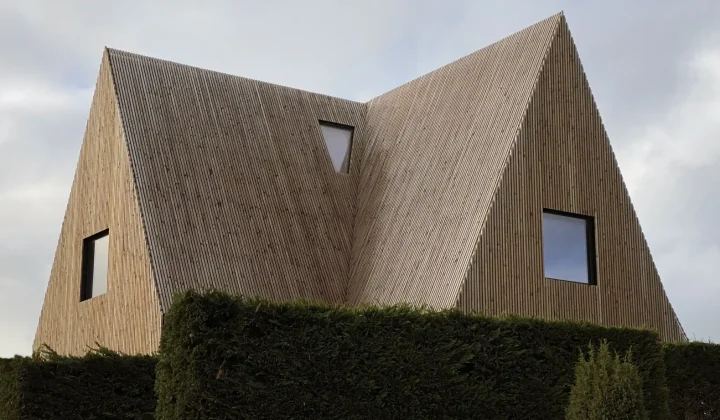
Vantieghem Talebi’s ‘House of Cards’ Brings Timber Geometry to Belgian Family Home
A new family house in Belgium by US- and Swiss-based practice Vantieghem Talebi uses a steeply pitched, card-house-inspired form clad in Douglas-fir…
Read moreRelated wiki
Adaptive Reuse in Architecture
Reference page for reuse, retrofit, conversion, embodied carbon and design constraints.
Read more