Club Amis: Layered Interiors Revive Beirut Residence
Rabih Geha Architects transforms a historic Beirut dwelling into a dynamic hospitality and educational venue, blending heritage with contemporary design through material contrast and spatial storytelling.
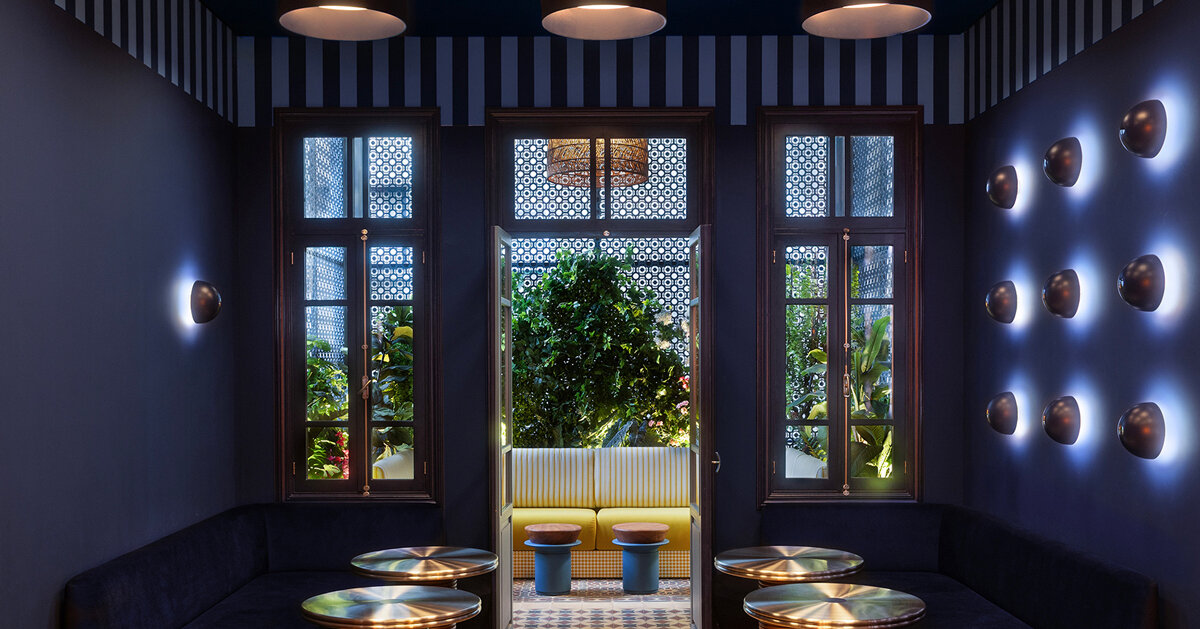
Rabih Geha Architects has completed Club Amis, a distinctive hospitality and educational venue located in Beirut’s Gemmayzeh district. Housed within a restored traditional Lebanese residential building, the project seamlessly integrates hospitality, education, and event programming within a sequence of immersive interior environments. The design is orchestrated around the core themes of conviviality and spatial versatility, allowing the venue to adapt and serve multiple functions throughout the day.
Dual Programming and Spatial Organization
Club Amis operates with a dual programming model. During daytime hours, the space functions as an educational hub, hosting professional trainings, tastings, and masterclasses tailored for bartenders, mixologists, and other hospitality professionals. As evening approaches, the venue transforms into a vibrant social space, activated by guest bartenders, chefs, and curated cultural events. This dynamic approach to programming directly informed the spatial organization, with individual rooms designed to accommodate varying atmospheres, scales, and forms of interaction.
Heritage Integration
Rather than discarding the existing compartmentalized layout of the traditional structure, Rabih Geha Architects chose to integrate the historic spatial framework into the design concept. The original sequence of rooms has been preserved and reimagined as a series of distinct environments. Each space is associated with different Pernod Ricard brands, yet they remain unified through a cohesive material and lighting strategy that enhances circulation and atmosphere.
Central Bar as an Anchor
At the heart of Club Amis is the main bar, conceived as both a spatial anchor and a social focal point. The design of the bar incorporates bold blue tones and striped motifs, directly referencing the Pernod Ricard logo. A striking suspended lighting installation, composed of circular illuminated tubes, further echoes the brand’s emblem. The materiality of the bar area features stainless steel surfaces, fluted glass, and mirrored elements, creating layered reflections and a sense of visual depth that permeates the space.
Materiality and Brand Identity
Radiating from the central bar, a series of rooms introduce diverse material palettes and distinct atmospheres, each curated to reflect specific brand identities. The Jameson and Chivas rooms, for instance, share a mirrored spatial arrangement characterized by gridded display systems and reflective ceilings that visually expand the interiors.
The Jameson room features darker green tones, textured glass, and a circular seating arrangement complemented by integrated sound systems and vinyl listening equipment, fostering an intimate and immersive experience. In contrast, the Chivas room utilizes warm wood finishes and more open seating configurations, encouraging conversation and display.
Mediterranean Influences on the Terrace
The Malfy terrace extends the project’s concept outdoors, offering a lighter spatial atmosphere inspired by Mediterranean references. Patterned wall panels, integrated greenery, and custom tables shaped to echo the silhouette of the Malfy bottle establish a strong continuity between branding and architectural detailing. A U-shaped seating arrangement organizes the terrace to promote collective gathering and open-air interaction.
Narrative and Contrasting Environments
Rabih Geha Architects further extends the project’s layered approach to narrative and atmosphere through additional spaces. The washroom features graphic wallpaper by House of Hackney, referencing the Monkey 47 brand, while the Mixology Academy presents a contrasting interior language inspired by Absolut Vodka. This academy area employs glossy white tiles with electric-blue grout, creating a laboratory-like environment. Individual workstations are meticulously organized, positioning mixology as both a technical practice and a performance art.
Restoration and Contemporary Dialogue
Throughout the project, original architectural elements, such as marble flooring and historic tiling, have been carefully restored and integrated alongside contemporary materials. This juxtaposition of heritage character with modern materials like stainless steel, mirrored finishes, textured glass, and custom lighting systems establishes a compelling dialogue between the building’s history and the venue’s contemporary identity.
Lighting as a Unifying Element
Lighting plays a crucial role as a unifying design element across the venue’s fragmented floor plan. It reinforces circulation paths, shapes atmospheres, and ensures spatial continuity between the various rooms. Despite the inherent constraints of working within an existing heritage structure, the project successfully incorporates new mechanical, electrical, and plumbing systems through carefully coordinated interventions that prioritize the preservation of the original building fabric.
Through adaptive reuse, layered material strategies, and a sequence of differentiated spatial environments, Club Amis by Rabih Geha Architects successfully transforms a historic Beirut residence into a multifaceted contemporary venue. The project celebrates interaction, craftsmanship, and brand storytelling, offering a unique model for revitalized urban hospitality.
Key facts
- Architect: Rabih Geha Architects
- Location: Beirut, Lebanon
- Project Type: Hospitality, Education, Events
- Design Approach: Adaptive Reuse, Heritage Integration, Material Contrast
This project offers a compelling case study in adaptive reuse for urban hospitality venues, demonstrating how historical structures can be revitalized to accommodate contemporary programming while respecting their heritage. For architects and designers, Club Amis highlights innovative material applications and spatial strategies for creating layered and versatile interiors. Its success in blending education and social functions provides a model for multi-purpose venues. For urban planners and preservationists, the project showcases a sensitive approach to integrating new uses into historic buildings, contributing to the cultural and economic vitality of Beirut’s districts.
Source: designboom – https://www.designboom.com/architecture/mirrored-ceilings-textured-glass-club-amis-layered-interiors-beirut-rabih-geha-architects/
Source
Designboom Original publication: 2026-05-21T09:30:45+00:00
Related news
SIITUA III to Gather International Researchers on Territory, Urbanism, and Architecture in Lima
The third edition of the International Seminar on Research in Territory, Urbanism, and Architecture (SIITUA III) will take place in Lima, organized…
Read more
Christopher Kane brings streamlined, heritage-driven vision to Mulberry in London Fashion Week debut
The Scottish designer presented his first collection for the British leather goods house at London Fashion Week, blending sharp tailoring, archival references…
Read more
When Film Directors Become Interior Designers: Guadagnino, Lynch, Anderson and Almodóvar Step Off Screen
From Luca Guadagnino’s Zara Home collection to David Lynch’s Paris club and Wes Anderson’s train carriage, a wave of collaborations is blurring…
Read more
Jesus Mari Lazkano Examines Changing Landscapes Through Painting and Animated Film at Basque Luxury Studio
The Basque artist’s exhibition ‘Azken Natura’ brings together six large-scale paintings and a 22-minute animated film that traces the melting of the…
Read moreRelated wiki
Adaptive Reuse in Architecture
Reference page for reuse, retrofit, conversion, embodied carbon and design constraints.
Read more