
Nile Greenberg Reinterprets the Edith Farnsworth House as a Site of Contested Noise
An exhibition at Mies van der Rohe's iconic glass house challenges its perception of silence by exploring the inherent "noise" of its history, design, and context.
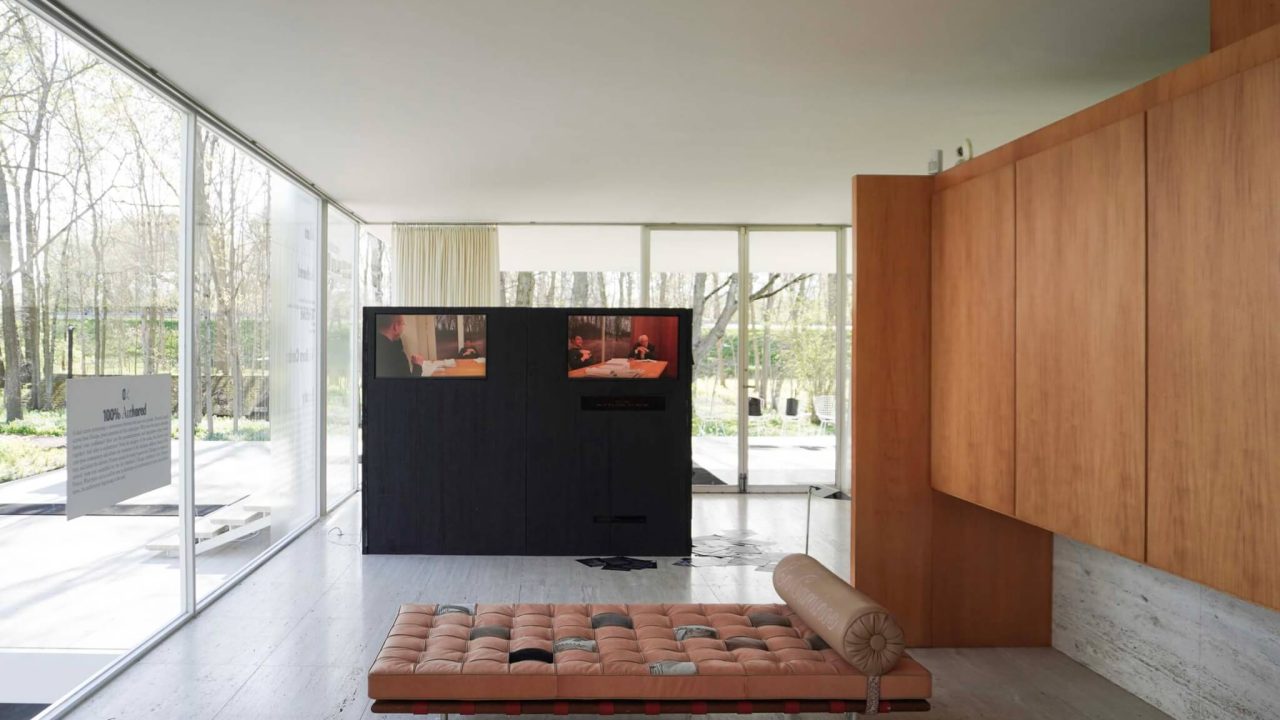
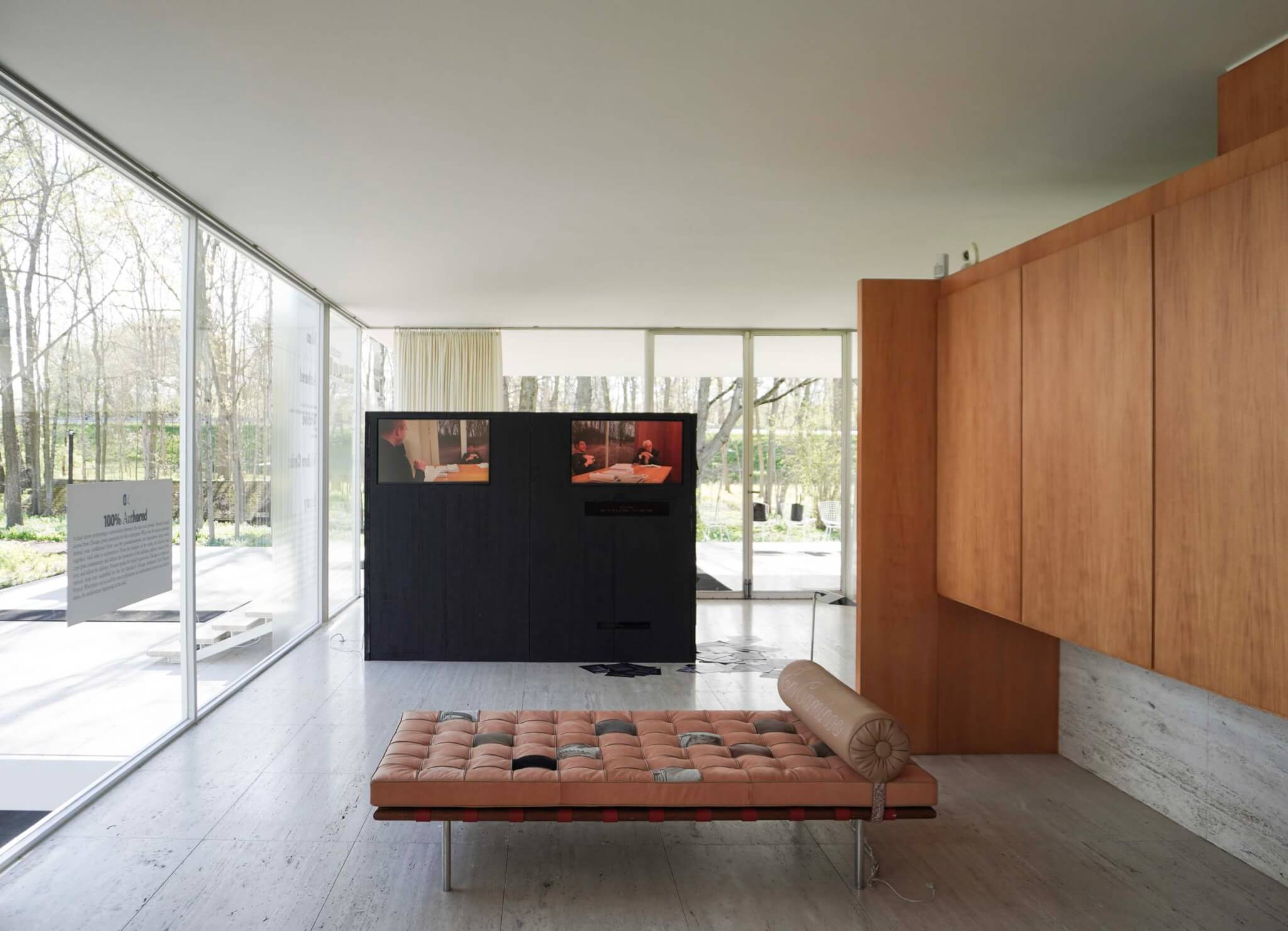
New York architect Nile Greenberg has unveiled an exhibition at the Edith Farnsworth House in Plano, Illinois, titled “Architecture of Noise.” The show, which opened on April 19, is the culmination of Greenberg’s 2025–26 Douglas A. Garofalo Fellowship at the University of Illinois Chicago School of Architecture. Through a series of installations and propositions spread across the house and its grounds, Greenberg challenges the long-held perception of the Farnsworth House as a pristine, silent, and perfectly controlled object. Instead, he argues that the house has always been filled with inherent “noise”—a concept encompassing not only literal sound but also the social, historical, and economic forces that shaped its existence and reception.
Greenberg’s exhibition posits that the modernist ideal of a gesamtkunstwerk, or “total work of art,” where the architect dictates every aspect of the environment, is an unattainable fantasy. He suggests that the Farnsworth House, despite Mies van der Rohe’s meticulous design, was never truly silent. The exhibition aims to bring to the fore the elements that were either suppressed, ignored, or inherent to the house’s reality, from the domestic sounds of its inhabitant to the speculative forces behind its construction and the environmental challenges it faced.
The Counter-Cabinet
Central to the exhibition is Greenberg’s “Counter-cabinet,” a black box installation that mirrors the dimensions of Edith Farnsworth’s original wooden cabinet. This piece sits on the dining table within the glass house, directly confronting the space where Farnsworth kept her personal belongings, including a record player and radio. Greenberg’s cabinet displays a hand-marked archive of 2,000 pages of Chicago architecture history on one face and plays a film on another. This film, titled “100% Authored,” features two actors representing “Chicago” (a composite of historical architects) and “The Present” (a contemporary architect). Their dialogue critiques the notions of authorship in architecture, with the past claiming singular genius and the present asserting a chaotic, market-driven origin, both of which Greenberg contends are fabrications.
A Film, titled 100% Authored
The film at the heart of the exhibition, “100% Authored,”
Key facts
- Source: The Architect’s Newspaper
- Date: 2026-05-21T19:00:32+00:00
- Topic: Nile Greenberg fills the Edith Farnsworth House with the noise it tried to keep out
Source
The Architect's Newspaper Original publication: 2026-05-21T19:00:32+00:00
Related news

Handwoven Teak and Cord Outdoor Seating Debuts from Masaya and Abril Zepeda
Nicaraguan furniture brand Masaya has introduced two new handcrafted outdoor chairs — a rocking chair and a lounge chair — designed by…
Read more
Place in Mind: Hendricks Churchill Launches Hospitality Group to Revive Historic Properties
The architecture and interior design studio Hendricks Churchill has launched Place in Mind, a new hospitality group focused on acquiring, restoring, and…
Read more
Adalberto Dias Architects Complete Restoration of Lisbon’s Patriarchal Cathedral and Archaeological Center
The restoration of the Sé de Lisboa by Adalberto Dias Arquitecto integrates a new archaeological center, preserved cloisters, and seven centuries of…
Read more
Vantieghem Talebi’s ‘House of Cards’ Brings Timber Geometry to Belgian Family Home
A new family house in Belgium by US- and Swiss-based practice Vantieghem Talebi uses a steeply pitched, card-house-inspired form clad in Douglas-fir…
Read moreRelated wiki

Adaptive Reuse in Architecture
Reference page for reuse, retrofit, conversion, embodied carbon and design constraints.
Read more