
OPAL Designs Net-Zero Mass Timber Housing for College of the Atlantic
The new student housing at the College of the Atlantic, designed by OPAL Architecture, is an all-timber structure aiming for net-zero energy performance and significant carbon sequestration.
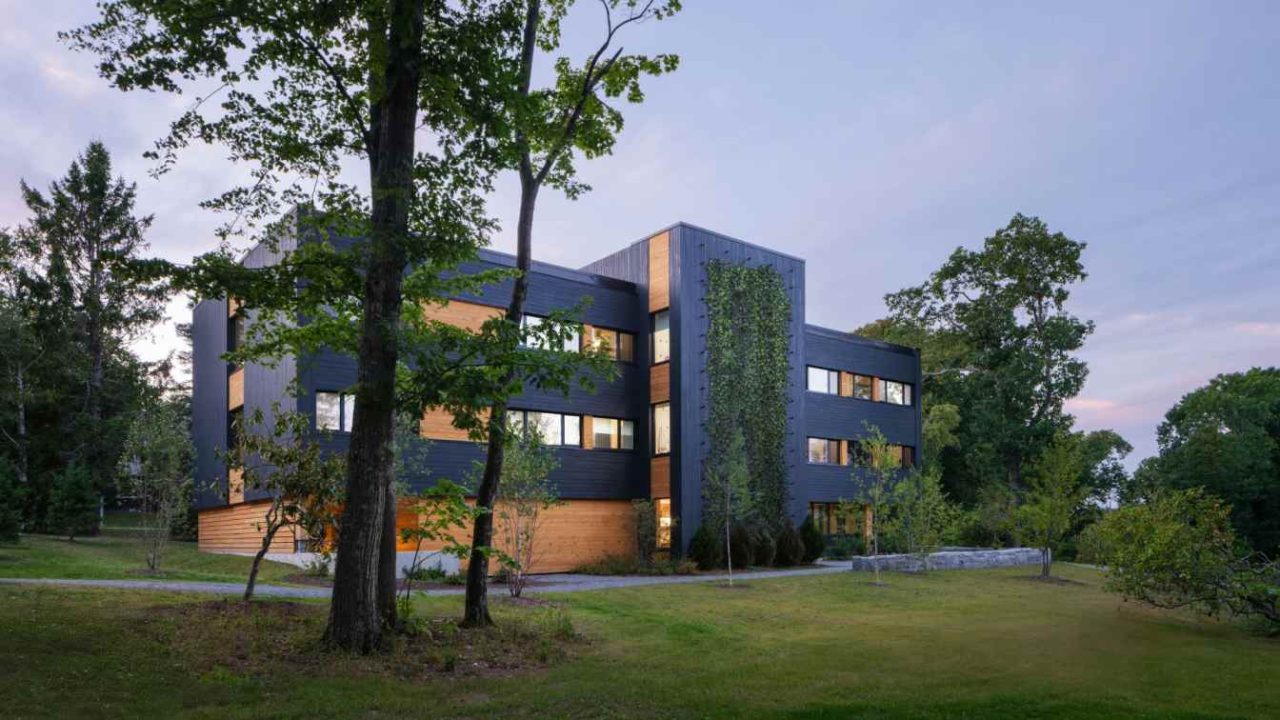
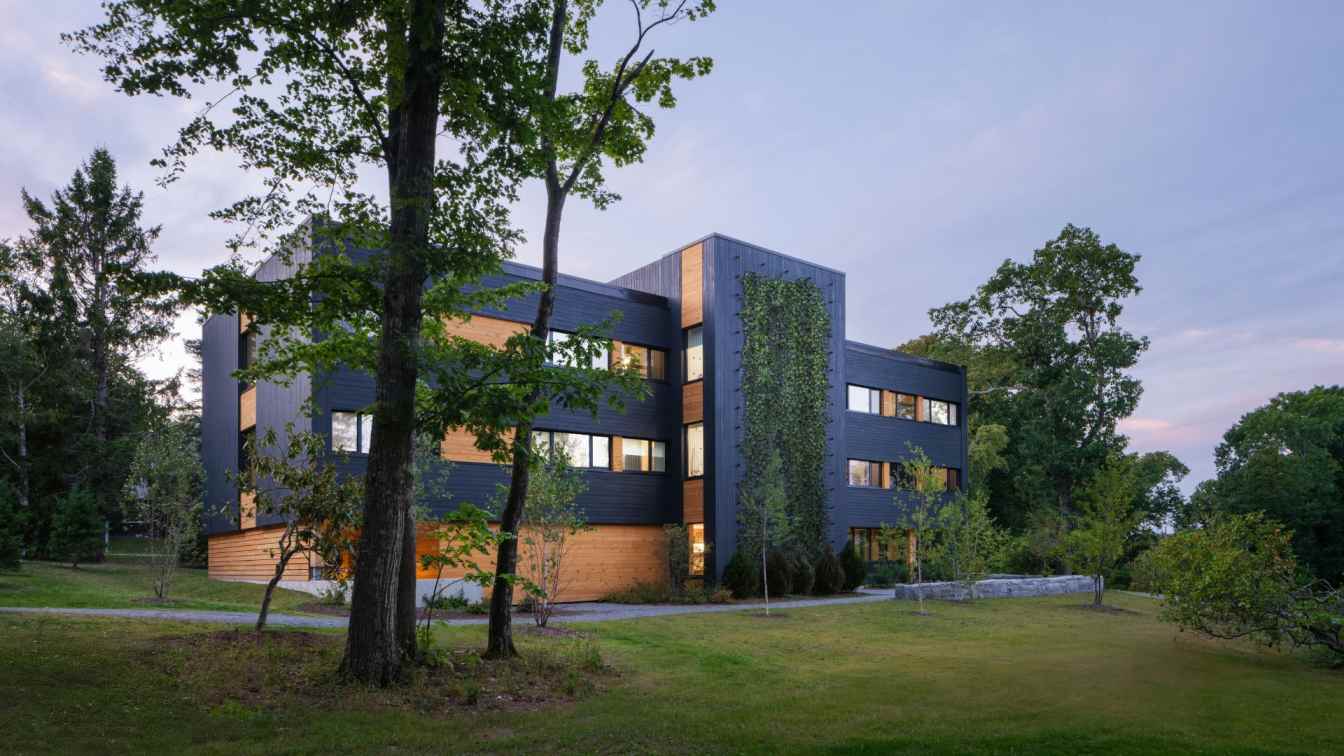
OPAL Architecture has unveiled designs for a new student housing complex at the College of the Atlantic in Bar Harbor, Maine, that prioritizes sustainability and rapid construction through an innovative all-timber approach. The 11,700-square-foot Massivhaus is engineered to achieve net-zero energy usage and represents a significant step forward in sustainable building practices for the institution.
This project is designed to address the college’s need for new development on limited space, requiring a construction method that is both quick to assemble and aligned with the college’s strong commitment to environmental stewardship. Drawing inspiration from OPAL’s prior work on the Davis Center for Human Ecology, the design team opted for an all-mass timber structure complemented by wood infill walls and wood fiber insulation. This comprehensive wood assembly is intended to sequester biogenic carbon and achieve Passive House level energy performance, marking it as one of the pioneering projects of its kind.
The design’s commitment to decarbonization is evident in every aspect, from the choice of materials to the building’s placement. By situating the Massivhaus on a previously developed site, the project minimizes its impact on the local ecosystem. Furthermore, the incorporation of bird-safe glazing throughout the building actively supports and protects local avian habitats.
Key facts
- Architect: OPAL Architecture
- Project Type: Student Housing
- Location: College of the Atlantic, Bar Harbor, Maine, USA
- Size: 11,700 sq ft
- Sustainability Goals: Net-zero energy, carbon sequestration, Passive House performance
- Primary Material: Mass Timber
Community and Connectivity
A core element of the design is the emphasis on fostering community and connection, particularly through the ground-floor spaces. The layout is intended to maximize the scale and connectivity of the kitchen and meeting areas, aligning with the college’s educational philosophy that values communal interaction. The communal kitchen is designed to be a versatile space, capable of accommodating both large gatherings and smaller groups for cooking and dining. It offers ample space for students to convene and share meals, with each resident provided with personalized, connected storage solutions.
The living quarters themselves are configured to offer a mix of single and double occupancy rooms. A distinctive feature of the sleeping areas is the exposed timber structure on the walls and ceilings, which not only highlights the inherent beauty and simplicity of the structural system but also reinforces the material’s presence throughout the living spaces. This aesthetic choice serves as a constant reminder of the building’s sustainable material basis.
Sustainability at its Core
The project’s designation as net-zero in energy usage is a testament to a rigorous, unwavering approach to decarbonization across all building assemblies and systems. The selection of mass timber is central to this strategy, offering a renewable resource that stores carbon, thereby offsetting embodied carbon emissions. The integration of wood fiber insulation further enhances thermal performance and contributes to the building’s low-energy profile.
Achieving Passive House standards signifies a commitment to exceptional energy efficiency, drastically reducing the building’s operational energy demand for heating, cooling, and ventilation. This is crucial for a net-zero target, as it minimizes the amount of renewable energy that needs to be generated on-site or procured. The choice of a previously developed site is also a significant sustainability consideration, preventing the disruption of undeveloped land and preserving natural habitats. The inclusion of bird-safe glazing is a direct measure to mitigate the impact of the built environment on local wildlife, demonstrating a holistic approach to environmental responsibility that extends beyond energy performance.
This development represents a paradigm shift for the College of the Atlantic, offering a model for future construction that marries rapid assembly with the highest standards of sustainability. For architects and designers, the project showcases the potential of mass timber in creating high-performance, carbon-sequestering residential buildings. For students and the broader college community, it provides a healthy, inspiring, and environmentally conscious living and learning environment. The focus on exposed timber and communal spaces aims to create a unique residential experience that is both functional and deeply connected to the institution’s values.
Source: Amazing Architecture – OPAL designs Massivhaus at the College of the Atlantic, an all-timber structure set to be net-zero in Bar Harbor, Maine (USA) – https://amazingarchitecture.com/residential-building/opal-designs-massivhaus-at-the-college-of-the-atlantic-an-all-timber-structure-set-to-be-net-zero-in-bar-harbor-maine-usa
Source
Amazing Architecture Original publication: 2026-05-22T23:43:50+00:00
Related news

UIA 2026: The Sessions and Themes Architects Should Watch This Week
A careful guide to the themes architects should track around UIA 2026 this week, focused on what can be confirmed, what still…
Read more
GridType Vol. 1 Examines How Digital Tools Reshape Type Design
A new publication from Slanted Publishers presents ten typefaces developed with an experimental online tool, tracing the influence of digital stencils on…
Read more
Ochre Residence by Thought Parallels Draws on Earthy Materials for a Warm Home in Kerala
The Ochre Residence in Kerala, India, by Thought Parallels uses baked terracotta, timber, coconut wood and cane to create a home that…
Read more
Wildcoast Residence by Studio Kennon Negotiates the Harsh Coastal Conditions of the Mornington Peninsula
Studio Kennon’s latest house on the Mornington Peninsula does not fight the wind, salt and rain of Bass Strait – it settles…
Read moreRelated wiki
Adaptive Reuse in Architecture
Reference page for reuse, retrofit, conversion, embodied carbon and design constraints.
Read more