
The Enduring Allure and Lingering Questions of Timber High-Rises
As the construction industry grapples with sustainability and efficiency, mass timber buildings have emerged as a compelling alternative to concrete and steel. This column explores the multifaceted appeal of timber high-rises, examining their environmental benefits, structural innovations, and the crucial questions tha
The silhouette of the modern city is increasingly being redefined by structures that challenge traditional material palettes. Among these, timber high-rises have captured the imagination of architects, developers, and the public alike, promising a synthesis of ecological responsibility and architectural ambition. This column delves into the phenomenon of tall timber construction, not merely as a novel building technique, but as a complex proposition involving environmental imperatives, evolving engineering, and critical considerations for its future.
The allure of building upwards with wood is multifaceted, rooted in both tangible benefits and a potent symbolic resonance. For proponents, mass timber represents a significant step towards decarbonizing the built environment. Unlike concrete and steel, which carry substantial embodied carbon footprints, timber sequesters carbon during its growth and can be sourced from sustainably managed forests. This potential for carbon-negative construction is a powerful driver in an era acutely aware of climate change. Beyond environmental gains, the prefabrication potential of mass timber elements—such as cross-laminated timber (CLT) and glulam beams—offers opportunities for faster construction timelines and reduced on-site waste, addressing perennial challenges in the construction sector.
Why it Matters
The global construction industry is a major contributor to greenhouse gas emissions, and the search for sustainable alternatives is paramount. Timber high-rises offer a compelling vision for how cities can grow more responsibly. They tap into a renewable resource, potentially reducing reliance on energy-intensive materials. Furthermore, the aesthetic qualities of exposed timber can contribute to warmer, more biophilic interior environments, which research suggests can positively impact occupant well-being. The rise of these buildings also signals a shift in perception, moving timber from its traditional association with low-rise construction to a material capable of supporting significant verticality. This has implications for urban density, architectural expression, and the very character of our cities.
What Sources Show
The growing body of mass timber construction provides a foundation for understanding its capabilities and challenges. Projects like the Mjøstårnet in Norway, once the world’s tallest timber building, demonstrate the structural viability of timber for significant heights. Architects and engineers are pushing the boundaries, developing innovative connection details and fire-resistance strategies. Publications like the Council on Tall Buildings and Urban Habitat (CTBUH) have extensively documented the progress of tall timber buildings, highlighting specific case studies and technical advancements. Industry bodies and research institutions are also actively developing codes and standards to facilitate safe timber construction, acknowledging its growing prominence. For instance, the National Research Council of Canada has been instrumental in advancing research on the fire performance and structural integrity of mass timber. The development of detailed project pages on studio websites and competition entries frequently showcase the technical ingenuity involved in realizing these structures, from advanced structural analysis to intricate facade detailing.
Design Trade-offs
While the promise of timber high-rises is significant, several trade-offs and challenges must be carefully managed. Fire safety remains a primary concern, despite advancements in CLT’s charring properties and the use of fire-retardant treatments. The perceived risk, and the need for rigorous testing and compliance with evolving building codes, can add complexity and cost. Moisture management is another critical factor; timber’s susceptibility to water damage necessitates meticulous detailing and robust weatherproofing to ensure long-term durability and prevent issues like rot or mold. The structural limitations of timber, particularly in seismic zones or for very tall structures, also require sophisticated engineering solutions, often involving hybrid systems that combine timber with concrete or steel. The supply chain for mass timber products, while growing, may not yet be as robust or widely distributed as that for conventional materials, potentially impacting availability and cost on a larger scale. Furthermore, the acoustic performance of timber structures can be a concern for occupants, requiring careful consideration in design and material selection for floor and wall assemblies.
What Remains Unclear
Despite the progress, several questions linger regarding the long-term performance of mass timber high-rises. How will these buildings age over decades, particularly concerning the structural integrity of timber components exposed to varying environmental conditions? What are the true life-cycle costs when all factors, including maintenance, insurance, and potential repair, are considered? The availability of comprehensive, long-term data on the performance of a wide range of timber high-rise projects is still developing. Understanding the full impact on occupant satisfaction, beyond perceived aesthetics, requires more longitudinal studies. The scalability of mass timber construction to meet the demands of rapid urbanization globally, especially in regions with different climatic conditions and regulatory frameworks, is also an ongoing area of exploration. The industry is still actively working on refining best practices for detailing and construction to minimize risks associated with moisture and fire over the lifespan of these buildings.
What Readers Can Verify
Readers can begin by exploring project portfolios of architectural firms specializing in mass timber construction. Websites of organizations like the CTBUH offer valuable databases and case studies of tall timber buildings worldwide. Investigating the websites of mass timber product manufacturers can provide insights into the technical specifications and performance data of materials like CLT and glulam. Additionally, reviewing competition results and award announcements for sustainable architecture often highlights innovative timber projects. For a deeper dive, academic research papers and technical reports from institutions focusing on wood construction can offer rigorous analysis.
Compact Facts
- Embodied Carbon: Potentially lower, carbon sequestering | Generally higher, carbon intensive
- Construction Speed: Often faster due to prefabrication | Varied, can be slower due to on-site processes
- Fire Resistance: Requires specific detailing and charring strategies | Well-established protocols and materials
- Moisture Sensitivity: High; requires meticulous detailing and protection | Lower, but still requires waterproofing
- Material Sourcing: Renewable, from managed forests | Non-renewable, energy-intensive production
- Longevity Research: Emerging, needs long-term data | Extensive historical data
Related news

R & Company Opens Its Brooklyn Archive to the Public, Revealing 10 Rare Design Finds
The celebrated design gallery R & Company has opened its 16,000 sq ft storage facility, Building 86, in the Brooklyn Navy Yard…
Read more
SIITUA III to Gather International Researchers on Territory, Urbanism, and Architecture in Lima
The third edition of the International Seminar on Research in Territory, Urbanism, and Architecture (SIITUA III) will take place in Lima, organized…
Read more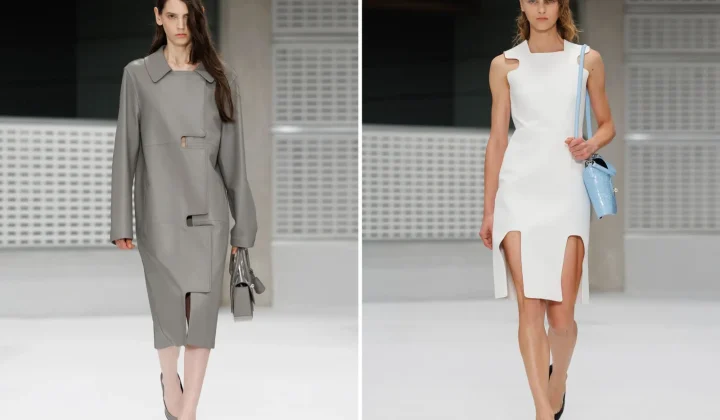
Christopher Kane brings streamlined, heritage-driven vision to Mulberry in London Fashion Week debut
The Scottish designer presented his first collection for the British leather goods house at London Fashion Week, blending sharp tailoring, archival references…
Read more
When Film Directors Become Interior Designers: Guadagnino, Lynch, Anderson and Almodóvar Step Off Screen
From Luca Guadagnino’s Zara Home collection to David Lynch’s Paris club and Wes Anderson’s train carriage, a wave of collaborations is blurring…
Read moreRelated wiki

Adaptive Reuse in Architecture
Reference page for reuse, retrofit, conversion, embodied carbon and design constraints.
Read more