
Buffalo’s Outer Harbor to Welcome Cruise Ships with New LiRo-Hill Designed Terminal
A new cruise terminal designed by LiRo-Hill is set to dock at Buffalo's Outer Harbor, aiming to integrate the city into the Great Lakes cruising network and stimulate economic activity.
Buffalo’s Outer Harbor to Welcome Cruise Ships with New LiRo-Hill Designed Terminal
SLUG: buffalo-outer-harbor-cruise-terminal-liro-hill
EXCERPT: A new cruise terminal designed by LiRo-Hill is set to dock at Buffalo’s Outer Harbor, aiming to integrate the city into the Great Lakes cruising network and stimulate economic activity.
CATEGORY: architecture-news
TAGS: cruise terminal, Buffalo, LiRo-Hill, urbanism, Great Lakes, waterfront development, New York State
SEO_TITLE: LiRo-Hill Designs New Cruise Terminal for Buffalo’s Outer Harbor
SEO_DESCRIPTION: Learn about the LiRo-Hill designed cruise terminal planned for Buffalo’s Outer Harbor, set to connect the city to the Great Lakes cruising network and boost local economy.
MEDIA_QUERY: architectural rendering of a modern cruise terminal on Buffalo’s Outer Harbor, designed by LiRo-Hill
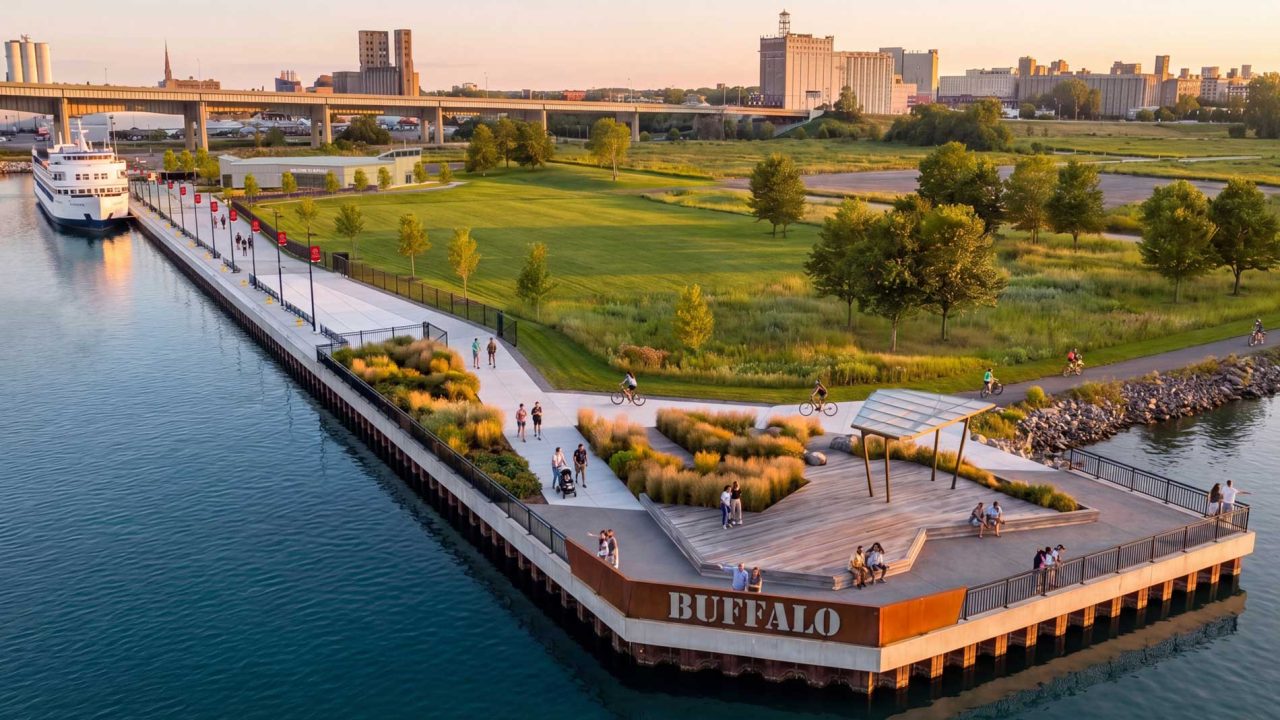
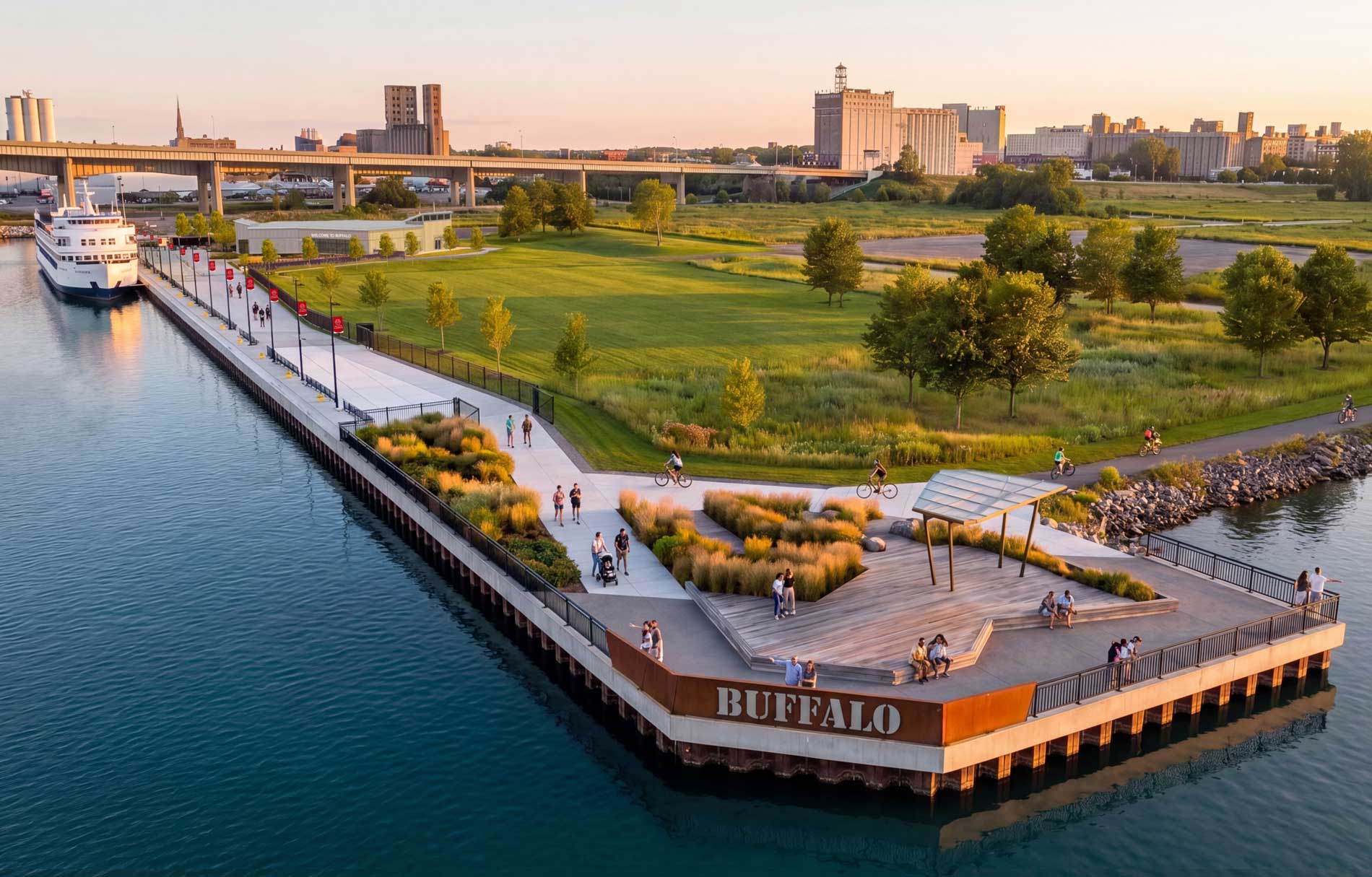
IMAGE_ALT: Rendering of the proposed Buffalo Outer Harbor Cruise Ship Terminal, featuring a large dock and welcome center.
Buffalo is poised to re-enter the Great Lakes cruising scene with a new terminal designed by LiRo-Hill, slated for construction on the city’s Outer Harbor. The Buffalo Outer Harbor Cruise Ship Terminal, planned for the long-vacant Slip 2 parcel on Fuhrmann Boulevard, aims to establish Buffalo as a significant stop on regional cruise routes, connecting it to major cities across the Great Lakes and Canada. New York Governor Kathy Hochul unveiled renderings of the project, highlighting its potential to enhance tourism and economic impact for the region.
Project Genesis and Vision
The initiative to bring cruise ships back to Buffalo has been building momentum since its initial announcement in 2022. The project is backed by the Erie Canal Harbor Development Corporation and is a strategic component of Buffalo’s broader tourism development efforts, including recent marketing campaigns by Visit Buffalo. A market demand study conducted in 2024 by infrastructure consultancy Moffat & Nichol confirmed the economic viability and potential benefits of establishing a cruise terminal. LiRo-Hill was subsequently awarded the contract in 2025 for the architectural and engineering design, as well as construction administration.
The terminal’s design, as depicted in the renderings, envisions a substantial dock capable of accommodating multiple vessels simultaneously. Passengers disembarking will enter a new welcome center, designed to serve as a gateway to the city’s attractions. The dock area extends into a pier, which will feature a park-like setting. Elements of the design include a fence crafted from patinated steel, imprinted with the city’s name, and a stepped wooden plinth that anchors the pier and incorporates a shading pavilion. A grassy park with mature trees and plantings is planned behind the docking facilities, creating a public amenity alongside the operational cruise infrastructure.
Economic and Urban Impact
The cruise terminal is projected to be a significant economic driver. By the end of 2026, it is anticipated that seven cruise lines will operate ten ships, generating an estimated $300 million in economic impact for the region. This development aims to facilitate trips from Buffalo to various destinations, including Toronto, Cleveland, Detroit, Chicago, Milwaukee, and Duluth, as well as remote islands in Michigan. Beyond the direct revenue from cruise tourism, the terminal is expected to generate ancillary benefits for downtown Buffalo businesses and the wider metropolitan area. Empire State Development Commissioner Hope Knight noted the potential for positive ripple effects throughout the local economy.
Furthermore, the terminal is envisioned as a catalyst for increased visitor engagement with Buffalo’s cultural and historical offerings. Passengers arriving via cruise are expected to embark on guided tours to prominent local attractions such as Niagara Falls and the recently opened Buffalo AKG Art Museum, designed by OMA and Cooper Robertson. This integration of the cruise terminal with existing and new cultural destinations underscores a strategy to leverage the influx of visitors for broader economic and cultural enrichment.
Development Timeline and Future Prospects
Construction on the Buffalo Outer Harbor Cruise Ship Terminal is scheduled to commence in July, with a grand opening anticipated in the summer of 2028. The project represents a significant investment in Buffalo’s waterfront revitalization and its integration into the broader regional economy. The site, a parcel on Fuhrmann Boulevard that has remained vacant since 2007, will be transformed into a functional and aesthetically considered piece of public infrastructure. The design’s emphasis on public space, including the pier park, suggests an ambition to balance the commercial demands of a cruise terminal with the creation of valuable urban amenities for residents.
The project’s success will hinge on its ability to not only attract cruise lines and passengers but also to effectively connect them to the city’s offerings, thereby fulfilling its promise of economic stimulation and enhanced tourism. The architectural and engineering approach taken by LiRo-Hill, combined with the strategic vision of state and local development agencies, will be crucial in realizing these objectives.
Key facts
- Project Name: Buffalo Outer Harbor Cruise Ship Terminal
- Architect/Engineer: LiRo-Hill
- Location: Slip 2 parcel, Fuhrmann Boulevard, Buffalo’s Outer Harbor
- Status: Design and engineering phase; construction to begin July 2024
- Expected Opening: Summer 2028
- Key Stakeholders: New York Governor Kathy Hochul, Erie Canal Harbor Development Corp.
This development marks a significant step in re-establishing Buffalo’s presence on the Great Lakes maritime map. For architects and urban planners, it offers a case study in waterfront redevelopment and the integration of transportation infrastructure with public and economic functions. For city dwellers and regional policymakers, it signifies a renewed focus on tourism and economic diversification. The project also underscores the ongoing trend of revitalizing post-industrial waterfronts into vibrant hubs of activity. The long-term success will depend on the seamless integration of the terminal’s operations with the city’s existing tourism assets and its ability to foster sustained economic benefits.
Source: The Architect’s Newspaper (https://www.archpaper.com/2026/05/liro-hill-buffalo-outer-harbor-cruise-terminal/)
Source
The Architect's Newspaper Original publication: 2026-05-22T18:44:42+00:00
Related news

Handwoven Teak and Cord Outdoor Seating Debuts from Masaya and Abril Zepeda
Nicaraguan furniture brand Masaya has introduced two new handcrafted outdoor chairs — a rocking chair and a lounge chair — designed by…
Read more
Place in Mind: Hendricks Churchill Launches Hospitality Group to Revive Historic Properties
The architecture and interior design studio Hendricks Churchill has launched Place in Mind, a new hospitality group focused on acquiring, restoring, and…
Read more
Adalberto Dias Architects Complete Restoration of Lisbon’s Patriarchal Cathedral and Archaeological Center
The restoration of the Sé de Lisboa by Adalberto Dias Arquitecto integrates a new archaeological center, preserved cloisters, and seven centuries of…
Read more
Vantieghem Talebi’s ‘House of Cards’ Brings Timber Geometry to Belgian Family Home
A new family house in Belgium by US- and Swiss-based practice Vantieghem Talebi uses a steeply pitched, card-house-inspired form clad in Douglas-fir…
Read moreRelated wiki

Adaptive Reuse in Architecture
Reference page for reuse, retrofit, conversion, embodied carbon and design constraints.
Read more