
Studio Cadena fills Medellín cafe with 31 towering wooden columns
New York-based Studio Cadena has completed Masa, a cafe in Medellín, Colombia, featuring 31 slender plywood columns that rise from floor to ceiling, creating a forest-like interior without walls.


Studio Cadena, the New York-based architecture firm led by Benjamin Cadena, has completed Masa, a cafe in Medellín, Colombia, where 31 slender plywood columns rise from the floor to a raw concrete ceiling. The design creates an open, forest-like atmosphere that eliminates traditional walls and enclosures.
Located in Colombia’s second-largest city, the cafe occupies a spacious ground-floor space. The studio focused on two primary materials — concrete and plywood — to shape the interior. The concrete ceiling remains exposed, while the plywood columns, each crafted from laminated veneer lumber, are arranged in a loose grid that guides movement through the space without compartmentalizing it.
Key facts
| Detail | Information |
|——–|————-|
| Project | Masa cafe |
| Location | Medellín, Colombia |
| Architecture firm | Studio Cadena (New York) |
| Key material | Plywood (laminated veneer lumber) |
| Number of columns | 31 |
| Ceiling material | Exposed concrete |
| Design approach | Open plan without walls |
Forest-like interior without walls
The columns are not structural but spatial devices. They vary slightly in placement and spacing, creating a rhythm that changes as visitors walk through the cafe. The effect is intentionally immersive — patrons are surrounded by vertical wooden elements that evoke tree trunks in a dense forest.
Studio Cadena described the result as an “atmosphere without walls or enclosure.” The columns define zones for seating, circulation, and service while keeping the entire space visually connected. The concrete ceiling above provides a heavy, monolithic counterpoint to the light, repetitive wooden posts.
Material contrast drives the design
The pairing of raw concrete and warm plywood is central to the project’s identity. Concrete appears on the ceiling and selected wall surfaces, lending an industrial, grounded feel. Plywood dominates the vertical plane, adding warmth and texture.
The floor is finished in polished concrete, tying the lower plane to the ceiling. Furniture is minimal and low, allowing the columns to remain the dominant visual element. Lighting is recessed or indirect, emphasizing the vertical lines of the columns and the texture of the concrete above.
A response to Medellín’s cafe culture
Medellín has a thriving cafe scene, with spaces that often blend design, hospitality, and social interaction. Masa fits into this context by offering an interior that prioritizes atmosphere over traditional layout. The open plan encourages lingering and conversation, while the column grid provides a sense of enclosure without physical barriers.
The project also reflects a broader trend in contemporary architecture: using repetitive, non-structural elements to shape experience. Similar approaches have appeared in galleries, restaurants, and retail spaces globally, but Studio Cadena’s execution is notable for its restraint and material clarity.
Studio Cadena’s approach
Benjamin Cadena founded Studio Cadena in New York in 2013. The firm has worked on projects ranging from residential interiors to cultural buildings, often emphasizing material honesty and spatial simplicity. The Masa cafe continues that focus, using a limited palette to achieve a strong atmospheric effect.
The firm has previously completed projects in Colombia, including a house in the coffee region and a restaurant in Bogotá. Masa represents their first cafe interior in Medellín.
What this means for architecture and design readers
For architects and designers, Masa offers a case study in how repetitive elements can define space without creating barriers. The project demonstrates that a single material — plywood — used consistently across many identical components can generate variety through arrangement and light.
The cafe also highlights the growing interest in experiential interiors in Latin America, where hospitality spaces increasingly compete on design quality. Medellín, in particular, has seen a wave of architect-designed cafes, bars, and restaurants that draw both local and international attention.
Source: Dezeen – https://www.dezeen.com/2026/09/04/masa-cafe-studio-cadena-medellin-wooden-columns/
Datos clave
| Punto | Detalle |
|---|---|
| Fuente | Dezeen |
| Fecha | 2026-09-04T10:00:35+00:00 |
| Tema | Studio Cadena fills Medellín cafe with 31 towering wooden columns |
Source
Dezeen Original publication: 2026-09-04T10:00:35+00:00
Related news
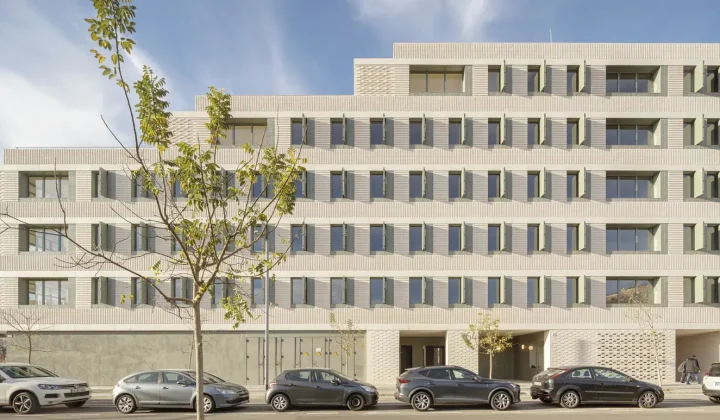
b720 Fermín Vázquez Completes 37 Build-to-Rent Homes in L’Hospitalet de Llobregat
Barcelona-based firm b720 Fermín Vázquez Arquitectos has completed a 37-unit build-to-rent residential project in L’Hospitalet de Llobregat, designed for a peripheral area…
Read more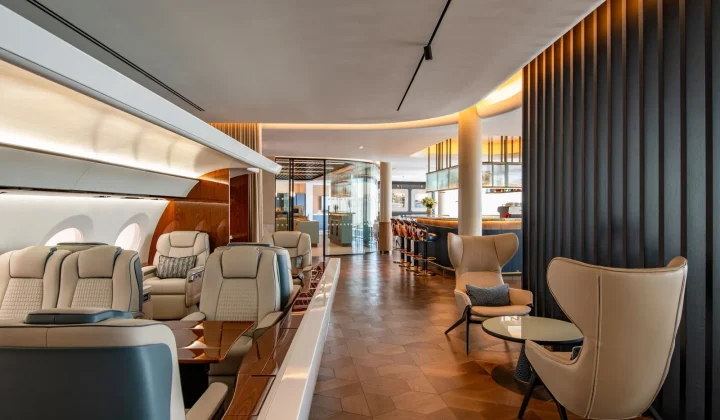
Flexjet’s new Farnborough terminal brings hospitality-driven design to private aviation
The private aviation provider’s first dedicated European hub at Farnborough Airport combines a lounge, training academy and event space with interiors by…
Read more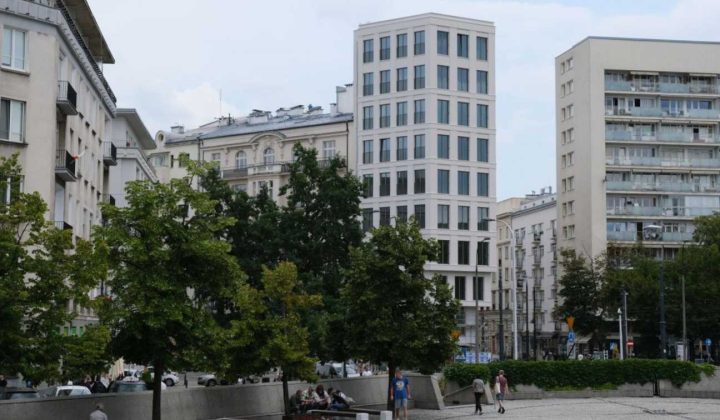
WXCA Completes Intimate Warsaw Apartment Block at Plac Politechniki, Showcasing Adaptive Reuse
Warsaw's Plac Politechniki has a new addition: a nine-unit apartment block by WXCA that reuses an existing structure, blending contemporary design with…
Read more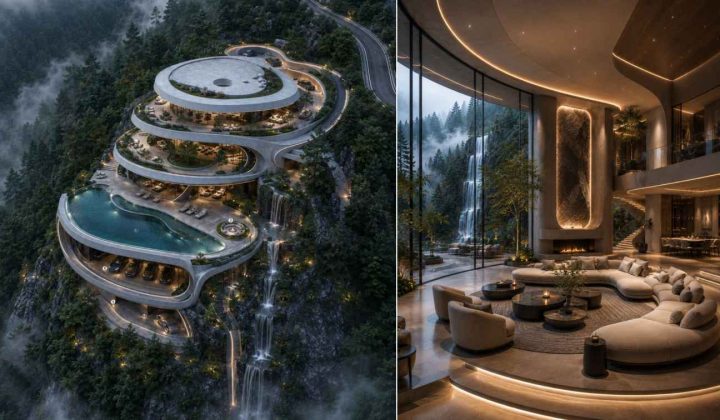
KUMO Mountain Residence Blends Architecture and Landscape on a Steep Forested Slope
Designed by Rabani Design, KUMO is a private mountain residence embedded into a steep forested mountainside. The project treats the terrain as…
Read moreRelated wiki
Adaptive Reuse in Architecture
Reference page for reuse, retrofit, conversion, embodied carbon and design constraints.
Read more