
Performing Colonial Toxicity Exhibition in Valencia Examines Architecture’s Role in Nuclear Colonialism
From 24 October to 1 November 2026, Aguas Internacionales in Valencia hosts Samia Henni’s exhibition on French nuclear testing in the Algerian Sahara, exploring how architecture and infrastructure were embedded in colonial toxicity.
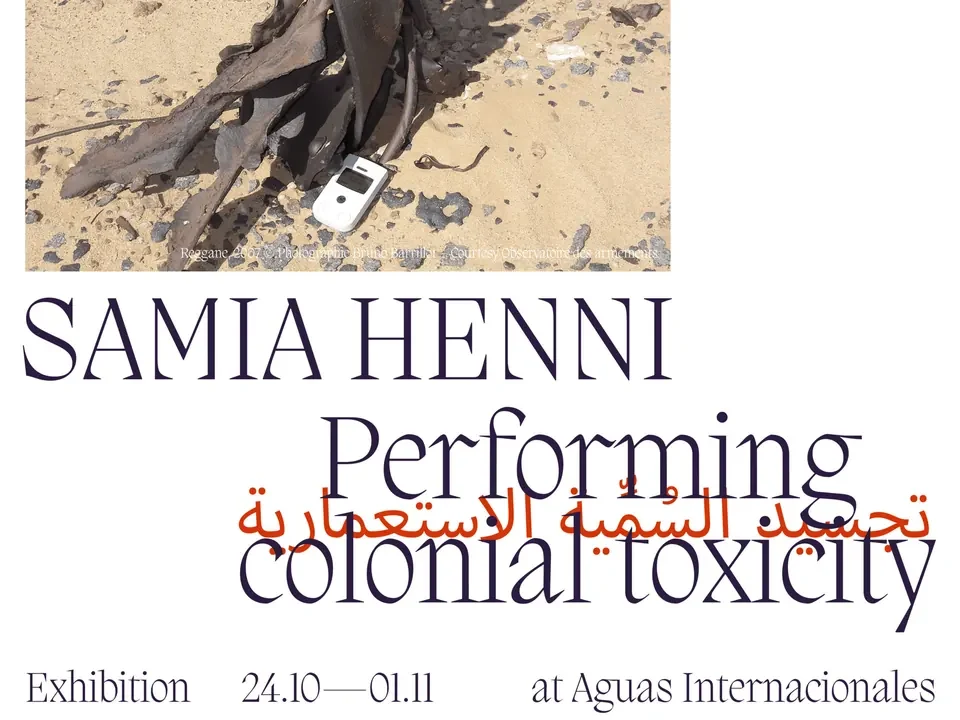
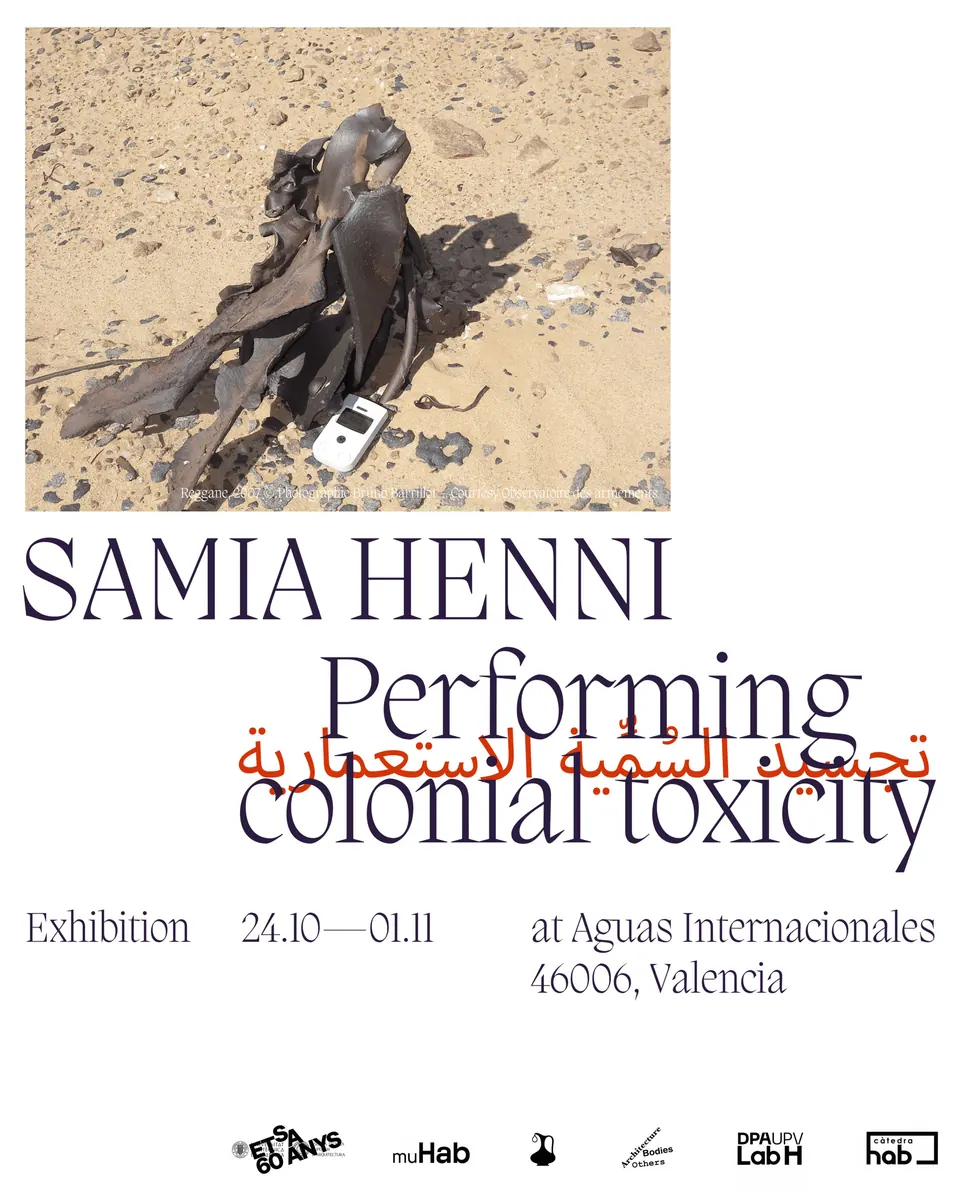
Valencia’s Aguas Internacionales space in the En Corts neighbourhood will host Performing Colonial Toxicity, an international exhibition by historian and researcher Samia Henni, from 24 October to 1 November 2026. The exhibition investigates the environmental and political aftermath of French nuclear testing in the Algerian Sahara between 1960 and 1966, with a particular focus on how architecture and infrastructure were instrumentalised in the colonial project.
Henni, whose work centres on the intersections of colonial history, architecture, and toxic legacies, uses the term “colonial toxicity” to describe the enduring harm caused by French counterinsurgency operations in Algiers and nuclear experiments in the desert. The exhibition draws on archival documents, testimonies, and audiovisual materials to reconstruct this chapter and expose its continuing consequences.
Por que importa
Key facts
| Aspect | Detail |
|——–|——–|
| Exhibition title | Performing Colonial Toxicity |
| Venue and dates | Aguas Internacionales, Valencia; 24 October – 1 November 2026 |
| Artist/Researcher | Samia Henni |
| Core subject | French nuclear testing in the Algerian Sahara (1960–1966) and architecture’s role in colonial infrastructure |
Architecture as a tool of colonial control
A central thread of the exhibition is the examination of the physical infrastructure that supported the French nuclear programme. This includes workers’ housing complexes that introduced European models of architectural rationalism into the Sahara Desert. These structures were not neutral shelters but deliberate instruments of colonial administration, designed to impose order, surveillance, and segregation on the landscape and its people. Henni’s research reveals how modernist architectural principles were co-opted to serve military and colonial objectives, embedding toxic legacies into the built environment.
The multimedia installation brings together photographs, blueprints, and testimonies that document these housing schemes alongside the test sites themselves. By showing how architecture was implicated in the nuclear programme, the exhibition challenges the profession to confront its historical entanglements with state violence and environmental destruction.
A travelling exhibition with global resonance
Performing Colonial Toxicity was first presented in Amsterdam in 2023 and has since travelled to Zurich, London, Providence, Paris, Ottawa, and Montreal. Each iteration has adapted to its host city while retaining the core archival material. The Valencia edition at Aguas Internacionales continues this trajectory, bringing the conversation to a Spanish audience with its own colonial and environmental histories.
The exhibition’s international reach reflects growing scholarly and public interest in the long-term effects of nuclear colonialism. Radioactive contamination from the French tests persists in the Sahara, affecting local communities, ecosystems, and water sources. By presenting this material in a gallery setting, Henni makes visible what state archives and official narratives have often obscured.
Why this matters for architecture and design readers
For professionals and students in architecture, urbanism, and landscape design, Performing Colonial Toxicity offers a critical case study of how design disciplines can become complicit in harmful state projects. The exhibition prompts reflection on contemporary practice: which infrastructures today might carry hidden political or environmental costs? How can architects and designers engage with decolonial methods and environmental justice?
The inclusion of housing complexes as a key exhibit element is particularly relevant for readers interested in housing, urbanism, and sustainable design. It demonstrates that even seemingly benign building types can be part of larger systems of extraction and control. The exhibition also contributes to ongoing debates about the profession’s responsibility to address historical injustices and to design for repair rather than domination.
Practical information for visitors
The exhibition is free and open to the public at Aguas Internacionales, located in the En Corts neighbourhood of Valencia. No registration is required. Visitors can expect a self-guided tour through archival displays, video installations, and text panels. The venue is accessible by public transport from central Valencia.
Those unable to attend in person can follow Samia Henni’s published research and previous exhibition catalogues, which are available through academic libraries and selected bookshops.
Source: ArchDaily – https://www.archdaily.com/1187096/performing-colonial-toxicity
Datos clave
| Punto | Detalle |
|---|---|
| Fuente | ArchDaily |
| Fecha | 2026-10-19T09:10:00+00:00 |
| Tema | Performing Colonial Toxicity |
Source
ArchDaily Original publication: 2026-10-19T09:10:00+00:00
Related news
Calm Haven House by ADA Design & Build Offers a Model for Wellness-Focused Residential Design
A new house in Can Tho, Vietnam, designed by ADA Design & Build for a young couple of doctors, demonstrates how residential…
Read more
ToB.Studio’s Timber Bike Station in Burgsinn Echoes a Stacked Log Pile
ToB.Studio has completed a cycling rest station in Burgsinn, Germany, that takes its visual cues from stacked timber logs. The building provides…
Read more
Hospitality Design Trends for 2027 Focus on Flexibility and Real-Use Comfort
From movable furniture and layered lighting to acoustic treatment and textured materials, the seven hospitality design trends for 2027 prioritise how spaces…
Read more
Futurewave’s Arc Silver Bracelet Uses a Gentle Vibration to Curb Phone Overuse
The Belgian design studio’s Arc bracelet offers a tactile nudge when screen time exceeds a set limit, with no display, notifications, or…
Read moreRelated wiki
Adaptive Reuse in Architecture
Reference page for reuse, retrofit, conversion, embodied carbon and design constraints.
Read more