Además Arquitectura Completes Casa Alba II in Buenos Aires with Introspective Concrete Wall
Argentina's Además Arquitectura has completed Casa Alba II, a 248-square-meter concrete house in Buenos Aires, featuring a distinctive rounded privacy wall that fosters an "introspective approach" to suburban living and redefines the interaction between domestic spaces and the urban environment.
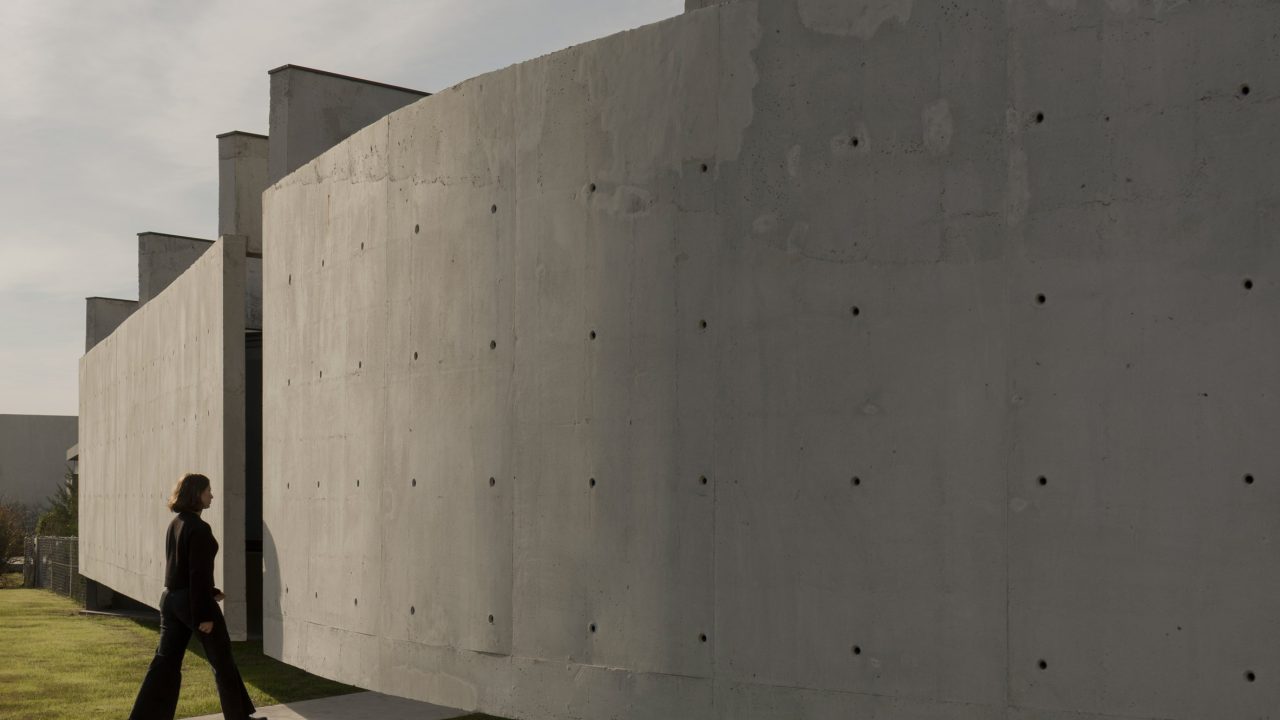
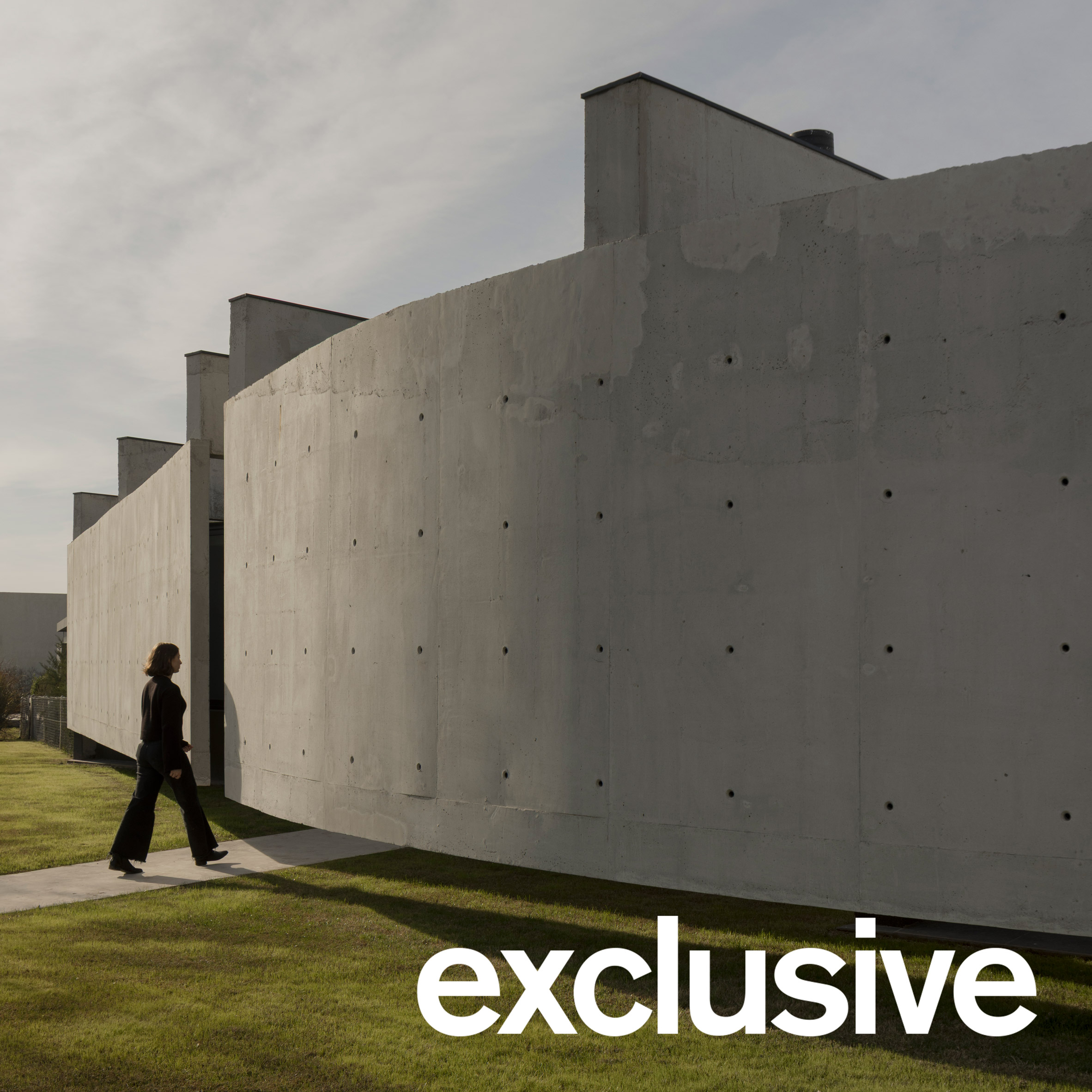
Además Arquitectura, an Argentinian studio, has completed Casa Alba II, a 248-square-meter (2,670-square-foot) concrete residence in the Ezeiza-Canning neighborhood of Buenos Aires. The project distinguishes itself through a prominent, rounded privacy wall that encircles the 0.3-acre lot, acting as both a boundary and a central architectural element designed to create an “introspective approach” to domestic life. Completed in 2024, the house explores how architectural devices can mediate the relationship between private living and the surrounding city, drawing inspiration from historical figures like Luis Barragán in its pursuit of a controlled and atmospheric interior world.
Architectural Concept and the Central Role of the Wall
The design of Casa Alba II positions the wall not as a secondary feature but as the fundamental organizing principle of the house. According to Además Arquitectura, the wall becomes “the central architectural device, organizing views, light and circulation.” This approach allows the “house to unfold inward,” with each internal space designed to interact with this perimeter condition. The primary function of the wall is to establish a sense of distance from the suburban environment, carefully filtering visual and spatial connections. It also plays a crucial role in managing natural light, reflecting it indirectly onto the interior surfaces and into the house through strategically placed large windows. This deliberate inward focus aims to cultivate a sense of refuge while simultaneously offering expansive internal experiences.
Key facts
- Project Name: Casa Alba II
- Architect: Además Arquitectura
- Location: Ezeiza-Canning, Buenos Aires, Argentina
- Area: 248 square meters (2,670 square feet)
- Completion: 2024
Spatial Organization and Materiality
The residence’s program is arranged within a series of volumes that are oriented diagonally to the street, running from north to south and converging at a central intersection. A clear central axis internally divides the public and private zones of the house. On the west side, three private sleeping areas are situated, offering a sense of seclusion. The social areas, including the living, dining, and kitchen spaces, are designed as an open-plan arrangement on the east side of this axis. These areas connect seamlessly to the garage and extend outwards to a 41-square-meter (44-square-foot) semi-covered porch located at the northern end of the property, facilitating indoor-outdoor living.
Materially, Casa Alba II is characterized by its almost exclusive use of exposed concrete. This choice underscores a commitment to material continuity and constructive clarity, employing a reduced palette to allow the spatial and atmospheric qualities of the design to take precedence. The monolithic presence of the exterior wall is reinforced by the consistent use of concrete throughout the interior, where it defines spaces with minimal additional intervention. To create contrast and intensify the perception of light, shadow, and texture, dark flooring and furniture elements have been introduced, complementing the raw concrete surfaces.
Sustainability and Environmental Strategy
Beyond its aesthetic and organizational functions, the perimeter wall contributes significantly to the house’s passive cooling strategy, effectively reducing solar exposure. The design incorporates mirrored north and south patios, which are instrumental in facilitating cross-ventilation. Cool breezes are drawn across a rectangular pool on the north side and channeled through the interiors, contributing to natural temperature regulation. During cooler months, the concrete mass acts as a thermal mass, absorbing and releasing heat slowly to maintain a stable, warm internal temperature, thereby minimizing the need for active heating systems. This integrated approach highlights the project’s focus on sustainable design principles, leveraging the inherent properties of materials and climatic conditions.
Precision and Introspection in Design
The project underscores the importance of precision in geometry, structure, and openings, particularly when working with a limited material palette and a restrained formal language. The experience of designing Casa Alba II led the studio to pursue a more introspective domestic condition, one that offers refuge without sacrificing carefully oriented views. This balance allows the house to function simultaneously as a private sanctuary and an expansive living space, reflecting a nuanced understanding of contemporary residential needs within a suburban context.
The architectural outcome at Casa Alba II contributes to the ongoing discourse on residential design in Buenos Aires, exploring innovative ways to address privacy, materiality, and sustainable living in dense urban and suburban environments. It stands as an example of how a singular architectural element, like a wall, can shape not only the physical form but also the experiential quality of a home, fostering a unique dialogue between inhabitants and their surroundings.
Source: Dezeen, https://www.dezeen.com/2026/05/20/ademas-arquitectura-casa-alba-two-buenos-aires-concrete-wall/
Source
Dezeen Original publication: 2026-05-20T18:00:54+00:00
Related news
Christopher Kane brings streamlined, heritage-driven vision to Mulberry in London Fashion Week debut
The Scottish designer presented his first collection for the British leather goods house at London Fashion Week, blending sharp tailoring, archival references…
Read more
When Film Directors Become Interior Designers: Guadagnino, Lynch, Anderson and Almodóvar Step Off Screen
From Luca Guadagnino’s Zara Home collection to David Lynch’s Paris club and Wes Anderson’s train carriage, a wave of collaborations is blurring…
Read more
Jesus Mari Lazkano Examines Changing Landscapes Through Painting and Animated Film at Basque Luxury Studio
The Basque artist’s exhibition ‘Azken Natura’ brings together six large-scale paintings and a 22-minute animated film that traces the melting of the…
Read more
Glenn Spiro opens intimate jewellery atelier in Mayfair with designer Valerie Name Bolaño
The London jewellery house’s new boutique at 26 Bruton Street blends antiques, bespoke furniture and a monochrome palette to create a residential…
Read moreRelated wiki
Adaptive Reuse in Architecture
Reference page for reuse, retrofit, conversion, embodied carbon and design constraints.
Read more