
Cecilia Vicuña Weaves Monumental Quipu Installation at Castello di Rivoli
Chilean artist Cecilia Vicuña's first solo museum exhibition in Italy, "El glaciar ido," transforms the ancient Andean quipu into a vast, immersive installation reflecting on disappearing glaciers and Indigenous knowledge.
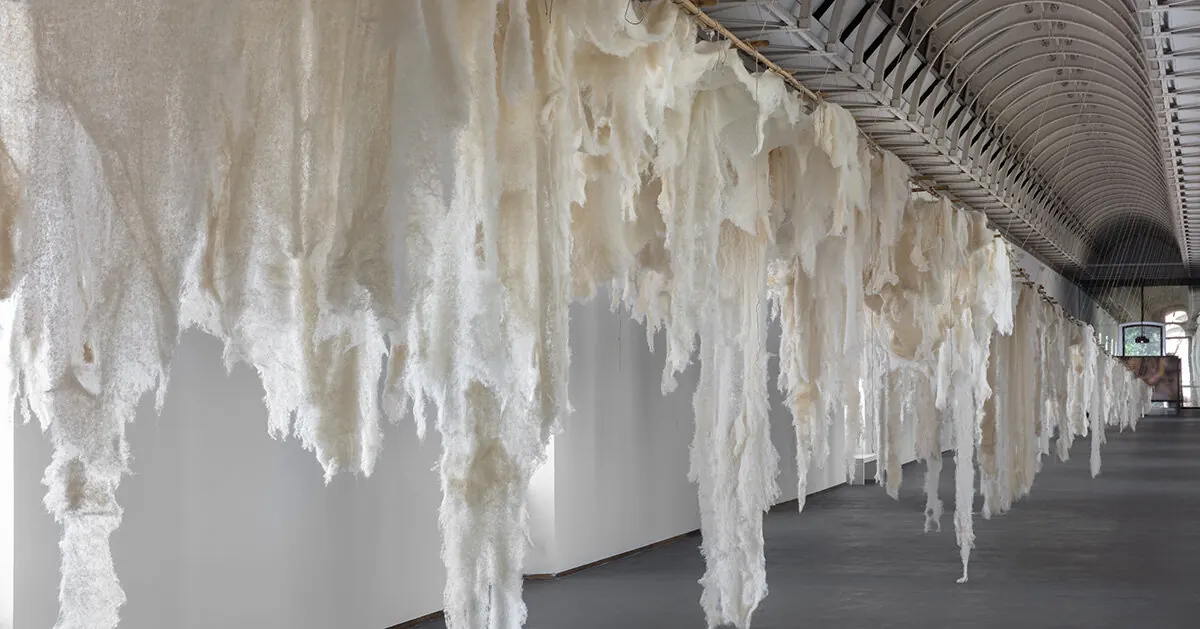
Chilean artist Cecilia Vicuña has unveiled a significant new installation, “El glaciar ido” (The Vanished Glacier), at the Castello di Rivoli Museo d’Arte Contemporanea in Turin, Italy. This marks the artist’s first solo museum exhibition in the country, transforming the historic Manica Lunga gallery into an immersive environment inspired by the ancient Andean quipu.
Vicuña, known for her decades-long practice of Arte Precario—an approach that utilizes ephemeral materials, collective participation, and ancestral methods—has conceived a monumental quipu that stretches over one hundred meters through the gallery. The installation draws on the quipu, a complex system of knotted cords used by Andean civilizations for centuries to record information, as a metaphor for disappearing glaciers, the preservation of Indigenous knowledge, and the ways in which materials carry collective memory.
Por que importa
El glaciar ido
The exhibition itself privileges the idea of being in the same place with the artworks. I would say that this is the case in which art becomes an experience, a true “embodied” experience, curator Marcella Beccaria told designboom.
At the heart of the exhibition is Vicuña’s reimagining of the quipu not just as a historical artifact, but as a living technology. By weaving together indigenous knowledge and collective participation, she aims to reclaim cultural practices that were historically suppressed. The installation is constructed from bamboo canes and strips of untreated wool, including fleece sourced from the indigenous Biellese sheep breed native to the region.
Contexto
This material choice is deliberate, evoking the glaciers that once shaped the Susa Valley, where the museum is located, during the Pleistocene era, and which have since significantly retreated or vanished. Vicuña uses these natural elements to suggest geological time, with the fibers of the wool mirroring the process of melting ice and flowing water, symbolizing the gradual accumulation of memory across generations.
Arte Precario and Collective Participation
Vicuña’s approach to art-making is deeply rooted in ephemeral materials and community involvement. Her work has consistently transformed discarded objects, raw fibers, and natural debris into pieces that exist at the intersection of sculpture, ritual, and performance. For “El glaciar ido,” this philosophy extends beyond the gallery walls.
In line with the artist’s vision of Arte Precario, the exhibition was preceded by a series of spontaneous actions in the public sphere. These included the artist seeking permission from the surrounding mountains before the work was created, gestures that were intentionally undocumented and remain in the collective memory of those who collaborated on the project, such as the installers and the curatorial team. This participatory spirit underscores Vicuña’s belief that craft is intrinsically linked to renewing our relationship with place, community, and the environment.
Poetry, Sound, and Embodied Experience
The installation is further enriched by poetry and sound. Newly written wall poems accompany the visual elements, while videos such as “Semiya (Seed Song)” (2015) and “Quipu Mapocho” (2017) incorporate the artist’s voice, songs, and performances. These elements expand Vicuña’s ongoing exploration of water, memory, and Indigenous knowledge, positioning poetry, language, and gesture as potent carriers of history, akin to fiber or wool.
Curator Marcella Beccaria emphasized the exhibition’s focus on embodied experience: ‘The exhibition itself privileges the idea of being in the same place with the artworks. I would say that this is the case in which art becomes an experience, a true “embodied” experience.’ Visitors are invited to engage with the suspended quipu, allowing the sheer scale and texture of the materials to create a profound connection to the themes explored.
Legacy of the Quipu
The quipu, used across Andean civilizations for millennia, served as a sophisticated method of record-keeping through its intricate system of cords, knots, and colors. Vicuña’s revival of this ancient practice is a powerful statement against the erasure of cultural histories and a celebration of ancestral forms of knowledge. By anchoring the quipu in the specific landscape and history of the Susa Valley, she highlights the universal relevance of these ancient systems in understanding our contemporary environmental and cultural challenges.
The exhibition at Castello di Rivoli serves as a poignant reminder of the fragility of natural landscapes and cultural heritage, offering a space for reflection on time, memory, and the interconnectedness of all things.
Key facts
| Detail | Information |
|—|—|
| Artist | Cecilia Vicuña |
| Exhibition Title | El glaciar ido (The Vanished Glacier / Il ghiacciaio scomparso) |
| Venue | Castello di Rivoli Museo d’Arte Contemporanea, Rivoli, Turin, Italy |
| Dates | April 29th – September 20th, 2026 |
| Materials | Bamboo, untreated wool (including Biellese sheep breed fleece) |
This exhibition offers a compelling example of how contemporary art can engage with historical practices and pressing environmental concerns, aligning with Paionia7’s focus on architecture, urbanism, and sustainable design by highlighting innovative uses of materials and the deep connection between human culture and the natural world.
Source: Designboom, https://www.designboom.com/art/cecilia-vicuna-monumental-quipu-disappearing-world-el-glaciar-ido-marcella-beccaria/
Datos clave
| Punto | Detalle |
|---|---|
| Fuente | Designboom |
| Fecha | 2026-07-09T21:00:34+00:00 |
| Tema | cecilia vicuña weaves a monumental quipu for a disappearing world |
Source
Designboom Original publication: 2026-07-09T21:00:34+00:00
Related news
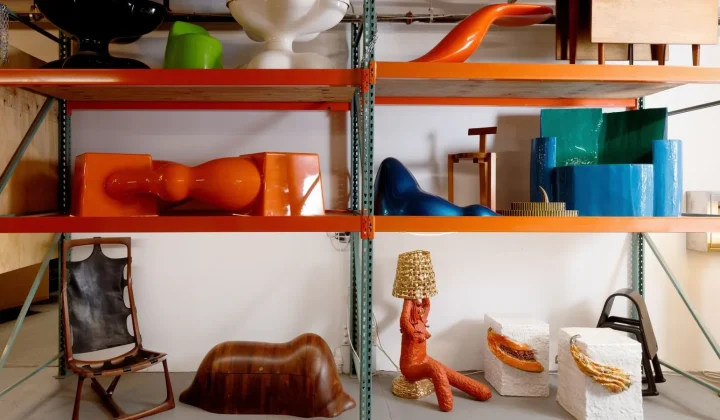
R & Company Opens Its Brooklyn Archive to the Public, Revealing 10 Rare Design Finds
The celebrated design gallery R & Company has opened its 16,000 sq ft storage facility, Building 86, in the Brooklyn Navy Yard…
Read more
SIITUA III to Gather International Researchers on Territory, Urbanism, and Architecture in Lima
The third edition of the International Seminar on Research in Territory, Urbanism, and Architecture (SIITUA III) will take place in Lima, organized…
Read more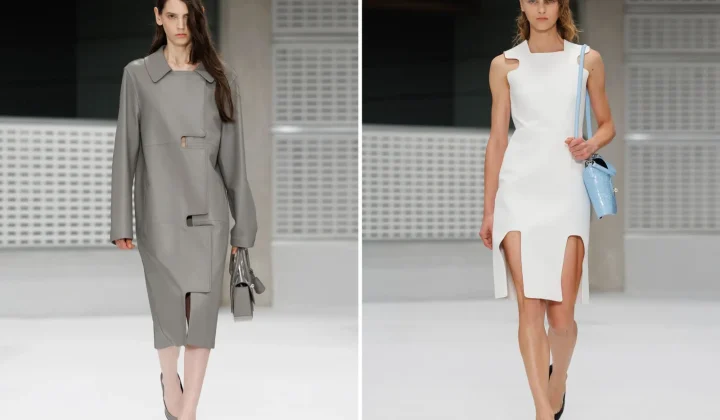
Christopher Kane brings streamlined, heritage-driven vision to Mulberry in London Fashion Week debut
The Scottish designer presented his first collection for the British leather goods house at London Fashion Week, blending sharp tailoring, archival references…
Read more
When Film Directors Become Interior Designers: Guadagnino, Lynch, Anderson and Almodóvar Step Off Screen
From Luca Guadagnino’s Zara Home collection to David Lynch’s Paris club and Wes Anderson’s train carriage, a wave of collaborations is blurring…
Read moreRelated wiki

Adaptive Reuse in Architecture
Reference page for reuse, retrofit, conversion, embodied carbon and design constraints.
Read more