Desert Observatory House: A Tectonic Interpretation of Utah’s Landscape
A new residential proposal in Utah envisions autonomous desert micro-habitats that blend seamlessly with the geological formations of the region, prioritizing off-grid living and minimal environmental impact.
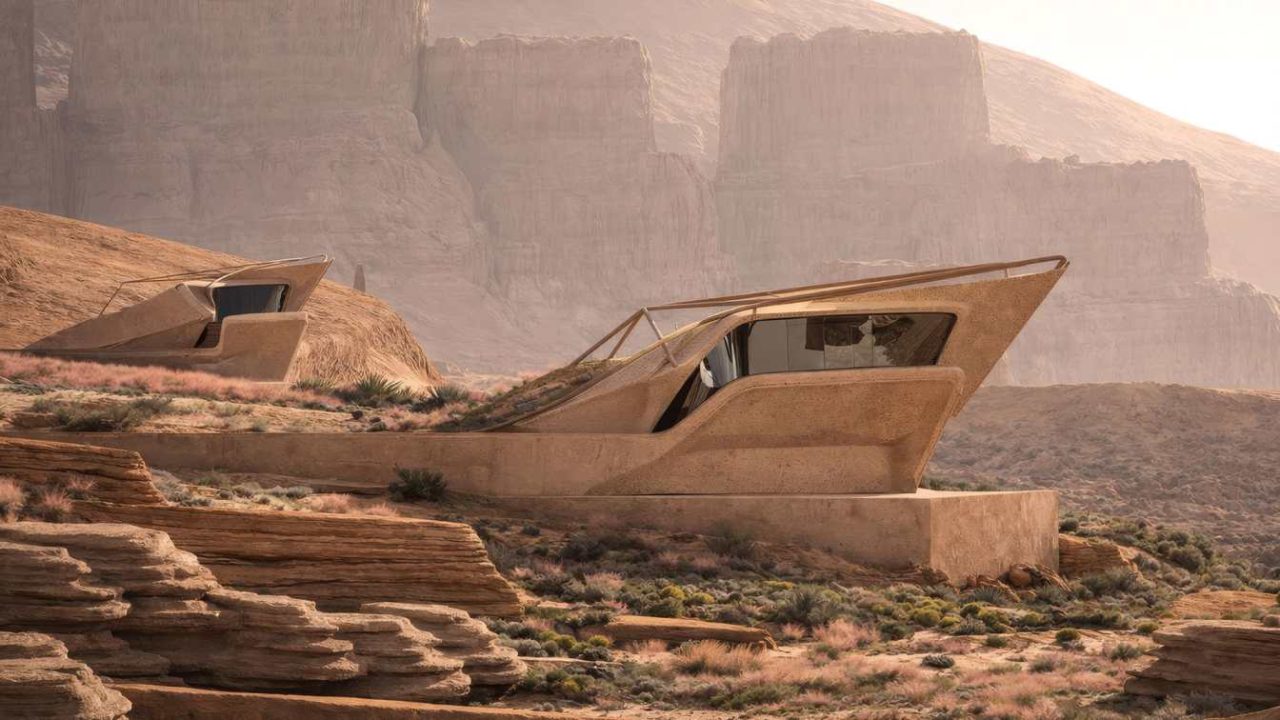
A conceptual project in Utah, dubbed the Desert Observatory House, proposes a new model for autonomous desert living, designed as a tectonic interpretation of the surrounding landscape. The project aims to create micro-habitats that operate off-grid while minimizing their impact on the fragile Utah environment.
This pilot project explores the potential for modular, self-sufficient desert dwellings that could be adapted for similar remote arid regions globally. The architectural approach emphasizes a deep connection to the site, with structures conceived as organic extensions of the desert’s topography rather than impositions upon it.
Habitation as Observation
The design philosophy centers on inhabitation as an act of observation. The spatial organization features semi-subterranean private areas that transition into elevated volumes, enhancing the experiential relationship with the desert environment. This configuration allows residents to be immersed in the landscape while maintaining thermal comfort and privacy.
The residential program spans approximately 150 square meters. Below ground, bedrooms are situated for thermal stability. Above, communal and observational spaces are designed to offer panoramic views of the vast desert terrain. Circulation is facilitated by a gently inclined slab, reinforcing the building’s singular spatial identity and continuity.
Environmental Responsiveness
Responding to the extreme desert climate, the architecture incorporates passive design strategies to significantly reduce energy demand. These include passive solar orientation, deep overhangs, and natural ventilation systems. To maintain the clean, sculptural purity of the structures, photovoltaic panels are not integrated into the buildings themselves. Instead, they are located in a discreet ground-mounted solar field within the surrounding landscape, ensuring optimal solar exposure without compromising architectural integrity.
Energy generated on-site is stored in battery systems, enabling each residential unit to function independently of the grid. Water conservation and recycling strategies are also integral to the project’s environmental sustainability goals.
Geological Mimicry and Materiality
The Habitable Outcrop project, as it is also known, draws inspiration from the region’s topography, translating the geometries of mesas, plateaus, and eroded canyons into a contemporary architectural language. The resulting structures are envisioned as low, elongated prisms articulated by inclined planes that echo the natural protrusions of the rocky terrain.
The design treats the building as a geological condition, an architectural formation that appears to emerge from the desert itself. This approach is further reinforced by the material palette, which is restrained and selected for durability, thermal performance, and integration with the desert landscape.
The construction strategy utilizes a layered rammed earth technique. Locally sourced soil is compacted within formwork to create stratified walls that visually resemble natural sedimentary rock. Subterranean volumes are excavated directly into the terrain, while exposed volumes extend outward using a hybrid system of rammed earth and concealed steel reinforcement, allowing for large openings and cantilevered forms.
The material strategy prioritizes environmental resilience and visual integration. The chromatic spectrum of Utah earth informs the architectural surfaces, producing textures that evoke the rugged qualities of natural erosion. Partially embedded within the ground, the structure merges with the existing topography, benefiting from the thermal mass of the earth for passive cooling.
Experiential Intensity
The architectural volumes are conceived as dynamic entities, not static objects. Inclined planes, sharp geometries, and cantilevered elements create a sense of tension, suggesting forms captured in a moment of geological transformation. The relationship between architecture and the ground is central, with volumes emerging from the earth, aligning with natural slopes, or appearing to lightly hover above the terrain.
The design pursues an intensity of form and spatial relationships that provokes heightened perceptual awareness. Beauty is found not in serenity but in contrast, friction, and unpredictability, mirroring the raw character of the desert landscape. The Desert Observatory House aims to construct an intermediate territory between the natural and the artificial, where habitation becomes a contemplative interface with the desert.
This project offers a compelling vision for architects and designers, demonstrating how buildings can act as co-authors of form with the landscape. It provides a model for sustainable, off-grid living that respects fragile ecosystems and enhances the human experience of place through deliberate, geomorphologically responsive design.
Key facts
- Project Type: Conceptual Residence/Observatory
- Location: Utah, USA
- Program Area: Approx. 150 sqm
- Construction: Layered rammed earth, hybrid steel system
- Sustainability: Off-grid, passive solar, water conservation
Source: Amazing Architecture – Omen | A Tectonic Interpretation Of The Desert Landscape Desert Observatory House | Utah – https://amazingarchitecture.com/visualization/omen-a-tectonic-interpretation-of-the-desert-landscape-desert-observatory-house-utah
Source
Amazing Architecture Original publication: 2026-05-22T22:25:29+00:00
Related news
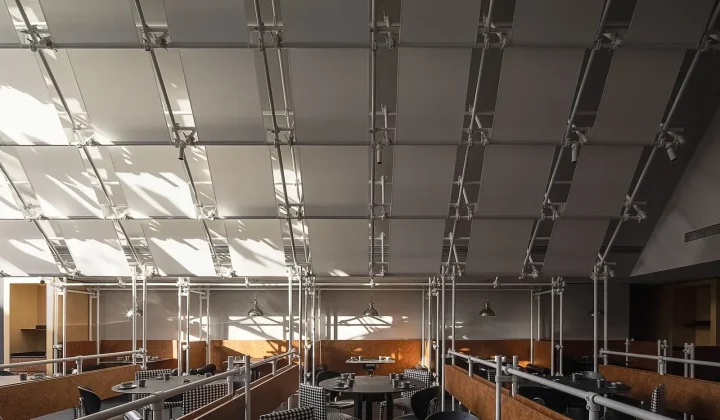
Scaffolding as Interior Architecture: Adaptable Systems Challenge the Divide Between Temporary and Permanent
A new article by Jonathan Yeung examines how modular scaffolding systems, from steel frames to Dieter Rams’ shelving, demonstrate that longevity in…
Read more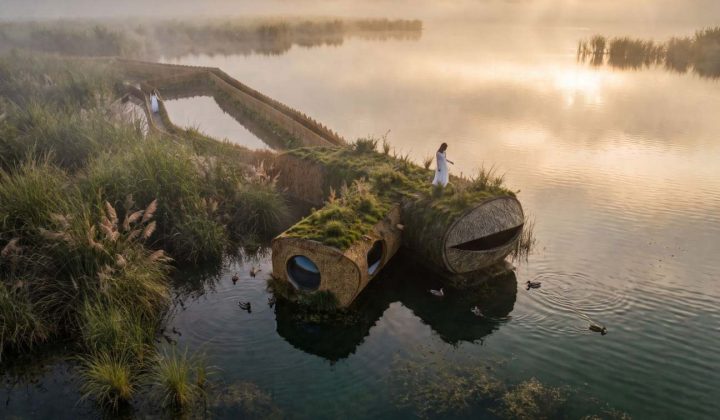
MIV Architects Proposes Wetland Pavilion That Prioritizes Non-Human Habitats Over Human Comfort
The Spanish firm’s “Nidos de Agua” concept for the Albufera natural park in Valencia aims to rebalance the relationship between building and…
Read more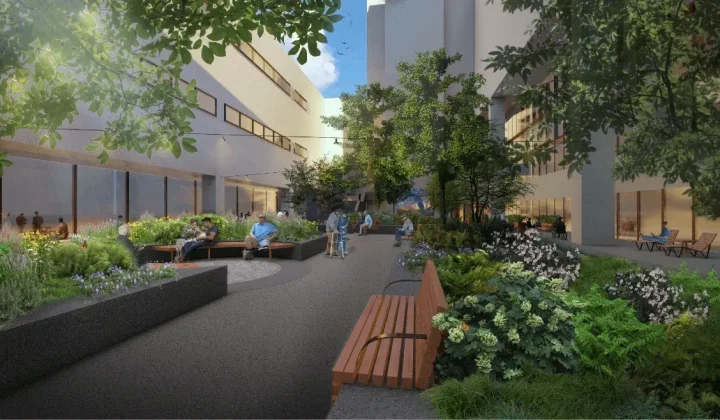
Nelson Byrd Woltz Begins Construction on Restorative Eagle Courtyard at Walter Reed Medical Center
Construction has started on a redesigned Eagle Courtyard at Walter Reed National Military Medical Center, led by Nelson Byrd Woltz Landscape Architects.…
Read more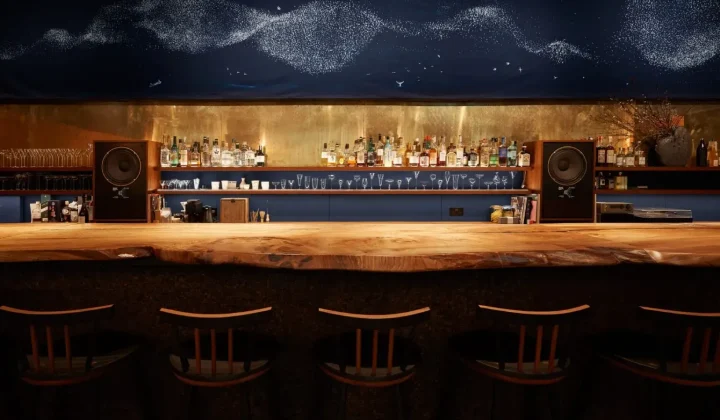
London’s listening bar boom reflects a deeper shift in hospitality design and music culture
A wave of Japanese-inspired listening bars is reshaping London’s nightlife, but owners and critics are asking whether the concept can survive commercial…
Read moreRelated wiki
Adaptive Reuse in Architecture
Reference page for reuse, retrofit, conversion, embodied carbon and design constraints.
Read more