
Emergency C-Sections Rise Sharply in England, Now One in Four Births
BBC analysis reveals a significant increase in emergency caesarean births in England over the past five years, prompting expert concern and highlighting potential systemic pressures.
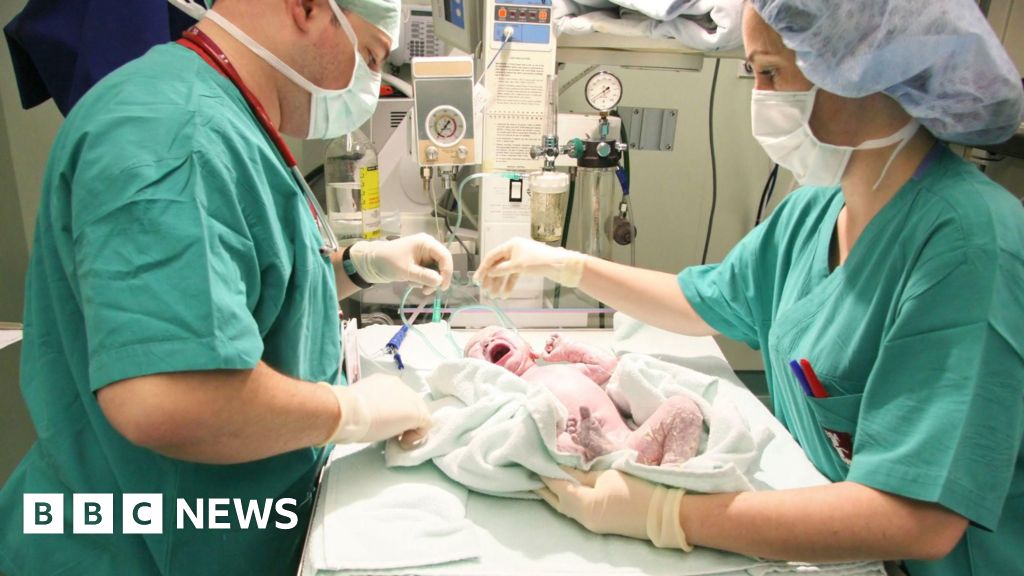
A significant shift in childbirth practices is occurring in England, with one in four births now delivered via emergency caesarean sections, according to BBC analysis. This marks an eight percentage point increase over the last five years, a trend that has also seen a rise in elective C-sections and a notable fall in unassisted vaginal births. Experts express concern over the rapid change, noting that it is not mirrored in other European countries and that the reasons behind the increase remain unclear.
Shift in Birth Methods
The data indicates a substantial decline in vaginal births without the use of instruments, dropping from over half of all deliveries to 43%. Concurrently, planned caesarean sections now account for 20% of births, while emergency C-sections have climbed from 18% to 26%. This contrasts with other parts of the UK, where emergency C-section rates are lower: 22% in Scotland, 20% in Wales, and 16% in Northern Ireland. Internationally, England’s ranking for C-section births has risen from 14th to 9th out of 42 countries between 2020 and 2025, with other nations not experiencing such sharp increases.
Unclear Explanations and Potential Factors
The National Health Service (NHS) does not publicly disclose specific reasons for emergency C-sections, and experts are struggling to pinpoint a singular cause for the surge. However, some healthcare professionals suggest that a climate of fear within maternity units and among pregnant individuals may be contributing to the increased number of procedures. The Royal College of Obstetricians and Gynaecologists notes that pressure on staff and operating theatres means the system is “really struggling” to meet demand.
NHS England maintains that “decisions are made by considering individual circumstances and clinical advice to ensure the safest and most appropriate approach for each birth.” Despite the rise in emergency C-sections, stillbirths and neonatal mortality rates have remained relatively stable. This has led to concerns, as Professor Shakila Thangaratinam of the University of Liverpool stated, “An increase in emergency caesarean sections poses concern if these are not accompanied by a corresponding decrease in stillbirths, newborn and maternal complications.” She emphasized the need for better data to understand the reasons behind the operations.
Influence of Maternity Scandals and Fear
Another contributing factor may be the legacy of high-profile maternity scandals in areas like Morecambe Bay, East Kent, and Shrewsbury and Telford. These cases, which involved tragic outcomes for mothers and babies, highlighted instances where caesareans were reportedly avoided or delayed. With ongoing inquiries in Nottingham and Leeds likely to uncover similar issues, there is a perceived pressure to avoid criticism. Professor Marian Knight suggests that “We also need to recognise the potential impact of rising fear among women, families and staff, which may lead more to choose or to recommend caesarean birth.” This sentiment is echoed by other health professionals who fear becoming the focus of the next scandal. The increase in legal claims against the NHS for maternity problems, which often question why caesareans were not performed sooner, further supports this observation, as doctors are rarely criticized for performing an early C-section.
Demographic Disparities
Professor Thangaratinam also highlighted potential racial disparities, noting that while the national average for emergency C-sections is one in four births, it rises to about one in three for Black and Asian mothers. Professor Knight is investigating if factors such as age, obesity, and pre-existing medical conditions play a role, alongside the impact of maternity scandals.
Economic Considerations
The cost of childbirth also varies significantly. A routine vaginal delivery is estimated to cost around £4,800, a planned C-section approximately £6,000, while an emergency C-section could cost close to £9,000, according to health economist Professor Ed Wilson.
Systemic Pressures and Future Capacity
Dr. Alison Wright, president of the Royal College of Obstetricians and Gynaecologists, expressed concern about the capacity of maternity services to adapt to the rising number of emergency C-sections, particularly the shortage of dedicated obstetric theatres. “If we do not invest in our workforce and in our operating theatre capacity, we may be in a position in the future where we cannot do the emergency caesareans we need to,” she warned.
Datos clave
| Aspecto | Dato |
|—|—|
| Tasa de cesáreas de emergencia | 26% |
| Tasa de partos vaginales sin instrumentos | 43% |
| Tasa de cesáreas planificadas | 20% |
| Aumento en 5 años | 8 puntos porcentuales |
The implications of this trend extend beyond immediate patient care. For a readership interested in urbanism, housing, and sustainable design, the increasing reliance on complex medical interventions like C-sections can subtly influence the design of healthcare facilities and urban planning considerations for maternal health services. While not a direct architectural concern, shifts in public health outcomes can inform requirements for hospital infrastructure, accessibility, and the integration of healthcare within community planning.
Fuente: BBC News, https://www.bbc.com/news/articles/cqxpxjrqd1po
Datos clave
| Punto | Detalle |
|---|---|
| Fuente | bbc.co.uk |
| Fecha | 2026-06-04T23:41:16+00:00 |
| Tema | One in four births in England is now emergency caesarean, BBC analysis shows |
Source
bbc.co.uk Original publication: 2026-06-04T23:41:16+00:00
Related news

Handwoven Teak and Cord Outdoor Seating Debuts from Masaya and Abril Zepeda
Nicaraguan furniture brand Masaya has introduced two new handcrafted outdoor chairs — a rocking chair and a lounge chair — designed by…
Read more
Place in Mind: Hendricks Churchill Launches Hospitality Group to Revive Historic Properties
The architecture and interior design studio Hendricks Churchill has launched Place in Mind, a new hospitality group focused on acquiring, restoring, and…
Read more
Adalberto Dias Architects Complete Restoration of Lisbon’s Patriarchal Cathedral and Archaeological Center
The restoration of the Sé de Lisboa by Adalberto Dias Arquitecto integrates a new archaeological center, preserved cloisters, and seven centuries of…
Read more
Vantieghem Talebi’s ‘House of Cards’ Brings Timber Geometry to Belgian Family Home
A new family house in Belgium by US- and Swiss-based practice Vantieghem Talebi uses a steeply pitched, card-house-inspired form clad in Douglas-fir…
Read moreRelated wiki

Adaptive Reuse in Architecture
Reference page for reuse, retrofit, conversion, embodied carbon and design constraints.
Read more