F36 House by Estudio Tecalli Integrates Art and Nature in Puebla
Estudio Tecalli completes a residence in Mexico's brick-producing region, designed for a performance artist to blend living and creative practices with the surrounding natural landscape.
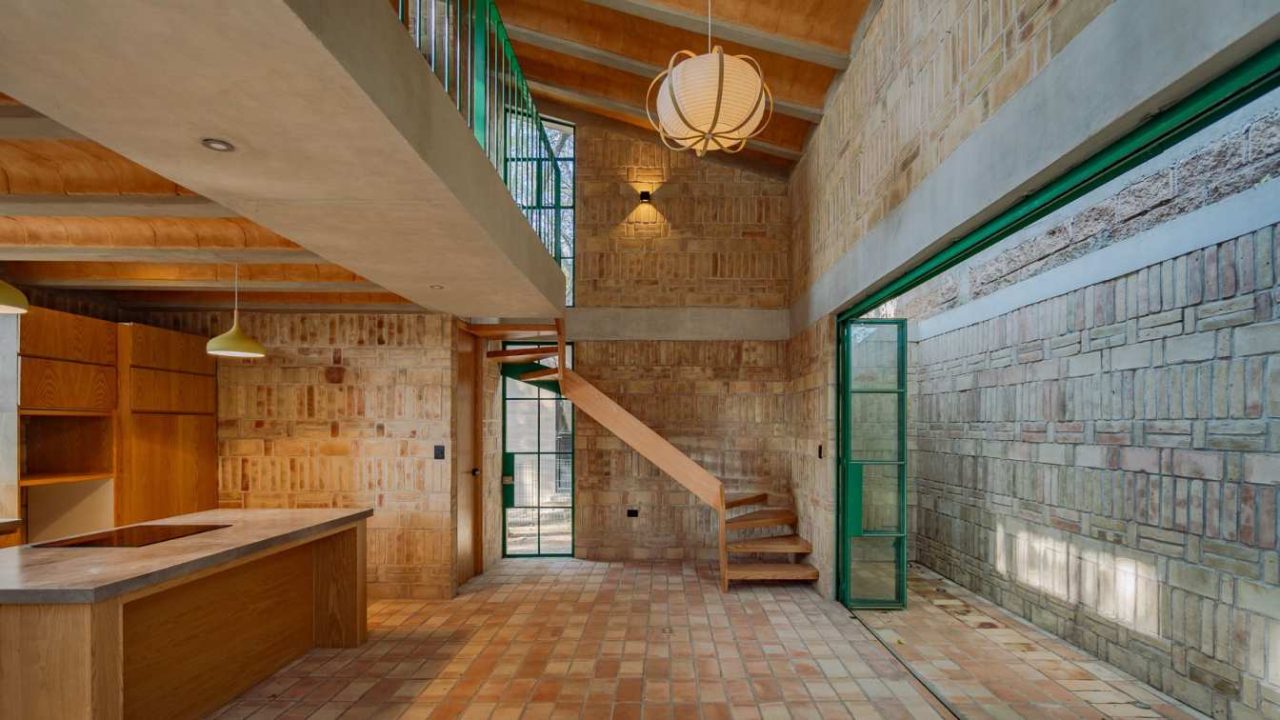
Estudio Tecalli has completed the F36 House in San Cristóbal Tepontla, a town near San Pedro Cholula in Puebla, Mexico. This project marks the firm’s second engagement in a region renowned for its significant brick production, characterized by traditional brick factories and expansive clay-drying fields. The house is designed as a dwelling for a performance artist and choreographer, intended to integrate her professional activities within a private living space that maintains a strong connection to nature.
The site is situated within a gated community that has seen rapid development with commercial housing prototypes common in Central Mexico. The immediate surroundings present a striking contrast between the imposing natural presence of Zapotecas Hill, a popular local landmark, and the escalating urban growth driven by real estate speculation in the Zerezotla area. The plot itself, measuring 110m², previously served as a plant nursery and an event garden, retaining a rich natural character.
Design Concept and Spatial Organization
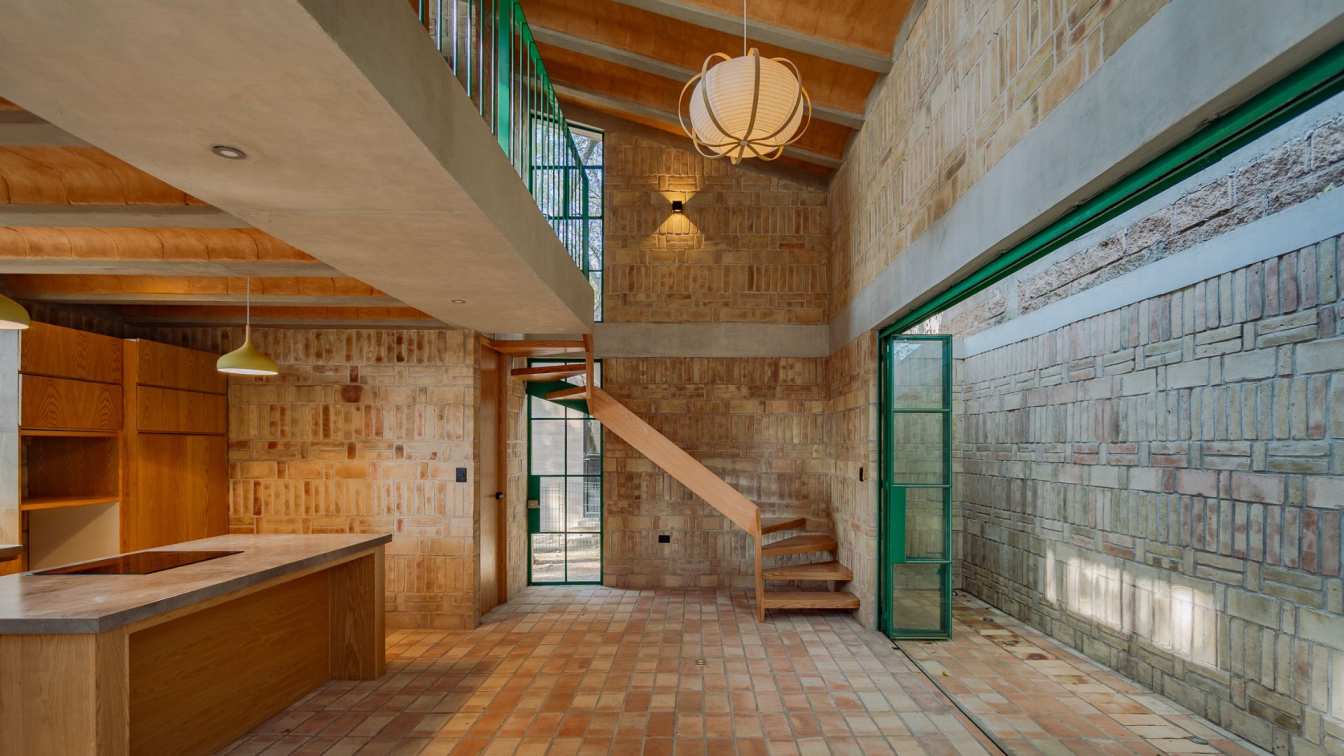
The F36 House was conceived as a dual-purpose environment, serving as both a private residence and a functional space for artistic endeavors. A key objective was to ensure constant contact with nature and the diurnal cycles, influencing the spatial arrangement. The ground floor features an open-plan layout, with the kitchen and service areas discreetly separated from the main living space. This living area is designed for flexibility, capable of being entirely cleared for solo dance practice or for hosting visitors.
The upper floor houses a single bedroom with a walk-in closet and a full bathroom. The overall design philosophy for the dwelling embraces a mono-space concept, aiming to enhance the sense of spaciousness even within the compact areas. This approach ensures that smaller zones retain an expansive feel, promoting a fluid and adaptable living experience.
Materiality and Construction
The architectural approach to the F36 House is rooted in materiality and brutalism. The entire building envelope, both exterior and interior, is finished with white brick, locally known as “Ajalpan brick.” This material was chosen for its notable thermal and acoustic qualities, contributing significantly to the house’s character.
Structural elements, such as tie-columns and columns, are concealed within the brick walls. Ribs are incorporated into the facade to create additional space within the walls for reinforced concrete components. For the window frames, ironwork was selected as a deliberate homage to mid-20th-century Mexican modern architecture, celebrated for its memorable and attractive window designs.
The ceiling slabs utilize a system of prestressed joists and open blocks. This system is finished with a natural pigment derived from the dust of the bricks used in the load-bearing walls, effectively repurposing residual waste material from the construction process. This choice not only adds a unique aesthetic finish but also underscores a commitment to resource efficiency and material circularity.
Impact and Context
The F36 House offers a compelling case study in how contemporary residential architecture can respond to specific programmatic needs and local material contexts. For architects and designers, it presents an example of integrating artistic practice into living spaces and employing traditional materials like Ajalpan brick in a refined, brutalist aesthetic. The project’s emphasis on natural ventilation, thermal comfort, and the use of recycled materials aligns with growing interest in sustainable design practices within the region.
For residents of Puebla and those interested in urban development, the house provides a counterpoint to the prevalent speculative housing models by demonstrating a more sensitive approach to site integration and design quality. The project highlights the potential for architectural interventions to acknowledge and engage with both the natural landscape and the industrial heritage of the area. It also offers an insight into how performance artists and creatives can shape their living environments to support their work, blurring the lines between domesticity and artistic production.
The use of Ajalpan brick, a material deeply tied to the region’s identity, showcases its versatility beyond its traditional applications. The brutalist aesthetic, combined with the warmth and texture of the brick, creates a dialogue between raw materiality and refined spatial design. The integration of structural elements within the brickwork and the use of recycled brick dust for ceiling finishes are innovative aspects that contribute to the project’s unique character and its resource-conscious approach.
Key facts
- Project Name: F36 House
- Architect: Estudio Tecalli
- Location: San Cristóbal Tepontla, Puebla, Mexico
- Building Type: Residential
- Primary Material: White brick (Ajalpan brick)
The F36 House stands as a testament to thoughtful design that balances the demands of a specific user program with a deep respect for local context and materials. Estudio Tecalli’s intervention in San Pedro Cholula’s brick-producing landscape offers a unique living and working environment that is both aesthetically striking and functionally adaptable. The project’s exploration of brutalist principles, its commitment to material innovation, and its seamless integration with the natural surroundings position it as a significant contribution to contemporary residential architecture in Mexico.
Source: Amazing Architecture – https://amazingarchitecture.com/houses/f36-house-san-pedro-cholula-puebla-mexico-by-estudio-tecalli
Source
Amazing Architecture Original publication: 2026-05-22T17:16:00+00:00
Related news

When Film Directors Become Interior Designers: Guadagnino, Lynch, Anderson and Almodóvar Step Off Screen
From Luca Guadagnino’s Zara Home collection to David Lynch’s Paris club and Wes Anderson’s train carriage, a wave of collaborations is blurring…
Read more
Jesus Mari Lazkano Examines Changing Landscapes Through Painting and Animated Film at Basque Luxury Studio
The Basque artist’s exhibition ‘Azken Natura’ brings together six large-scale paintings and a 22-minute animated film that traces the melting of the…
Read more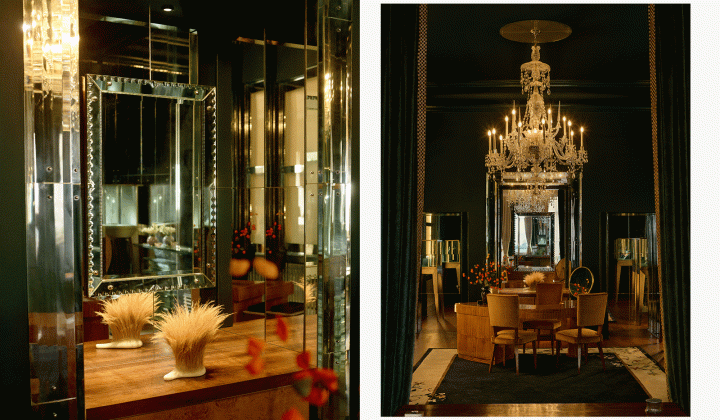
Glenn Spiro opens intimate jewellery atelier in Mayfair with designer Valerie Name Bolaño
The London jewellery house’s new boutique at 26 Bruton Street blends antiques, bespoke furniture and a monochrome palette to create a residential…
Read more
RIBA International Prize 2026 Shortlist Announced: Four Projects Vie for World’s Best Building
The Royal Institute of British Architects has revealed four projects competing for the 2026 International Prize, marking the award’s tenth anniversary with…
Read moreRelated wiki
Adaptive Reuse in Architecture
Reference page for reuse, retrofit, conversion, embodied carbon and design constraints.
Read more