
Hermès Beijing Flagship Unveiled with Parametric Ceramic Veil by Mamou-Mani
The new Hermès flagship in Beijing's Sanlitun district features a distinctive rose-pink and terracotta ceramic facade, a collaboration between RDAI and Mamou-Mani that blends digital fabrication with traditional craft.
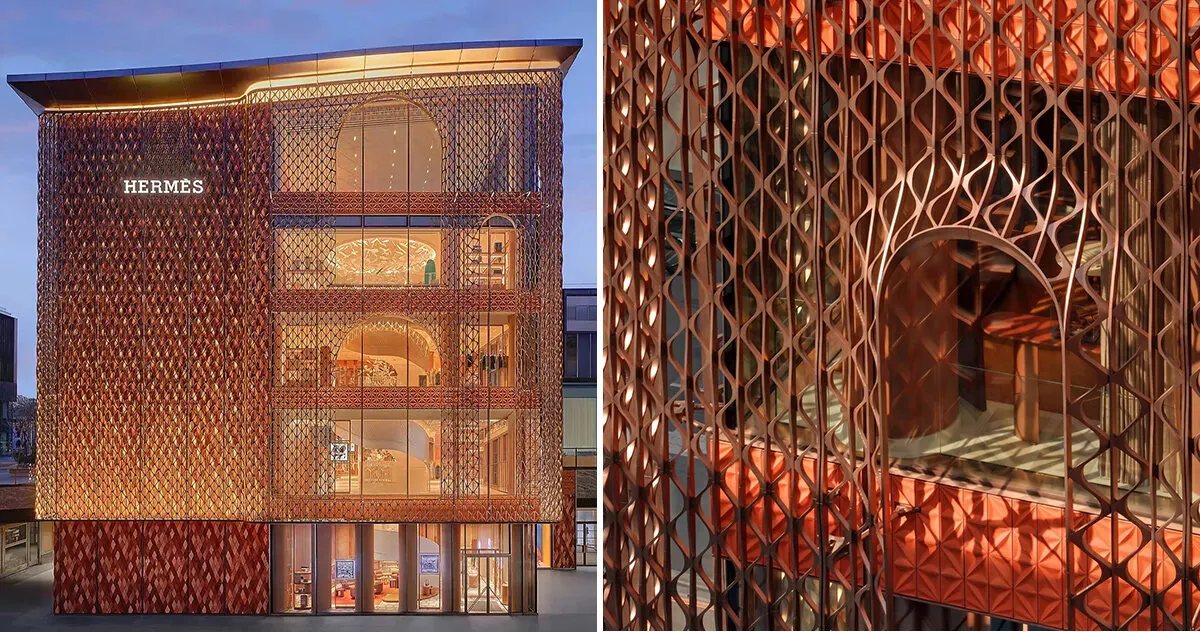
The Hermès flagship store in Beijing’s bustling Sanlitun district has been reimagined with a striking new facade that merges cutting-edge digital design with the warmth of traditional materials. Designed by RDAI, the five-story building is now enveloped in a rose-pink and terracotta ceramic veil, a collaborative effort with Mamou-Mani Architects, who brought their expertise in computational design and fabrication to the project.
Parametric Facade
Mamou-Mani’s contribution centers on a semi-transparent ceramic layer that softens the building’s glass volume and engages with the urban environment. From a distance, the facade presents a continuous, warm volume, but upon closer inspection, it reveals a patterned mesh of modular ceramic components. This intricate arrangement, developed using parametric design, allows light to filter through, creating depth and a dynamic interplay of shadow and form. The tiles are strategically positioned, pushed and pulled to create moments of transparency across the building’s surface.
Materiality and Craftsmanship
The facade’s construction involved digitally developed modules. Curved elements were created using 3D-printed positives for mold-making, a process that integrates digital fabrication with a material language often associated with handcraft. This approach ensures a tactile quality, avoiding the perceived coldness that can sometimes accompany computationally designed facades. The ceramic’s inherent depth, glaze, and repetition contribute to a unique architectural expression that feels both contemporary and grounded. Diamond and rhombic ceramic nosing are incorporated at the edges, preventing the surface from sitting flat against the glass and adding further texture and visual interest.
A Nod to Beijing’s Heritage
While embracing modern design and technology, RDAI drew inspiration from Beijing’s architectural heritage. The curved glazed rooflines subtly reference the nearby Forbidden City through their color, profile, and material finish, harmonizing with the surrounding urban context. The rose-pink and terracotta tones echo the ceramic roofs and sun-warmed masonry of traditional structures, offering a contemporary interpretation rather than a direct historical quotation. This thoughtful integration ensures the building feels connected to its location while maintaining a distinct modern identity.
Functional Design
Beyond its aesthetic appeal, the ceramic veil incorporates practical considerations. Mamou-Mani developed the facade with removable panels, allowing for maintenance and longevity. This pragmatic approach ensures that the building’s striking exterior can be preserved over time. The facade’s design is conceived as a system working in concert with the roofline and the filtered interior light, creating an architectural effect that is both visually engaging and functionally integrated.
The project represents a significant application of Mamou-Mani’s fabrication research within the luxury retail sector. For Hermès, this collaboration transforms a flagship store into a building with a more prominent and engaging public presence, where the ceramic skin acts as a primary design element, filtering daylight, connecting with the city’s built history, and imbuing the store with a warmer architectural character.
Key facts
| Feature | Detail |
|---|---|
| Project Name | Hermès Beijing Sanlitun Flagship |
| Building Architect | RDAI |
| Facade Architect | Mamou-Mani |
| Location | Sanlitun District, Beijing, China |
| Primary Material | Rose-pink and terracotta ceramic tiles |
| Design Approach | Parametric design, digital fabrication, integration of heritage |
This development is of interest to our readers as it showcases an innovative application of parametric design and digital fabrication within a high-profile retail architecture project. The fusion of advanced technology with traditional materials and a sensitive approach to local context offers valuable insights into contemporary architectural trends, particularly in the realm of luxury brand environments.
Source: Designboom, https://www.designboom.com/architecture/hermes-beijing-flagship-rose-pink-ceramic-veil-mamou-mani-rdai/
Source
Designboom Original publication: 2026-06-29T20:00:11+00:00
Related news
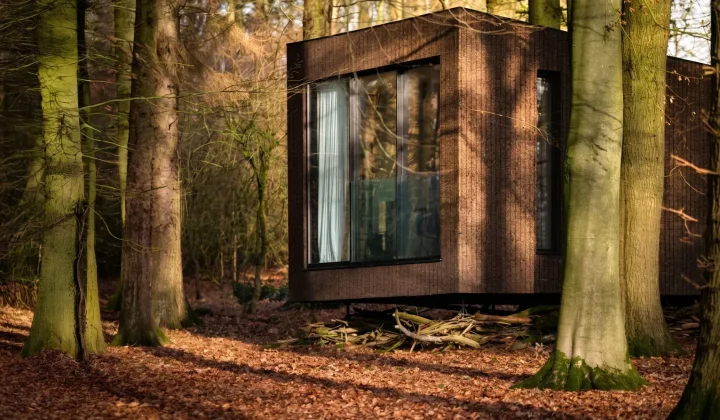
Koto launches Haku, a mobile prefab hotel suite built on a wheeled chassis to bypass UK planning restrictions
UK architecture studio Koto has unveiled Haku, a fully mobile prefabricated suite that legally qualifies as a caravan, allowing landowners and hotel…
Read more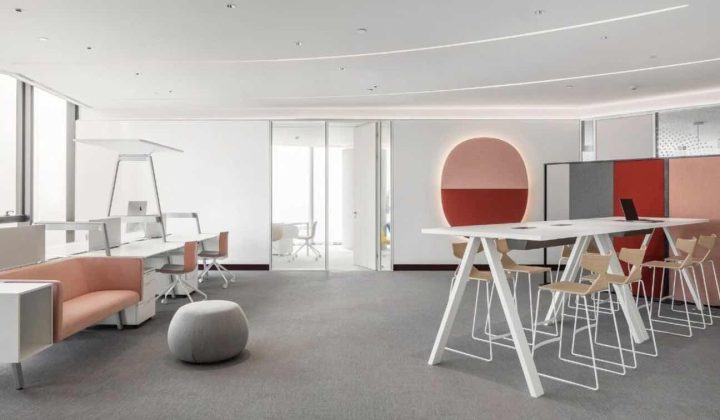
HONG Designworks Completes Private Office in Xi’an That Balances Memory, Materiality, and Long-Term Use
The Xi’an office by HONG Designworks integrates a folded steel staircase, retained furniture from a previous workspace, and a restrained purple-gray palette…
Read more
Handwoven Teak and Cord Outdoor Seating Debuts from Masaya and Abril Zepeda
Nicaraguan furniture brand Masaya has introduced two new handcrafted outdoor chairs — a rocking chair and a lounge chair — designed by…
Read more
Place in Mind: Hendricks Churchill Launches Hospitality Group to Revive Historic Properties
The architecture and interior design studio Hendricks Churchill has launched Place in Mind, a new hospitality group focused on acquiring, restoring, and…
Read moreRelated wiki

Adaptive Reuse in Architecture
Reference page for reuse, retrofit, conversion, embodied carbon and design constraints.
Read more