Next Office Completes Gable Villa, Blending Tradition with Modern Framework in Royan, Iran
Next Office—Alireza Taghaboni has completed the Gable Villa in Royan, Iran, a residential project that uniquely combines elements of traditional regional architecture with a contemporary orthogonal structural system. The design strategically integrates an inclined roof structure with a clear spatial organization tailor
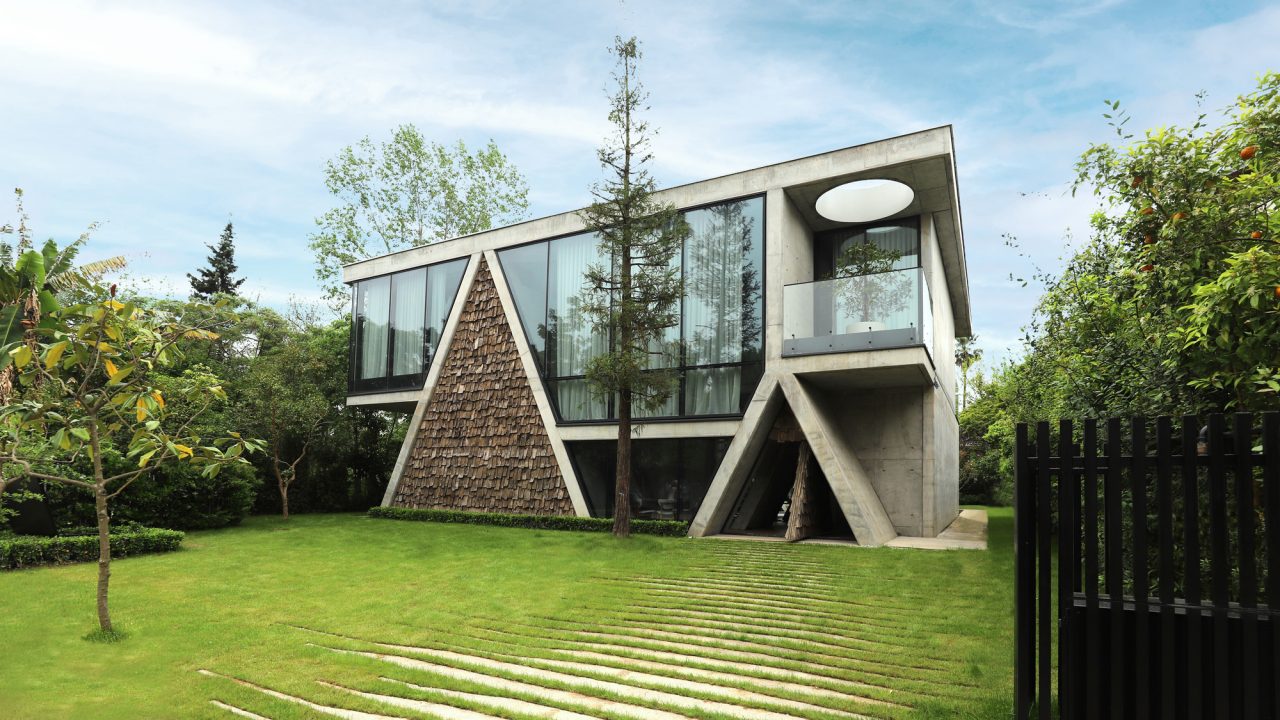
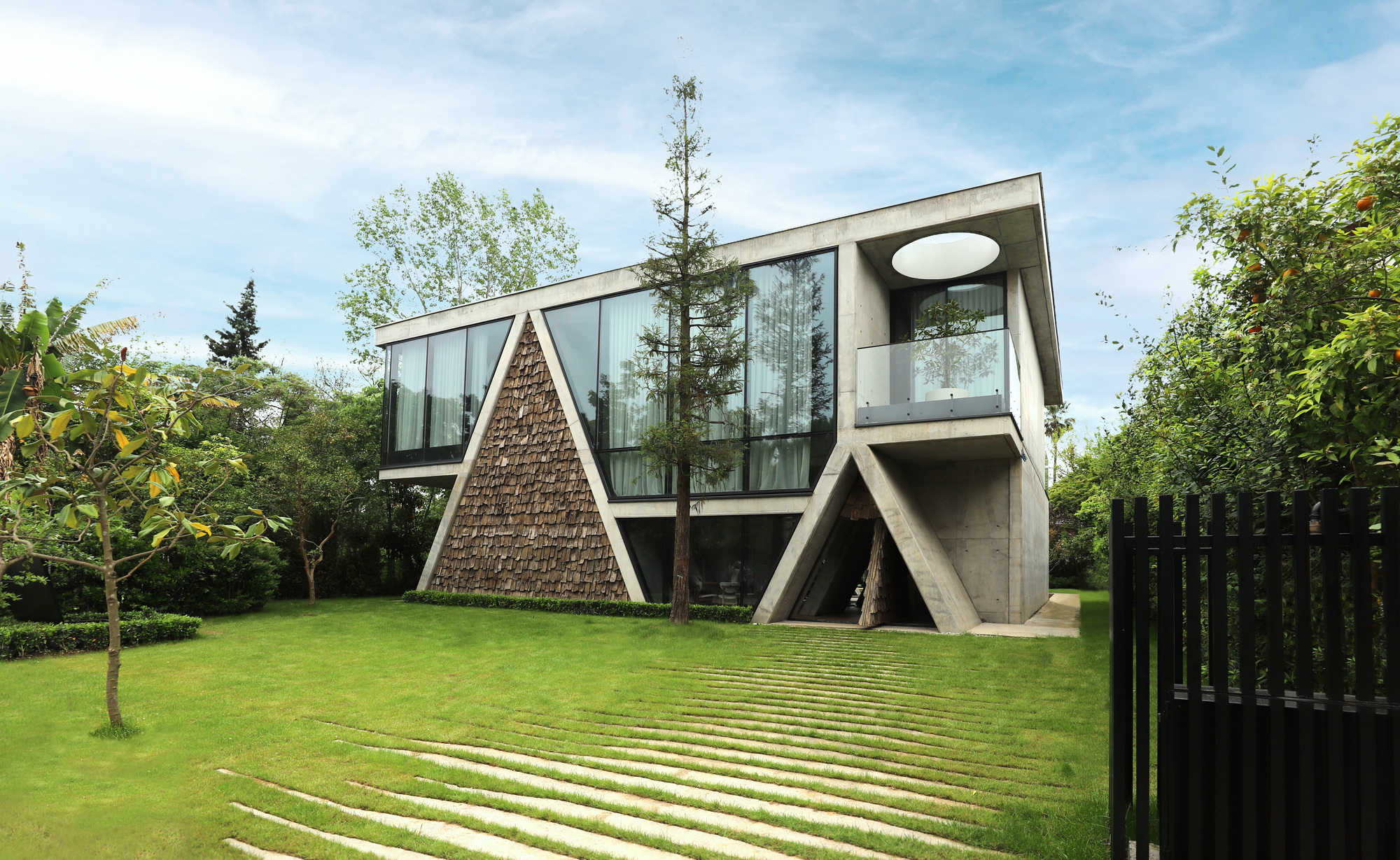
Next Office—Alireza Taghaboni has announced the completion of the Gable Villa, a new residential project located in Royan, Iran. The villa is notable for its innovative structural and spatial approach, which merges an inclined roof form, reminiscent of traditional regional architecture, with a contemporary orthogonal framework. This hybrid design strategy not only defines the building’s aesthetic but also dictates its internal organization, creating an efficient and responsive living environment.
The project’s design philosophy centers on an “economy of space,” where the structural system directly influences the spatial layout. Public areas, requiring greater ceiling heights, are strategically located on the lower level, maximizing volumetric efficiency and natural light integration. This thoughtful arrangement reflects a nuanced understanding of both architectural heritage and modern living requirements.
Architectural Concept and Hybridization
The core concept behind the Gable Villa is a hybridization of two distinct architectural languages. The inclined structure, drawing inspiration from the gabled roofs prevalent in the region’s traditional buildings, provides a contextual link to its surroundings. This traditional element is then integrated with an orthogonal framework, which introduces a contemporary structural logic and spatial clarity. This fusion creates a dialogue between past and present, offering a fresh interpretation of residential architecture in the Iranian context. The interplay between these forms is not merely aesthetic; it is fundamental to the villa’s structural integrity and its spatial narrative.
The choice to combine these elements allows for a dynamic interplay of volumes and light. The inclined planes introduce unique ceiling geometries and opportunities for varied fenestration, while the orthogonal framework provides structural stability and defines clear circulation paths. This approach ensures that the building is deeply rooted in its place while simultaneously advancing a modern architectural discourse.
Spatial Organization and Programmatic Efficiency
A key aspect of the Gable Villa’s design is its intelligent spatial organization. The architects describe this as an “economy of space,” where the functional requirements of the building drive its volumetric distribution. Public zones, such as living and dining areas, are positioned on the lower level. This decision is driven by the need for increased height in these communal spaces, which benefits from the expansive volume created by the inclined roof. This configuration not only enhances the sense of openness but also optimizes natural ventilation and daylight penetration.
Conversely, more private areas, such as bedrooms, are likely situated in areas where lower ceiling heights might be more appropriate or where the orthogonal framework provides a more intimate scale. This layered approach to spatial planning ensures that each function within the villa is accommodated in a manner that maximizes comfort and utility, reflecting a user-centric design philosophy. The clear division between public and private realms, articulated through structural and volumetric changes, contributes to a legible and intuitive spatial experience for the inhabitants.
Key facts
- Location: Royan, Iran
- Architect: Next Office—Alireza Taghaboni
- Project Type: Residential (Villa)
- Architectural Style: Hybrid of traditional inclined structure and orthogonal framework
Materiality and Construction
While the source context is concise, the mention of concrete as a material suggests a robust and contemporary approach to construction. Concrete, known for its versatility and structural capabilities, likely plays a significant role in realizing both the inclined and orthogonal elements of the villa. Its use can contribute to both the aesthetic character and the long-term durability of the building. The integration of concrete within the design allows for clean lines and a modern finish, contrasting with or complementing the traditional gabled form.
The choice of materials is critical in bridging the gap between traditional forms and contemporary execution. Concrete, in this context, can be manipulated to create sharp edges and smooth surfaces, enhancing the modern aspects of the design, while also providing the structural support necessary for the complex geometry of the roof. The interplay of light on these surfaces would further define the spatial experience, highlighting the architectural forms.
Impact on Regional Architecture
The Gable Villa represents a significant contribution to contemporary architecture in Iran, specifically in how it respectfully engages with regional architectural traditions while pushing the boundaries of modern design. By reinterpreting the gabled roof—a common feature in many climatic regions for shedding rain and snow—Next Office demonstrates that traditional forms can be integrated into innovative structural solutions without resorting to pastiche. This project offers a model for designers seeking to create buildings that are both culturally resonant and formally progressive.
For architects, designers, and students of architecture, the Gable Villa provides a compelling case study in resolving the tension between contextual sensitivity and modern architectural expression. It illustrates how a deep understanding of local vernacular can inform a contemporary design process, leading to outcomes that are both unique and universally appealing. The emphasis on spatial economy and structural clarity also offers valuable lessons in efficient and thoughtful design.
Source: ArchDaily, https://www.archdaily.com/1041652/the-gable-villa-next-office-alireza-taghaboni
Source
ArchDaily Original publication: 2026-05-19T19:00:00+00:00
Related news

When Film Directors Become Interior Designers: Guadagnino, Lynch, Anderson and Almodóvar Step Off Screen
From Luca Guadagnino’s Zara Home collection to David Lynch’s Paris club and Wes Anderson’s train carriage, a wave of collaborations is blurring…
Read more
Jesus Mari Lazkano Examines Changing Landscapes Through Painting and Animated Film at Basque Luxury Studio
The Basque artist’s exhibition ‘Azken Natura’ brings together six large-scale paintings and a 22-minute animated film that traces the melting of the…
Read more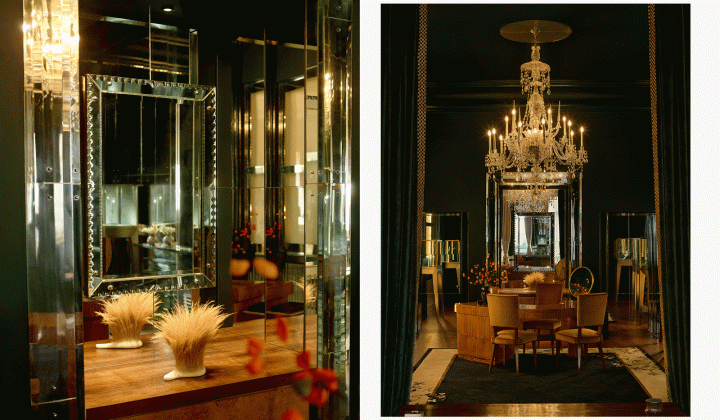
Glenn Spiro opens intimate jewellery atelier in Mayfair with designer Valerie Name Bolaño
The London jewellery house’s new boutique at 26 Bruton Street blends antiques, bespoke furniture and a monochrome palette to create a residential…
Read more
RIBA International Prize 2026 Shortlist Announced: Four Projects Vie for World’s Best Building
The Royal Institute of British Architects has revealed four projects competing for the 2026 International Prize, marking the award’s tenth anniversary with…
Read moreRelated wiki
Adaptive Reuse in Architecture
Reference page for reuse, retrofit, conversion, embodied carbon and design constraints.
Read more