Ocean Vortex: A Spiraling Floating Parliament Designed from Recycled Marine Waste
A speculative design for a floating parliament by Yufeng Tu envisions transforming Pacific Ocean plastic pollution into a functional, iconic structure for environmental dialogue and action.
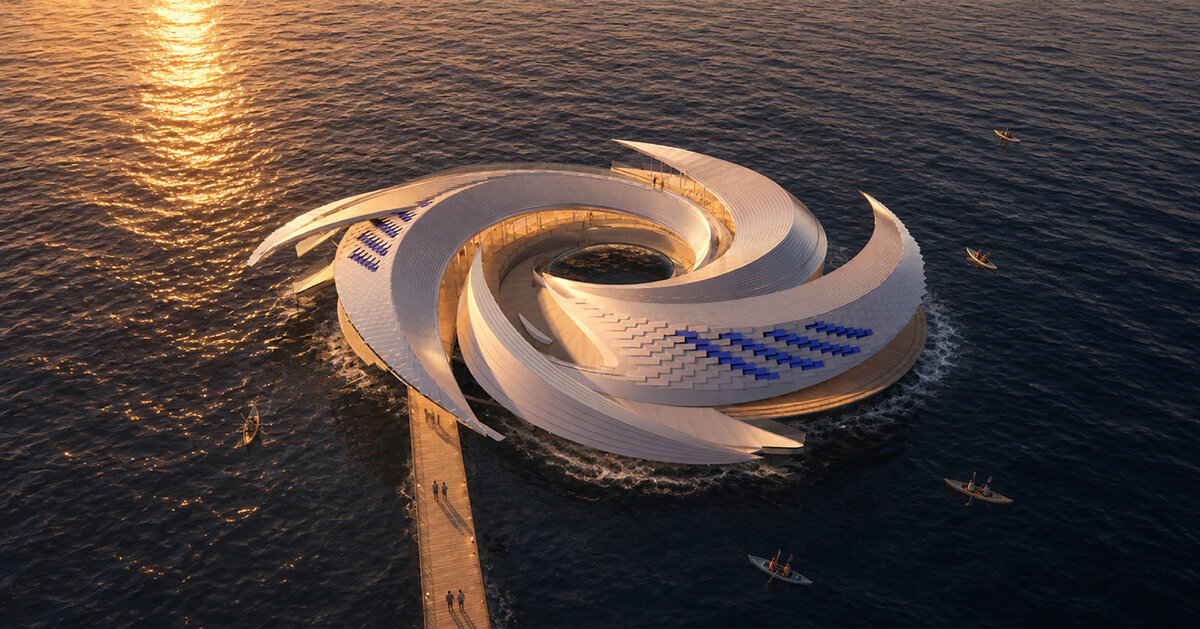
A visionary speculative project named Ocean Vortex by designer Yufeng Tu proposes a radical architectural intervention to combat marine pollution: a spiraling floating parliament constructed from recycled marine waste. This ambitious concept, which was a finalist in the 2026 YAC competition “Ocean Parliament,” aims to transform the pervasive issue of plastic islands in the Pacific Ocean into a platform for environmental awareness, public engagement, and civic discourse.
Ocean Vortex is designed not just as a building but as a symbol of restorative design, demonstrating how materials once considered pollution can become the foundation of new, functional structures. The project highlights architecture’s potential role in addressing pressing environmental crises and fostering collective action.
The Floating Structure
The design’s striking spiral form is inspired by the natural dynamics of ocean waves and wind, creating a visually dynamic and programmatically efficient layout. This vortex geometry guides visitors through the structure, leading them inward towards a central water courtyard. The circulation is carefully orchestrated to separate different user groups: the general public enters exhibition and museum spaces focused on marine pollution and ocean conservation, while parliament participants and staff access dedicated meeting and governance areas via a distinct route. This integrated spatial system aims to seamlessly connect public education with civic participation.
Key facts
- Project Name: Ocean Vortex
- Designer: Yufeng Tu
- Competition: 2026 YAC Ocean Parliament (Finalist)
- Concept: Floating parliament addressing marine pollution
- Primary Material: Recycled marine waste (plastic barrels, containers)
Sustainability and Construction
Sustainability is at the core of Ocean Vortex’s concept and proposed construction. The floating structure is supported by a steel frame, with recycled marine waste serving as the primary buoyancy elements. This direct repurposing of discarded plastics and containers into structural components underscores the project’s commitment to circularity and waste transformation.
Renewable energy is integrated through rooftop solar panels, powering the structure’s daily operations. Submerged sections of the parliament are designed to house advanced environmental systems, including hydroponic cultivation for food production, energy conversion technologies, and desalination plants, further enhancing its self-sufficiency and resource management capabilities.
The structure is stabilized by a flexible seabed anchorage system, designed to accommodate tidal shifts and wave movements, ensuring its resilience in a dynamic marine environment. Instead of concealing its environmental systems, Ocean Vortex makes them visible and integral to the architectural experience, offering a legible demonstration of sustainable technologies.
A New Model for Civic Architecture
Ocean Vortex proposes a paradigm shift in civic architecture, envisioning a future where governance, environmental stewardship, and public engagement converge on the water. The design integrates recycled waste, renewable energy, and active public participation into a single, iconic floating form. By making environmental systems spatially legible and functionally relevant, the project aims to educate and inspire visitors, fostering a deeper connection to the ocean and a commitment to its protection.
The low, sweeping form of the parliament is intended to frame the horizon, creating a public landmark that is both functional and symbolic. Governance, exhibition spaces, and environmental awareness initiatives are brought together on this unique aquatic platform. The spiral geometry not only organizes the program but also transforms movement around the central pool into a shared spatial experience. Layered circulation and visual openness connect gathering spaces, debate areas, and exhibition zones within a cohesive civic interior.
The main floor plan is organized around a central void, emphasizing openness and connection. Programmatic elements, access points, circulation paths, and the very forces of the environment are all orchestrated through the swirling geometry of the design. The parliament, museum, offices, cultivation facilities, and integrated floating infrastructure are conceived as part of a continuous, interconnected system. As seen from the sea, Ocean Vortex presents itself as an open civic platform, shaped by the natural forces of wind and waves, a potent metaphor for adaptation and resilience.
This speculative design by Yufeng Tu offers a compelling vision for how architecture can respond to urgent global challenges, transforming environmental liabilities into innovative solutions and fostering a new era of sustainable and participatory civic spaces.
Source: designboom, https://www.designboom.com/architecture/ocean-vortex-spiraling-floating-parliament-recycled-marine-waste-yufeng-tu/
Source
Designboom Original publication: 2026-05-24T20:30:16+00:00
Related news

Handwoven Teak and Cord Outdoor Seating Debuts from Masaya and Abril Zepeda
Nicaraguan furniture brand Masaya has introduced two new handcrafted outdoor chairs — a rocking chair and a lounge chair — designed by…
Read more
Place in Mind: Hendricks Churchill Launches Hospitality Group to Revive Historic Properties
The architecture and interior design studio Hendricks Churchill has launched Place in Mind, a new hospitality group focused on acquiring, restoring, and…
Read more
Adalberto Dias Architects Complete Restoration of Lisbon’s Patriarchal Cathedral and Archaeological Center
The restoration of the Sé de Lisboa by Adalberto Dias Arquitecto integrates a new archaeological center, preserved cloisters, and seven centuries of…
Read more
Vantieghem Talebi’s ‘House of Cards’ Brings Timber Geometry to Belgian Family Home
A new family house in Belgium by US- and Swiss-based practice Vantieghem Talebi uses a steeply pitched, card-house-inspired form clad in Douglas-fir…
Read moreRelated wiki
Adaptive Reuse in Architecture
Reference page for reuse, retrofit, conversion, embodied carbon and design constraints.
Read more