
Tom Sachs Embraces Imperfection in New Ceramics Exhibition at Salon 94
Tom Sachs' latest exhibition, "Furniture" at Salon 94, showcases ceramic works that highlight breakage, repair, and the visible language of craft, alongside pieces by JJ Peet.
Tom Sachs, known for his meticulous yet often raw approach to design and art, is currently exhibiting a collection of ceramic works at Salon 94 in New York City that boldly embrace imperfection. The exhibition, titled “Furniture,” which opened on April 24th, 2026, transforms the gallery’s townhouse space into a showcase of Sachs’ broader practice, including furniture, ceramics, lighting, sculpture, and painting.
A concurrent group show, “Satan Ceramics,” which opened on May 20th, 2026, further enriches the display by featuring Sachs’ ceramic creations alongside works by artists such as JJ Peet, Mary Frey, Pat McCarthy, and Luc Hammond-Thomas. This juxtaposition creates a dynamic tension, with Sachs’ furniture providing a structured framework for the more visceral and expressive ceramic pieces.
Visible Craftsmanship
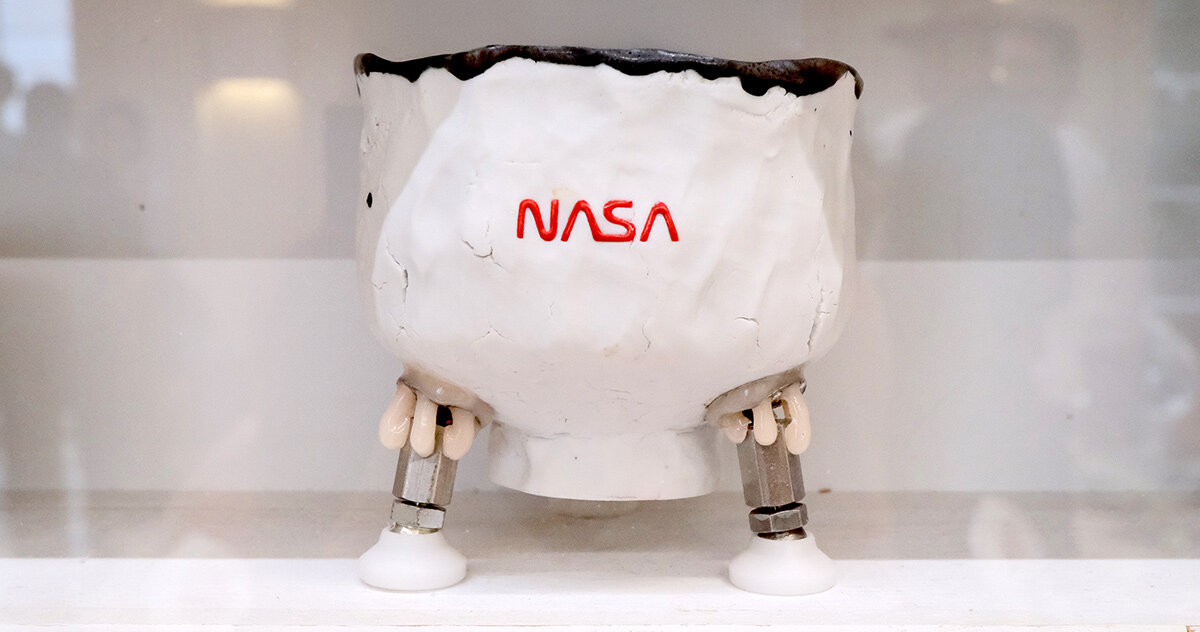
Within Salon 94’s Upper East Side townhouse, Tom Sachs’ ceramic works are presented behind glass, arranged in a minimalist white cabinet. What immediately stands out are the visible signs of breakage and repair. Bowls appear patched, taped, and stitched back together, their surfaces bearing the marks of the making process rather than striving for a pristine finish. These pieces evoke the feel of a workshop archive, where the journey of creation is as important as the final object.
The familiar NASA insignia appears on some of these works, lending an unexpected institutional confidence to pieces that might otherwise appear fragile or incomplete. Some ceramics resemble fragments salvaged from a kiln mishap, while others are reassembled just enough to suggest their original intended form. This deliberate exposure of seams, screws, and studio decisions is a hallmark of Sachs’ artistic philosophy, extending his interest in making assembly visible to the smaller scale of ceramics.
Challenging Ceramic Conventions
Sachs’ approach challenges the conventional expectation of functional ceramics to be flawlessly smooth and complete. His bowls and cups feature blackened rims, small metal legs reminiscent of scientific equipment, and cracked forms meticulously stitched with gauze and tape. These visible mends don’t detract from the objects; instead, they amplify their character and narrative. They point to an intended shape, inviting the viewer to contemplate everything that interrupted its realization.
The exhibition’s setting, within Sachs’ “Furniture” show, provides a unique context. His new Walnut Jeanneret Tables act as platforms for these ceramic collections, offering a shared ground without homogenizing the individual pieces. The broad surfaces allow for the arrangement of bowls, cups, and vessels into informal groupings, highlighting them as a series of experiments in form and material.
Complementary Works
The inclusion of works by JJ Peet in the “Satan Ceramics” show offers a compelling counterpoint to Sachs’ aesthetic. Peet’s vessels, displayed on Sachs’ tables, feature surfaces built up with vibrant color and textured, blocky forms. Some of these ceramics function as containers for flowers, adding a layer of organic life to the material. Peet’s pieces can appear as small ruins, tools, or elements of a model city repurposed for a new function. His contribution prevents the group presentation from being solely an extension of Sachs’ singular vision, introducing a different rhythm and tactile quality to the exhibition.
Peet’s ceramics, with their small painted cavities and rough skins, feel handled and shaped over time. Set against the polished gallery interiors and the clean geometry of Sachs’ tables, they draw attention back to clay as a material that records pressure and human touch.
A Shared Language of Craft
Across both Sachs’ and Peet’s works, there is a shared refusal to view craft as a polished endpoint. Both artists engage with clay as a medium capable of openly expressing error and transformation. The repaired bowls, the flower-filled vessels, the rough cups, and the furniture designed to display them all contribute to a collective exploration of making. In this context, the process remains visible, and the evidence of damage or repair becomes an active part of the artwork’s story. Sachs’ plywood chairs, with their exposed construction and visible fasteners, further reinforce this material honesty at a larger scale, connecting the ceramic works to his long-standing interest in revealing the construction of objects.
Key facts
| Aspect | Detail |
|---|---|
| Exhibitions | Furniture, Satan Ceramics |
| Artists | Tom Sachs, JJ Peet |
| Gallery | Salon 94 Design, New York |
| Furniture Dates | April 24th — June 20th, 2026 |
| Satan Ceramics Dates | May 20th — June 20th, 2026 |
| Focus | Ceramics embracing breakage, repair, and visible craft processes |
This exhibition offers a compelling perspective for design enthusiasts, highlighting how embracing imperfections and the evidence of process can lead to powerful artistic and design statements. It challenges viewers to reconsider their notions of finished work and the inherent beauty in the journey of creation.
Source: designboom – https://www.designboom.com/design/tom-sachs-ceramic-failures-craft-salon-94-jj-peet-satan-furniture/
Source
Designboom Original publication: 2026-06-24T21:45:32+00:00
Related news

Handwoven Teak and Cord Outdoor Seating Debuts from Masaya and Abril Zepeda
Nicaraguan furniture brand Masaya has introduced two new handcrafted outdoor chairs — a rocking chair and a lounge chair — designed by…
Read more
Place in Mind: Hendricks Churchill Launches Hospitality Group to Revive Historic Properties
The architecture and interior design studio Hendricks Churchill has launched Place in Mind, a new hospitality group focused on acquiring, restoring, and…
Read more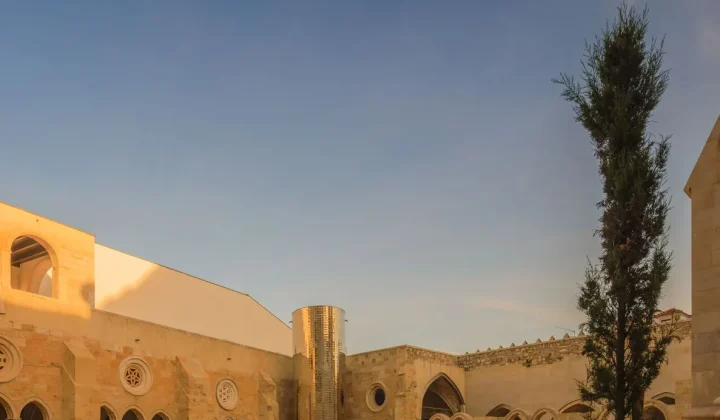
Adalberto Dias Architects Complete Restoration of Lisbon’s Patriarchal Cathedral and Archaeological Center
The restoration of the Sé de Lisboa by Adalberto Dias Arquitecto integrates a new archaeological center, preserved cloisters, and seven centuries of…
Read more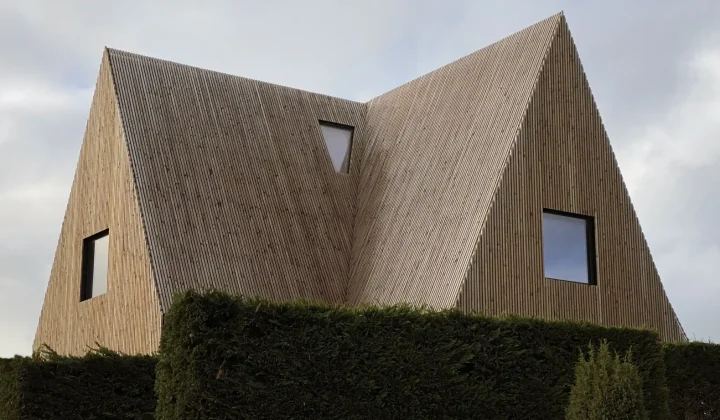
Vantieghem Talebi’s ‘House of Cards’ Brings Timber Geometry to Belgian Family Home
A new family house in Belgium by US- and Swiss-based practice Vantieghem Talebi uses a steeply pitched, card-house-inspired form clad in Douglas-fir…
Read moreRelated wiki
Adaptive Reuse in Architecture
Reference page for reuse, retrofit, conversion, embodied carbon and design constraints.
Read more