
Atrium-Centered Timber House Unfolds Under Sweeping Roof in Denmark’s Glacial Landscape
Høyer Arkitektur and Maria-Therese Grant have designed a flexible, timber-framed dwelling in Ebeltoft, Denmark, organized around a central atrium and topped with a distinctive roof that echoes the surrounding moraine landscape.
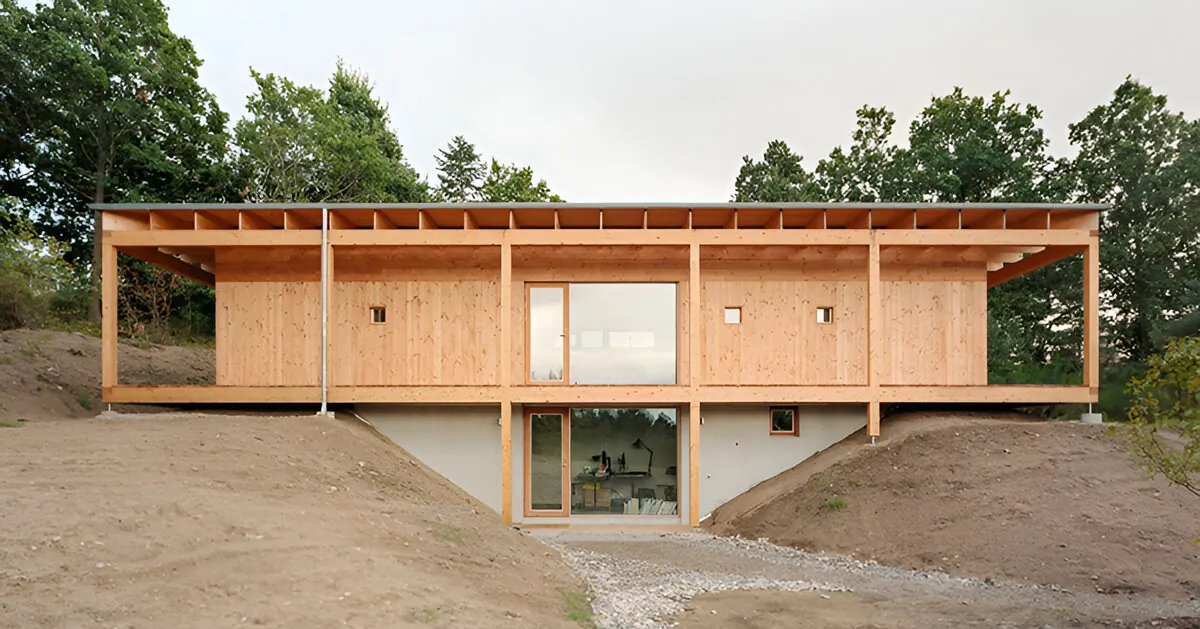
Høyer Arkitektur, in collaboration with Maria-Therese Grant, has unveiled “House on a Hill,” a unique timber residence located on the outskirts of Ebeltoft, Denmark. The dwelling is thoughtfully situated within a moraine landscape, a geological formation sculpted by glacial activity during the last Ice Age, with its design actively responding to the area’s meltwater valleys and rolling hills.
Positioned on an elevated plateau, the house is defined by a prominent, sweeping roof structure that establishes a strong architectural dialogue with the surrounding terrain. This elevated placement and the roof’s form are key elements in integrating the dwelling with its natural context.
Central Atrium as the Core
The heart of House on a Hill is its central atrium, which serves as both the spatial and social nucleus of the home. This core element acts as a vital connector for the interior spaces, while simultaneously linking the house to its external environment. Through carefully orchestrated views in all four cardinal directions, the atrium offers residents a constant connection to the varied topography beyond. This design strategy not only enhances visual relationships with the landscape but also efficiently draws natural light and fresh air into the very center of the building’s plan.
Flexible Timber Structure
The interior organization of the house is defined by a robust timber structural system. The design comprises twelve individual modular spaces, each measuring 3.6 by 3.6 meters. These spaces are arranged within a deliberate column-and-beam framework, all sheltered beneath a continuous, overarching roof. Departing from conventional architectural layouts, the design eschews traditional hallways and corridors. Instead, it prioritizes direct connections between rooms, fostering a more fluid and open pattern of circulation throughout the residence.
Adaptability for Future Needs
Flexibility is a cornerstone of the design for House on a Hill. The roof’s support system relies primarily on the external walls and continuous perimeter beams, which liberates the internal partitions. This structural approach allows for partitions to be removed, relocated, or reconfigured over time, enabling the house to adapt to evolving family requirements without necessitating significant structural alterations. This inherent adaptability ensures the dwelling can remain relevant and functional for generations to come.
Integration with the Landscape
The roof extends generously beyond the enclosed volume of the house, creating a continuous perimeter terrace. This transitional zone is supported by a colonnade of timber columns, with deep overhangs that further emphasize the boundary between the built form and the natural landscape. The rhythm of the structural elements is intentionally kept visible throughout this covered outdoor space, reinforcing the project’s construction logic and its honest material expression. The roof itself functions as a significant architectural element, its form a direct response to the contours of the moraine landscape, while also evoking the domestic archetype of the hearth as a gathering place.
Through its modular organization, adaptable structure, and deep integration with its site, House on a Hill offers a compelling examination of the relationship between architecture, family life, and landscape over extended periods. The project reflects Studio Høyer Arkitektur’s commitment to site-specific design, emphasizing material expression and construction as fundamental components of their architectural philosophy. By working through the interplay of structure, material, and place, the studio consistently develops projects that engage with existing conditions while embracing the potential for future transformation.
Key facts
| Feature | Detail |
|—|—|
| Project Name | House on a Hill |
| Architects | Høyer Arkitektur, Maria-Therese Grant |
| Location | Ebeltoft, Denmark |
| Key Design Elements | Central Atrium, Sweeping Timber Roof, Modular Rooms, Flexible Partitions |
| Structural System | Timber Column-and-Beam |
This project is particularly relevant to Paionia7 readers for its thoughtful integration of residential design with a challenging natural landscape, its innovative use of timber construction for flexibility and sustainability, and its exploration of how architecture can adapt to both environmental context and evolving human needs.
Source: Designboom – atrium-centered timber house unfolds under a sweeping roof in denmark’s glacial landscape (https://www.designboom.com/architecture/atrium-centered-timber-house-sweeping-roof-denmark-glacial-landscape-hoyer-arkitektur-maria-therese-grant/)
Datos clave
| Punto | Detalle |
|---|---|
| Fuente | Designboom |
| Fecha | 2026-06-15T18:45:45+00:00 |
| Tema | atrium-centered timber house unfolds under a sweeping roof in denmark’s glacial landscape |
Source
Designboom Original publication: 2026-06-15T18:45:45+00:00
Related news
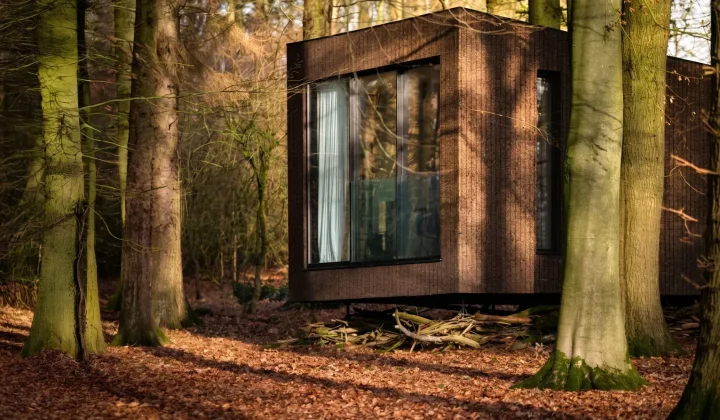
Koto launches Haku, a mobile prefab hotel suite built on a wheeled chassis to bypass UK planning restrictions
UK architecture studio Koto has unveiled Haku, a fully mobile prefabricated suite that legally qualifies as a caravan, allowing landowners and hotel…
Read more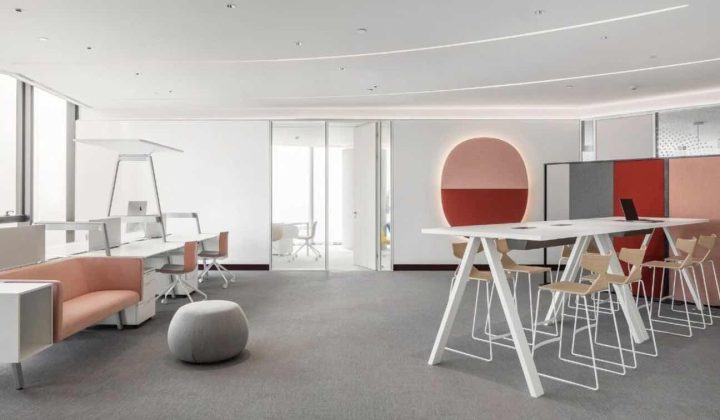
HONG Designworks Completes Private Office in Xi’an That Balances Memory, Materiality, and Long-Term Use
The Xi’an office by HONG Designworks integrates a folded steel staircase, retained furniture from a previous workspace, and a restrained purple-gray palette…
Read more
Handwoven Teak and Cord Outdoor Seating Debuts from Masaya and Abril Zepeda
Nicaraguan furniture brand Masaya has introduced two new handcrafted outdoor chairs — a rocking chair and a lounge chair — designed by…
Read more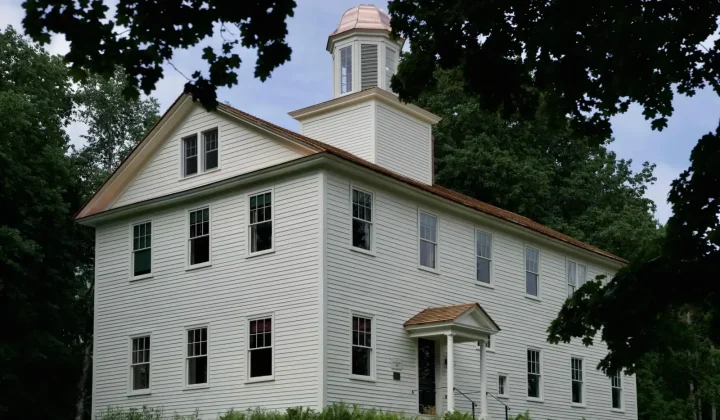
Place in Mind: Hendricks Churchill Launches Hospitality Group to Revive Historic Properties
The architecture and interior design studio Hendricks Churchill has launched Place in Mind, a new hospitality group focused on acquiring, restoring, and…
Read moreRelated wiki

Adaptive Reuse in Architecture
Reference page for reuse, retrofit, conversion, embodied carbon and design constraints.
Read more