Materials, Craft & Construction: what changed and what it means for readers
A careful guide to what has actually shifted in materials and construction discourse, why resource efficiency and documentation matter more, and how readers can assess broad claims without mistaking marketing for evidence.
Materials, Craft & Construction: what changed and what it means for readers
Short answer
The clearest change is not that one new material has replaced all others, but that claims around materials and construction are increasingly being read through the lenses of resource efficiency, environmental impact, and documented performance. UNEP frames cities as central to resource efficiency because urban areas concentrate material use, waste, emissions, and construction activity; that broader context helps explain why materials are now discussed less as isolated products and more as part of larger environmental systems. At the same time, architecture publications continue to spotlight experimentation and product innovation, which makes careful reading more important rather than less.
For readers, that means two things. First, the most useful questions are often about evidence, limits, and context: what a product is, what problem it is meant to solve, and whether a claim is being made at the level of a material, an assembly, or a broader design idea. Second, visual appeal and novelty still matter in architecture culture, but they do not settle questions of durability, suitability, or environmental value on their own.
Context
UNEP’s resource-efficiency work treats cities as a major site of environmental pressure and opportunity, linking urban development to how resources are extracted, used, and managed. In practical terms, that makes construction materials part of a much bigger conversation about how buildings are made, maintained, and renewed. Readers encountering terms such as circularity, lower-impact design, or efficient resource use should understand them as part of this wider shift in the built-environment discussion, not as self-explanatory proof that a product or method is automatically better.
Architecture media, including ArchDaily, has also helped normalize a more design-literate public conversation about material palettes, fabrication methods, reuse, and construction detail. That is useful, but it also creates a familiar risk: striking projects and well-photographed surfaces can make emerging approaches look more settled or more universal than they really are. A publishable lesson for readers is that visibility is not the same as verification.
Why the conversation has changed
A reasonable reading of the available sources is that materials are now being judged more openly against environmental narratives than they were in much older product-led discussions. UNEP’s emphasis on resource efficiency reinforces this shift by tying urban development to the pressure placed on land, energy, and material flows. In other words, material choice is increasingly framed as part of systems thinking.
At the same time, architecture publishing continues to circulate examples of technical innovation, expressive detailing, and new fabrication approaches. That ongoing visibility can broaden public understanding, but it can also flatten distinctions between mainstream practice, niche experimentation, and speculative design culture. Readers benefit from holding those categories apart.
Step-by-step guide: how to read a materials claim more carefully
When you come across a strong claim about a building material or construction method, a practical reading sequence helps:
- Identify whether the claim is mainly environmental, aesthetic, technical, or cultural.
- Check whether the source is presenting a documented fact or a design interpretation.
- Ask whether the example is a one-off project, a repeatable system, or a broad industry pattern.
- Read environmental language cautiously, especially when it gestures toward efficiency or sustainability without explaining scope.
- Treat visibility in architecture media as a starting point for inquiry, not the final word on performance.
That approach matters because resource-efficiency language can be meaningful without being complete, and design coverage can be illuminating without functioning as technical certification. The reader’s task is not to be cynical; it is to separate what has been shown, what has been documented, and what is still being inferred.
What the recent shift means in practice
For architects, students, clients, and general readers alike, the main implication is that material literacy now requires more than knowing names and finishes. It requires understanding that urban construction sits inside larger resource questions, while design culture still rewards novelty and image-making. Put simply: materials should be read as technical, environmental, and cultural objects at once.
This also means craftsmanship remains important even when conversations focus heavily on innovation. A material may be promoted for its environmental promise or its visual character, but the way it is detailed, assembled, and maintained still shapes how it performs in real buildings. The verified source pack does not support sweeping technical claims about specific methods, so the safer editorial conclusion is narrower: careful construction practice matters because materials do not exist apart from the way architecture is executed and represented.
Comparison table: what appears to have changed, and how to read it
| Change in the conversation | What seems to be different now | Why readers notice it | What to verify before repeating the claim | Main caution |
|---|---|---|---|---|
| Resource efficiency is more central | Materials are discussed within broader urban environmental systems | Sustainability language appears more often in design coverage | Whether the claim explains scope, trade-offs, or system boundaries | Broad environmental language can sound more precise than it is |
| Project visibility is higher | Architecture media gives wide exposure to materials, detailing, and innovation | Readers see more examples of experimental or polished outcomes | Whether the example is typical practice or a curated exception | A visually strong case study is not universal proof |
| Materials are framed culturally as well as technically | Discussion often mixes atmosphere, ethics, craft, and performance | Readers are asked to care about meaning as well as function | Whether factual and interpretive claims are clearly separated | Cultural appeal can obscure unresolved practical questions |
| Construction is read at city scale | Material choices are increasingly linked to urban resource use | The stakes appear larger than a single building | Whether the source is discussing one product, one building, or citywide patterns | Scale can be blurred in public discussions |
Common mistakes when reading materials and construction trends
- Confusing a compelling project feature with a settled industry direction.
- Repeating environmental language without checking what is actually being measured or described.
- Assuming that media visibility equals technical consensus.
- Ignoring the difference between material image, material claim, and built performance.
Practical checklist
Before trusting or sharing a claim about a material or construction method, readers should:
- Look for whether the claim is tied to resource efficiency, design value, or technical performance.
- Check if the source is an official body, an architecture publication, or another kind of commentator.
- Ask what scale is being discussed: city, building, system, or surface treatment.
- Separate what is documented from what is interpretive or promotional.
- Treat elegant imagery as helpful context, not as proof.
FAQ
What counts as a meaningful change in materials and construction?
A meaningful change is one that alters how readers evaluate buildings or products, not just how they are marketed. Based on the verified sources, the strongest broad shift is the move toward reading materials in relation to urban resource efficiency and wider environmental impact, alongside continued media attention to design innovation and craft.
Does sustainability language prove a material is better?
No. UNEP’s framing shows why resource efficiency matters, but broad environmental language still needs context, scope, and explanation. A term can point to a real concern without proving that every related claim is complete or comparable.
Why should readers be cautious with architecture case studies?
Because case studies are often selective by nature. They can show what is possible, what is attractive, or what is culturally influential, but that is different from proving that an approach is typical, universally suitable, or fully verified in use.
Does craft still matter if the conversation is about innovation?
Yes, in a general sense. Materials are encountered through construction, detailing, and maintenance as well as through ideas and imagery. Even when public discussion centers on innovation, the built result still depends on how architecture is made and cared for.
Conclusion
The most important change for readers is not a single new product trend. It is a change in how materials are interpreted: more attention to urban resource efficiency, more design-media visibility, and more need to separate evidence from atmosphere. That is good news if it leads to sharper reading. It is less helpful if broad sustainability language or seductive project imagery is allowed to stand in for proof.
A durable rule of thumb is simple: when a materials claim sounds important, ask what scale it addresses, what kind of evidence it offers, and what it leaves unsaid. That habit is more valuable than chasing novelty for its own sake.
Sources
Related news

Handwoven Teak and Cord Outdoor Seating Debuts from Masaya and Abril Zepeda
Nicaraguan furniture brand Masaya has introduced two new handcrafted outdoor chairs — a rocking chair and a lounge chair — designed by…
Read more
Place in Mind: Hendricks Churchill Launches Hospitality Group to Revive Historic Properties
The architecture and interior design studio Hendricks Churchill has launched Place in Mind, a new hospitality group focused on acquiring, restoring, and…
Read more
Adalberto Dias Architects Complete Restoration of Lisbon’s Patriarchal Cathedral and Archaeological Center
The restoration of the Sé de Lisboa by Adalberto Dias Arquitecto integrates a new archaeological center, preserved cloisters, and seven centuries of…
Read more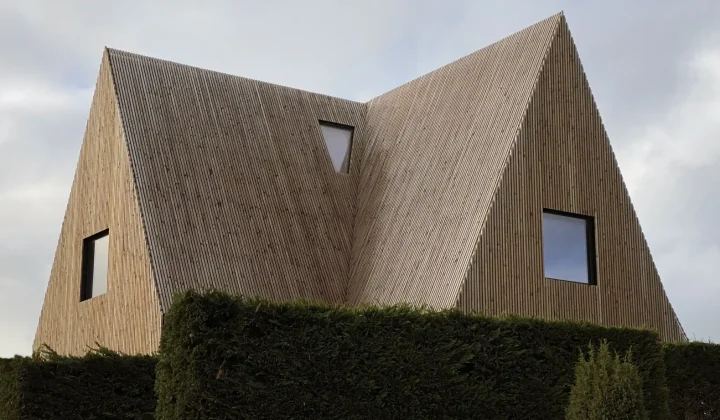
Vantieghem Talebi’s ‘House of Cards’ Brings Timber Geometry to Belgian Family Home
A new family house in Belgium by US- and Swiss-based practice Vantieghem Talebi uses a steeply pitched, card-house-inspired form clad in Douglas-fir…
Read moreRelated wiki
Adaptive Reuse in Architecture
Reference page for reuse, retrofit, conversion, embodied carbon and design constraints.
Read more