Iittala’s Iconic Aalto Vase Reimagined as a Walk-In Pavilion at 3daysofdesign
A temporary pavilion at Copenhagen's 3daysofdesign festival scaled Alvar Aalto's celebrated 1936 vase into an immersive architectural experience, crafted from low-carbon aluminum.
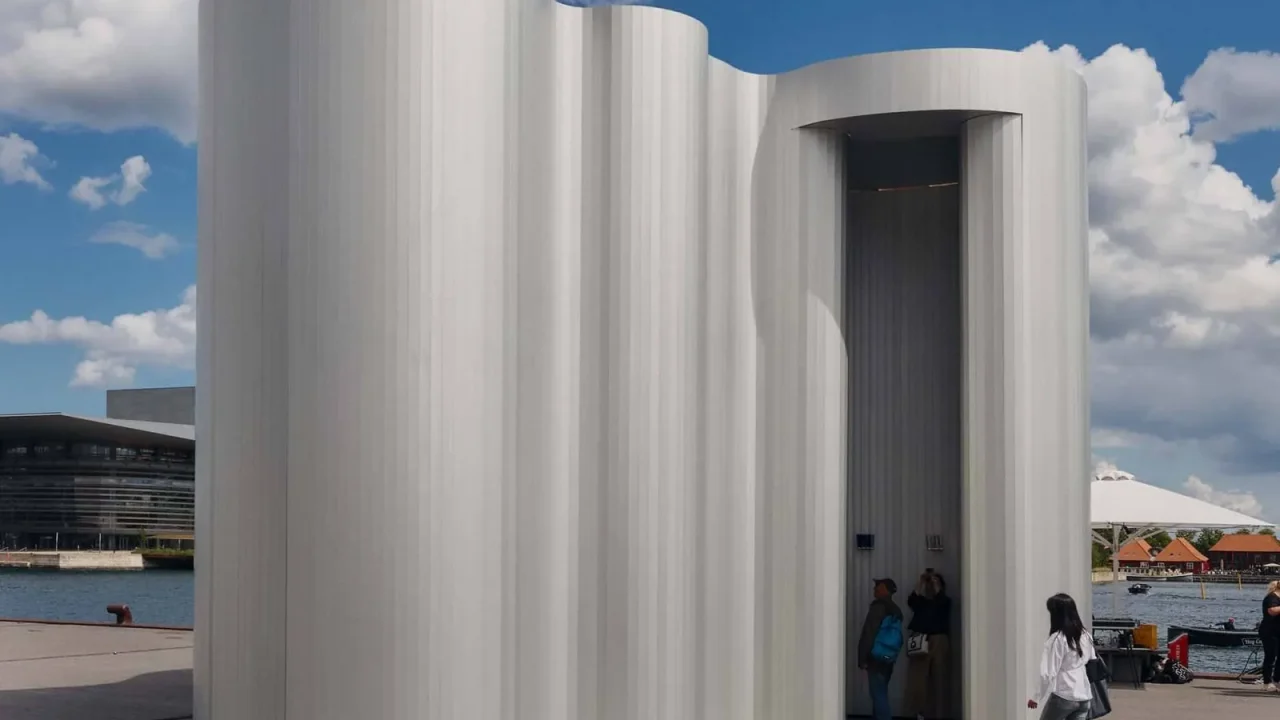
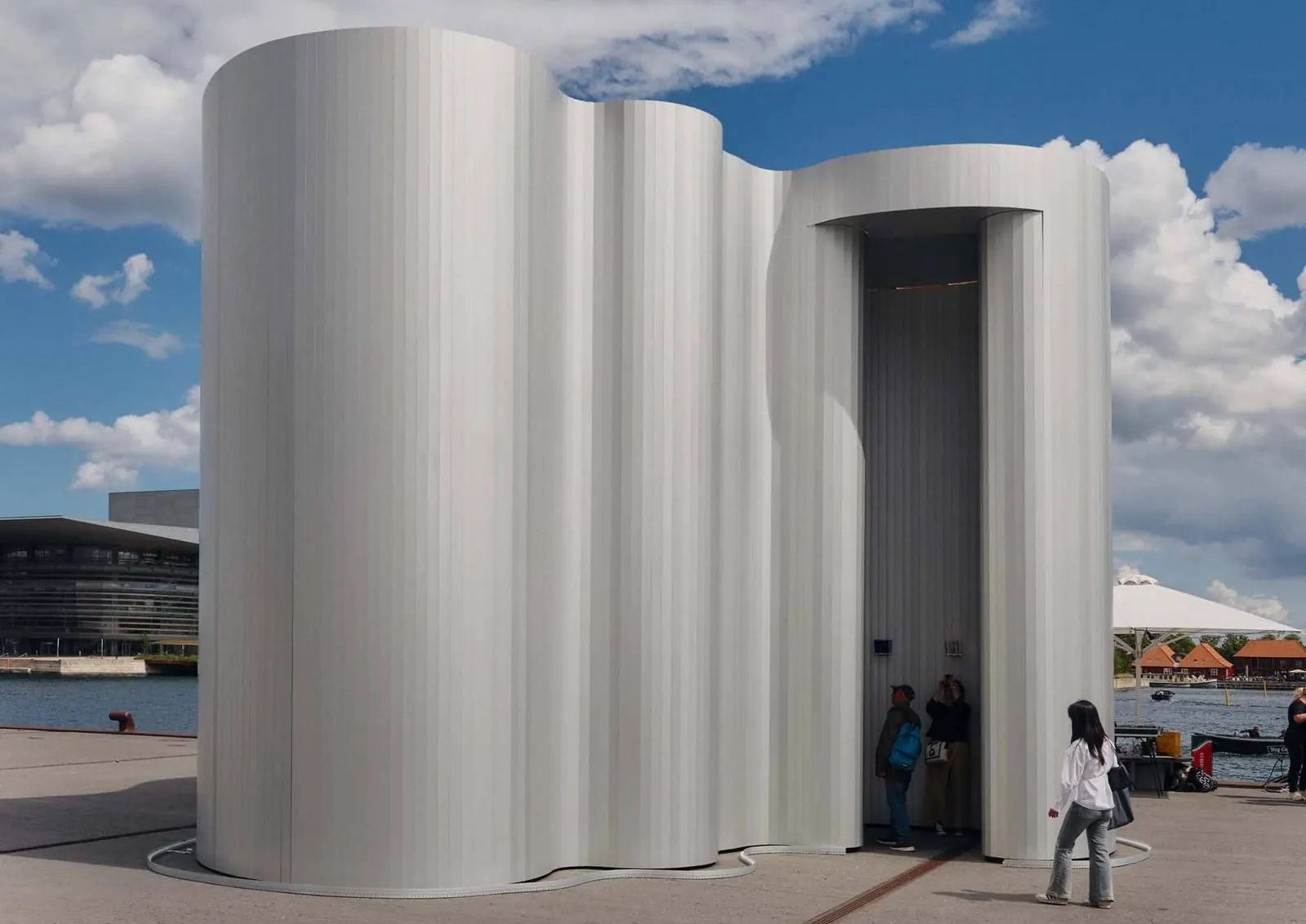
A striking, full-scale interpretation of Alvar Aalto’s timeless vase installation graced Copenhagen’s harborfront during the recent 3daysofdesign festival. The Aalto 90 Pavilion, a temporary structure standing approximately 23 feet tall, invited visitors to step inside the iconic form, offering a unique architectural experience and celebrating the 90th anniversary of the original glass vessel.
A Monumental Scale
For three days in June, the Ofelia Plads waterfront featured a pale, rippling wall that, from a distance, appeared as a single, soft curve. Upon closer inspection, a seam opened into a doorway, leading visitors into a space that mirrored the recognizable contours of the Aalto vase. Designed by the Copenhagen studio Tableau CPH and commissioned by Iittala, the Finnish glassmaker that has produced the vase since its inception in 1936, the pavilion transformed a handheld object into an occupiable room.
Collaborative Innovation
The ambitious project was realized through a collaboration with Hydro, a Norwegian aluminum company responsible for supplying the low-carbon metal and the engineering expertise required to erect the 23-foot-tall structure. Hydro’s contribution included the use of Hydro REDUXA, an aluminum produced with 100 percent renewable energy, boasting a significantly lower carbon footprint than the global average. This material choice was crucial in allowing the vase’s organic lines to be translated to an architectural scale without appearing heavy.
Sustainable and Portable Design
The entire pavilion was engineered for disassembly and transport, allowing for potential reassembly in other cities after its Copenhagen debut. This focus on modularity and material sustainability aligns with contemporary architectural practices and the growing demand for environmentally conscious design.
An Inverted Experience
The Aalto 90 Pavilion inverted the typical relationship between an object and its user. While a vase is an object held, viewed, and placed, the pavilion offered an interior to be experienced from within. Visitors moved through the space, engaging with the form in a partial and internal manner, where the object that once sat in the hand became the room that contained the body.
At the heart of the pavilion, a new anniversary set of Aalto City Vases—in six colors named after major global cities—was displayed within the monumental version of their own form. This arrangement brought the handheld object back into the room it had become, creating a dialogue between the original scale and the immersive recreation.
Materiality and Light
Hydro meticulously shaped its low-carbon aluminum into sections, clamped edge-to-edge to create a continuous, unbroken surface. The organic fluidity of the vase’s form was achieved without visible seams or right-angled joints, resulting in an enclosure that wrapped around visitors. Unlike the original glass vase, which relies on light passing through it, the aluminum pavilion was illuminated from the floor and along its folds. This raking light emphasized the undulations, casting folds into shadow and making the waves read more prominently than in transparent glass.
A Tribute to Aalto’s Vision
Alvar Aalto, whose surname translates to “wave” in Finnish, dedicated his career to softening the rigid lines of modernism with organic, human-centered forms. The pavilion’s interior was designed to foster atmosphere over mere display. A skylight allowed daylight to diffuse down the curved walls, its changing quality throughout the day considered a central element of the interior experience, complemented by an integrated soundscape.
Janni Vepsäläinen, Iittala’s creative director, emphasized that Aalto’s vase form was always intended to be intuitive and human. The pavilion served as a spatial translation of this spirit, enabling people to step inside its contours and feel its inherent movement.
Key facts
| Aspect | Detail |
|---|---|
| Project Name | Aalto 90 Pavilion |
| Original Object | Alvar Aalto vase (designed 1936) |
| Event | 3daysofdesign, Copenhagen |
| Dates | June 10-12, 2024 (implied by source context of event) |
| Commissioned by | Iittala |
| Designed by | Tableau CPH |
| Material | Hydro REDUXA low-carbon aluminum |
| Height | Approx. 23 feet (7 meters) |
| Anniversary | 90th anniversary of the Aalto vase |
This development matters for Paionia7 readers as it showcases a significant architectural intervention inspired by a design icon. The project highlights the innovative use of sustainable materials like low-carbon aluminum in creating temporary, immersive spaces. It also demonstrates how historical design objects can be reinterpreted at an architectural scale, blurring the lines between product design and built environment, and offering new perspectives on user experience within familiar forms.
Source: The Architect’s Newspaper – Iittala and Hydro scale Alvar Aalto vase into a walk-in pavilion at Copenhagen’s 3daysofdesign – https://www.archpaper.com/2026/06/aalto-90-pavilion-iittala-hydro/
Source
The Architect's Newspaper Original publication: 2026-06-23T20:26:59+00:00
Related news
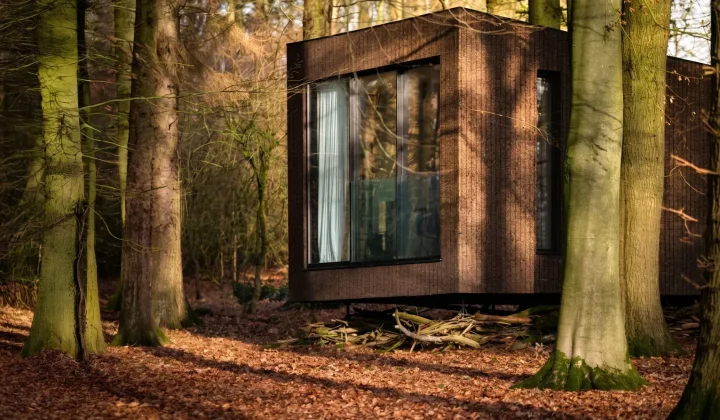
Koto launches Haku, a mobile prefab hotel suite built on a wheeled chassis to bypass UK planning restrictions
UK architecture studio Koto has unveiled Haku, a fully mobile prefabricated suite that legally qualifies as a caravan, allowing landowners and hotel…
Read more
HONG Designworks Completes Private Office in Xi’an That Balances Memory, Materiality, and Long-Term Use
The Xi’an office by HONG Designworks integrates a folded steel staircase, retained furniture from a previous workspace, and a restrained purple-gray palette…
Read more
Handwoven Teak and Cord Outdoor Seating Debuts from Masaya and Abril Zepeda
Nicaraguan furniture brand Masaya has introduced two new handcrafted outdoor chairs — a rocking chair and a lounge chair — designed by…
Read more
Place in Mind: Hendricks Churchill Launches Hospitality Group to Revive Historic Properties
The architecture and interior design studio Hendricks Churchill has launched Place in Mind, a new hospitality group focused on acquiring, restoring, and…
Read moreRelated wiki

Adaptive Reuse in Architecture
Reference page for reuse, retrofit, conversion, embodied carbon and design constraints.
Read more