
Koto launches Haku, a mobile prefab hotel suite built on a wheeled chassis to bypass UK planning restrictions
UK architecture studio Koto has unveiled Haku, a fully mobile prefabricated suite that legally qualifies as a caravan, allowing landowners and hotel operators to place high-end accommodation in sensitive or restricted landscapes without foundations or permanent planning permission.
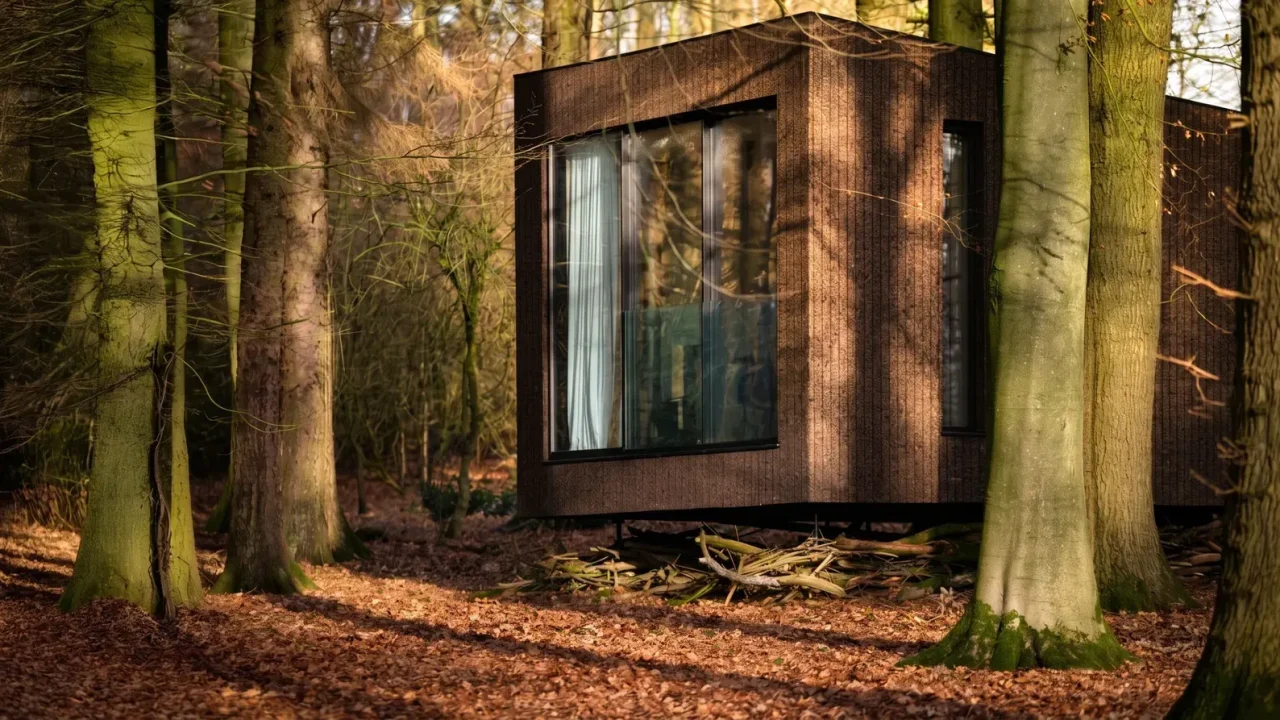
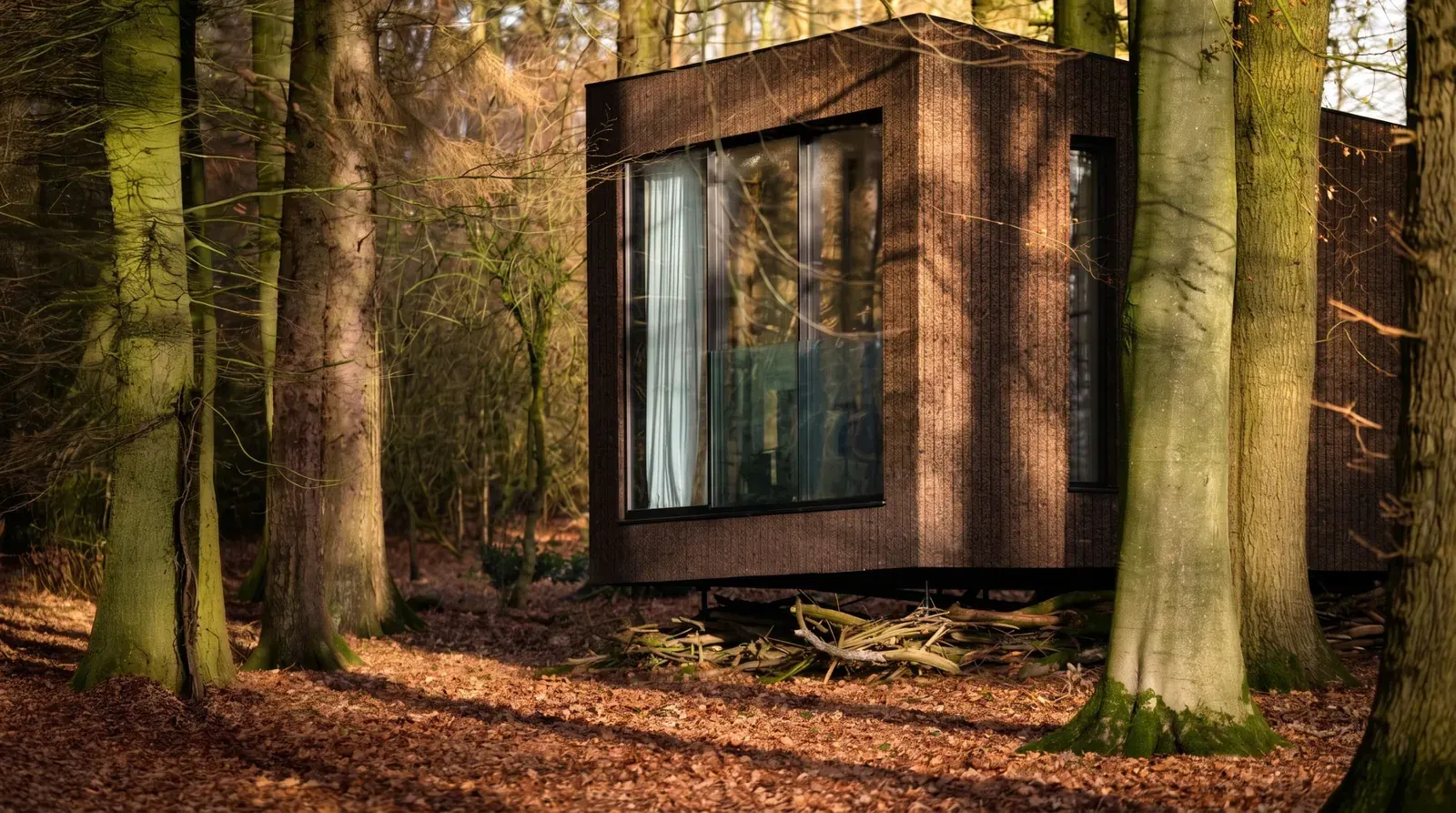
UK architecture studio Koto has released Haku, a prefabricated suite designed to sit on a wheeled chassis, which legally classifies it as a caravan under the Caravan Sites Act 1968. This classification removes the need for standard planning permission for permanent structures, allowing the unit to be placed in landscapes where conventional building would be restricted or prohibited.
The first installations of Haku have been completed at the Denton Estate in Yorkshire, where the unit is configured as an upscale hotel suite. It includes a wood-burning stove and a rain-shower bathroom, demonstrating the system’s potential for hospitality use.
Key facts
| Detail | Information |
|---|---|
| Dimensions | 74m long x 3.60m wide x 3.85m high |
| Price per unit (on-grid, 15 units) | £80,000 |
| Price per unit (off-grid, 15 units) | £90,000 |
| Legal classification | Caravan under the Caravan Sites Act 1968 |
Design and construction
The building envelope is timber framed, with an external finish of expanded cork, a natural and renewable material that provides thermal insulation and a textured organic appearance. Koto can supply the unit fully furnished, creating a turnkey solution for hotel operators and estate owners. The absence of foundations or a concrete slab means the structure can be removed without leaving a trace on the site, reducing its environmental impact compared to a permanent building.
Because the unit is built on a wheeled chassis, it can be transported by truck to most locations. Koto reports that design, construction and delivery lead times are significantly shorter than those for conventional buildings, offering a faster route to market for hospitality projects.
Legal and planning context
Haku’s key innovation is its legal status. By sitting on wheels, it meets the definition of a caravan under the Caravan Sites Act 1968, which exempts it from the full planning process that applies to permanent buildings. This allows landowners to place the suite in sensitive environments such as woodland clearings, riverbanks or coastal edges where standard construction would not be permitted.
The design is intended to be reversible. Because it requires no permanent foundations, the unit can be relocated or removed as easily as it is installed, leaving no physical scar on the landscape. This makes it particularly relevant for estates and landowners who want to generate hospitality income without committing to permanent development.
Pricing and availability
Koto offers Haku from today to hotels, estates and private landowners. At a volume of 15 units, the price starts at £80,000 per suite for on-grid units and £90,000 for off-grid units. A tiered pricing structure is available for operators planning phased or multi-suite rollouts, making the system scalable for larger projects.
Johnathon Little, co-founder of Koto, described the philosophy behind the design: “What matters is where it can stand: the clearing, the shelf above the water, the ground an estate has always had to leave alone. Architecture that finds its place.”
Relevance for architects and developers
For architects, Haku represents a case study in how design can work within existing legal frameworks to unlock sites that would otherwise remain undevelopable. The project demonstrates that prefabricated, mobile architecture can achieve a high level of finish and comfort while maintaining regulatory compliance and environmental sensitivity.
For developers and estate owners, the unit offers a low-risk way to test hospitality demand on a site before committing to permanent infrastructure. The ability to remove the structure without restoration costs adds financial flexibility.
Source: Wallpaper, “Fancy an instant-landscape hotel? The Haku suite from Koto could be the answer”, https://www.wallpaper.com/architecture/residential/haku-suite-koto-cabin-uk
Source
Wallpaper Original publication: 2026-10-09T17:36:52+00:00
Related news
HONG Designworks Completes Private Office in Xi’an That Balances Memory, Materiality, and Long-Term Use
The Xi’an office by HONG Designworks integrates a folded steel staircase, retained furniture from a previous workspace, and a restrained purple-gray palette…
Read more
Handwoven Teak and Cord Outdoor Seating Debuts from Masaya and Abril Zepeda
Nicaraguan furniture brand Masaya has introduced two new handcrafted outdoor chairs — a rocking chair and a lounge chair — designed by…
Read more
Place in Mind: Hendricks Churchill Launches Hospitality Group to Revive Historic Properties
The architecture and interior design studio Hendricks Churchill has launched Place in Mind, a new hospitality group focused on acquiring, restoring, and…
Read more
Adalberto Dias Architects Complete Restoration of Lisbon’s Patriarchal Cathedral and Archaeological Center
The restoration of the Sé de Lisboa by Adalberto Dias Arquitecto integrates a new archaeological center, preserved cloisters, and seven centuries of…
Read moreRelated wiki

Adaptive Reuse in Architecture
Reference page for reuse, retrofit, conversion, embodied carbon and design constraints.
Read more