
Lucy McRae’s speculative practice treats the body as a testing ground for future technologies
The artist and designer, founder of Future Sensitive, discusses how wearable tech, swallowable cosmetics, and speculative costumes turn the human form into a medium for exploring emerging technologies.
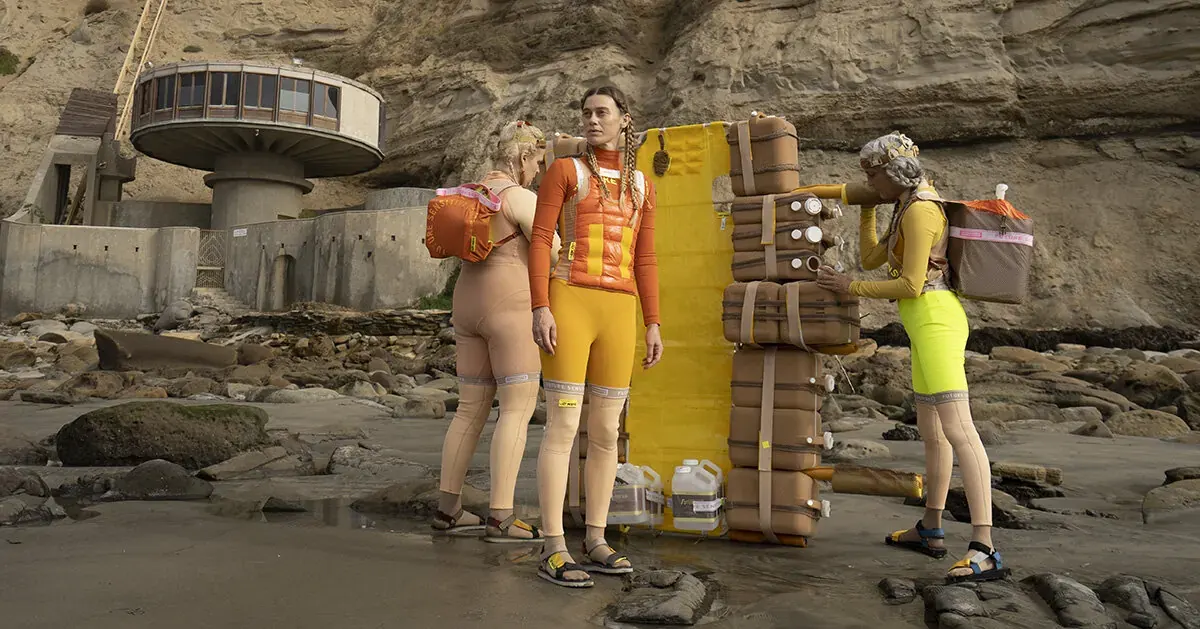
The British-born Australian artist and designer Lucy McRae, founder of the speculative lab Future Sensitive, continues to push the boundaries of where the body ends and technology begins. In a recent interview with Designboom, McRae described her practice as one where “the body has been my canvas, tool, and medium,” using sculpture, film, conceptual fashion, and experimental design to make emerging technologies tangible.
McRae’s work asks a foundational question: what happens when technology becomes inseparable from the human form? After studying interior design at RMIT, she led a far-future design research lab at Philips from 2006 to 2010, developing wearable technologies such as emotional-sensing dresses and electronic tattoos. That experience established a recurring line of inquiry that now defines Future Sensitive, an art-led lab that brings together scientists, artists, and designers to explore body futurism and post-nature futures.
Key facts
| Aspect | Detail |
|——–|——–|
| Artist | Lucy McRae, founder of Future Sensitive |
| Background | Interior design at RMIT; led far-future design research at Philips (2006-2010) |
| Notable project | Swallowable Parfum, a speculative cosmetic pill developed with synthetic biologist Sharef Mansy |
| Upcoming | Future Sensitive fashion collection launching in Los Angeles in 2027 |
From the lab to the screen and the market
McRae’s speculative projects often blur the line between fiction and market signal. Compression Cradle, a project presented at the 2019 Milan Triennale exhibition *Broken Nature* curated by Paola Antonelli, later inspired a visual reference in *Blade Runner 2099*, for which McRae designed a crèche and birth bags for replicants. The pipeline from gallery to film set illustrates how ideas developed through her art can migrate into commercial storytelling.
Perhaps her most direct test of fiction as market signal is Swallowable Parfum, a speculative cosmetic pill developed with synthetic biologist Sharef Mansy. Conceived as a fictional beauty commercial, the project attracted real interest from pharmaceutical brands, turning an invented product into a point of contact with actual industry players. “So does the body become tech when we eat it?” McRae asks. “Maybe the better question is what far greater things could exist if technology is swallowable.”
Clothing as invisible architecture
McRae’s background in interior design informs her understanding of wearable objects as more than garments. She sees clothing as a form of architecture that shapes perception and behavior, even if the structure is invisible. “I think objects we wear create architectures, but they’re invisible,” she explains. “They’re fields of feeling, or of psyche.”
This concept is central to a forthcoming Future Sensitive fashion collection, set to launch in Los Angeles in 2027. Drawing inspiration from costumes in films and artworks, the collection explores how clothing can express ideas about the future and alter how the wearer feels about themselves. McRae is testing the collection in public, where the clothes become a way of projecting identity. “It says ‘I am cooler than you think,’ or really, ‘I am cooler than I think,’” she notes. “It pumps up identity without words.”
The desire to belong, which McRae traces to her own experience of feeling like an outsider and making her own clothes to fit in, continues to influence her work. “The estrangement you sense might be a trace of that: a yearning, a trying, a squeezing into something. Wanting to belong is universal,” she says.
Immersive futures and audience participation
For McRae, the power of speculative design lies in its ability to let people inhabit a possible future rather than simply observe it. “Powerful stories are felt more when you can imagine yourself as the character, lie down in them, and embody a future,” she highlights. “Just as important, you have to be able to refute it, argue with it, or offer alternatives.”
She is planning an artwork in a swimming pool that would use wearable flotation pieces and water-based rituals to create a participatory experience. The project, she suggests, could double as a campaign for the fashion launch, merging art, performance, and commerce.
Why this matters for design readers
McRae’s practice sits at the intersection of design, art, and technology, offering a model for how speculative thinking can inform real-world product development and architectural thinking. For readers interested in the boundaries of wearable technology, body architecture, and the cultural implications of emerging science, her work provides a tangible example of how fiction can generate market signals and shape public imagination.
Source: Designboom – ‘the body is my canvas, tool, and medium’: lucy mcrae discusses identity and the spaces we carry – https://www.designboom.com/art/body-canvas-tool-medium-lucy-mcrae-spaces-future-sensitive-interview/
Datos clave
| Punto | Detalle |
|---|---|
| Fuente | Designboom |
| Fecha | 2026-10-13T20:35:36+00:00 |
| Tema | ‘the body is my canvas, tool, and medium’: lucy mcrae discusses identity and the spaces we carry |
Source
Designboom Original publication: 2026-10-13T20:35:36+00:00
Related news
Hospitality Design Trends for 2027 Focus on Flexibility and Real-Use Comfort
From movable furniture and layered lighting to acoustic treatment and textured materials, the seven hospitality design trends for 2027 prioritise how spaces…
Read more
Futurewave’s Arc Silver Bracelet Uses a Gentle Vibration to Curb Phone Overuse
The Belgian design studio’s Arc bracelet offers a tactile nudge when screen time exceeds a set limit, with no display, notifications, or…
Read more
BDNY 2026 returns to New York with immersive installations and global hospitality design focus
Boutique Design New York (BDNY) returns to the Jacob K. Javits Center on November 8–9, 2026, featuring over 700 brands, immersive Designed…
Read more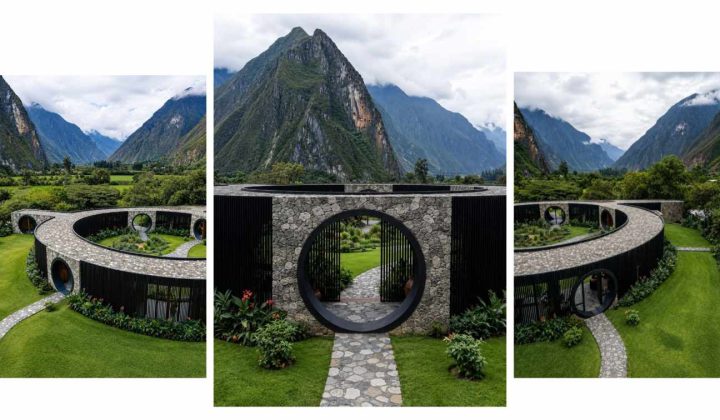
Circular Geometry and Central Courtyard Define Villa Orbit by Hamidreza Edrisi and Hoori Taleshi
Iranian architects Hamidreza Edrisi and Hoori Taleshi have unveiled Villa Orbit, a residential design proposal defined by a continuous circular geometry and…
Read moreRelated wiki

Adaptive Reuse in Architecture
Reference page for reuse, retrofit, conversion, embodied carbon and design constraints.
Read more