
Three Lessons on “Good Design” Emerge from WAN Awards Jury Room
Michele Rhoda shares insights from the WAN Awards, highlighting the shift towards adaptable, human-centered, and community-driven architecture as the new definition of design excellence.
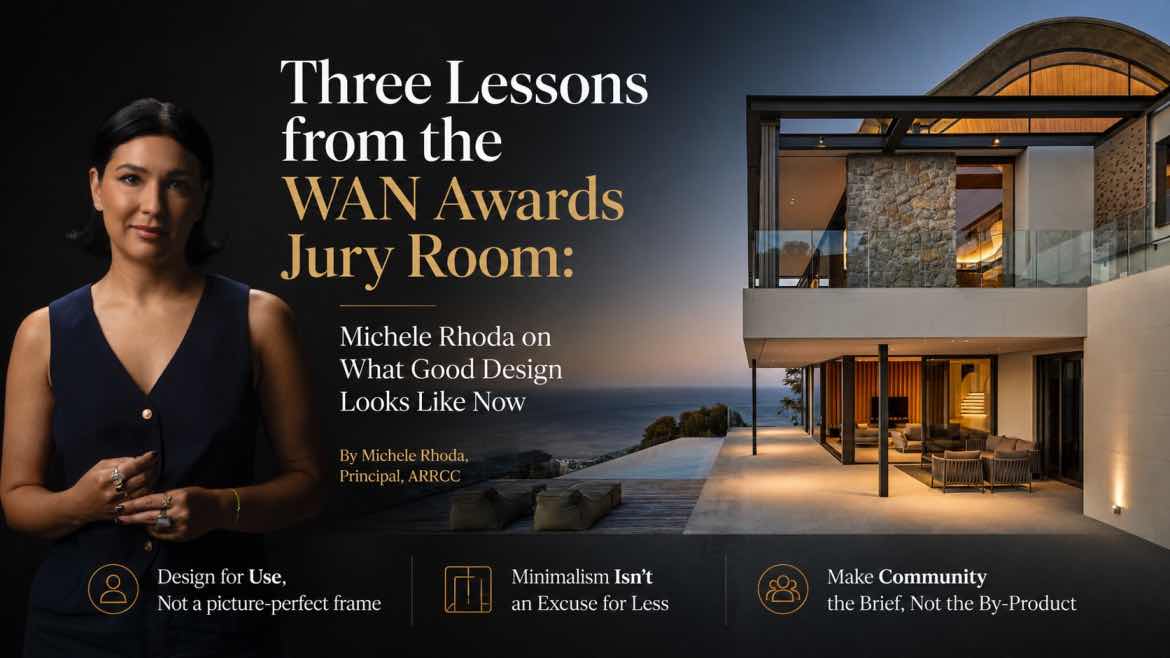
A recalibration of what constitutes “good design” has emerged from the recent WAN Awards jury deliberations, according to Michele Rhoda, a juror for the prestigious awards. The discussions revealed a movement beyond traditional markers of design excellence, such as polished imagery and confident diagrams, towards a more profound consideration of a project’s impact on its inhabitants and its long-term relevance. The most compelling architectural work today, Rhoda suggests, is not merely aesthetically pleasing but actively seeks to improve lives and demonstrate adaptability over time.
Design for Use, Not a Picture-Perfect Frame
Rhoda emphasized that sustainability is no longer a superficial checklist but a fundamental test of a project’s purpose under pressure. The strongest entries across categories like Adaptive Reuse and Future Leisure treated their briefs as provisional, acknowledging that the world is in constant flux. These designs involved extensive upfront research into usage patterns, anticipated diverse user groups, and accounted for cultural and operational shifts, rather than designing for a single, idealized opening-day scenario.
This approach redefines how success is measured. A building that performs impeccably at launch but lacks the capacity to adapt is, in effect, already becoming obsolete. Rhoda advocates for viewing sustainability not as a curated selection of local materials, but as a commitment to prolonged usefulness. This involves operational intelligence, spatial generosity, and a flexibility that prevents a structure from becoming a burden—financially, environmentally, or socially—in the years following its completion.
In the realm of Adaptive Reuse, this intelligence manifested as a disciplined approach. Successful projects moved beyond mere sentimental preservation of character, instead accentuating existing fabric through precise interventions that enhanced legibility and liveability. The everyday functionality of a space became the true benchmark. Rhoda cited ARRCC’s Wave Villa as an example, where the restoration of key elements was anchored in how the house would be lived in, breathe, and support daily rituals over time. This distinction highlights the difference between preservation as image-making and reuse as a dynamic, living system—retaining what is essential, upgrading what is deficient, and designing for future life with the same care given to honouring the past.
The Future Leisure category further illuminated this point. Sustainability arguments were often embedded within the program itself, focusing on clear public benefit rather than mere spectacle. Projects that stood out were those that belonged to their city, offering evolving spaces that could transcend their initial novelty, rather than performing as isolated “icons.” The key question these designs convincingly answered was how longevity, delight, and responsibility could mutually reinforce each other.
Minimalism Isn’t an Excuse for Less
While stripped-back architecture can be powerful, its effectiveness hinges on being underpinned by spatial generosity and environmental comfort. Rhoda cautioned against minimalism that serves as a disguised budget reduction, which ultimately reveals a lack of investment in comfort, longevity, and the lived experience. The jury consistently returned to human experience as a measurable and uncompromising factor.
Design drivers, rather than afterthoughts, included functional daylight, effective ventilation, thermal comfort, and acoustic performance. Contemporary interiors, whether in affordable housing or high-end hospitality, must feel genuinely inhabitable and comforting. What endures, Rhoda asserted, is not visual austerity but a disciplined calm, achieved through material intelligence, proportion, and warmth, rather than mere reduction.
Make Community the Brief, Not the By-Product
Future-oriented architecture, according to Rhoda, must clearly answer the question of “who benefits?” Buildings driven by spectacle or short-term impact falter when they cannot support real patterns of use over time. The critical factor is whether a project integrates with its context, strengthens public life, and delivers value beyond its image or market appeal.
The most effective projects treat shared spaces as deliberate social infrastructure. Circulation should encourage encounters, thresholds should reduce exclusion, and flexibility should accommodate evolving uses. Modularity, when successful, avoids mere repetition and instead supports dignity and individual identity over pure efficiency. Neri&Hu’s adaptive reuse project was highlighted as a succinct demonstration of how restraint paired with clarity can be generous, proving that long-term public value is achieved through purpose.
Datos clave
| Aspect | Key Principle |
|—|—|
| Design Focus | Adaptability, human-centeredness, community benefit |
| Sustainability | Long-term usefulness, operational intelligence, flexibility |
| Minimalism | Spatial generosity, environmental comfort, not budget reduction |
| Community Integration | Social infrastructure, inclusive thresholds, evolving use |
This perspective from the WAN Awards jury offers valuable insights for architects, designers, and urban planners. It underscores a critical shift in architectural evaluation, moving beyond purely aesthetic concerns to a more holistic assessment of a project’s social, environmental, and long-term functional impact. The emphasis on adaptability, inhabitant well-being, and community integration provides a framework for designing spaces that are not only beautiful but also resilient, responsible, and relevant for the future.
Fuente: Amazing Architecture – Three Lessons from the WAN Awards Jury Room: Michele Rhoda on What Good Design Looks Like Now – https://amazingarchitecture.com/articles/three-lessons-from-the-wan-awards-jury-room-michele-rhoda-on-what-good-design-looks-like-now
Datos clave
| Punto | Detalle |
|---|---|
| Fuente | Amazing Architecture |
| Fecha | 2026-05-27T19:04:03+00:00 |
| Tema | Three Lessons from the WAN Awards Jury Room: Michele Rhoda on What Good Design Looks Like Now |
Source
Amazing Architecture Original publication: 2026-05-27T19:04:03+00:00
Related news
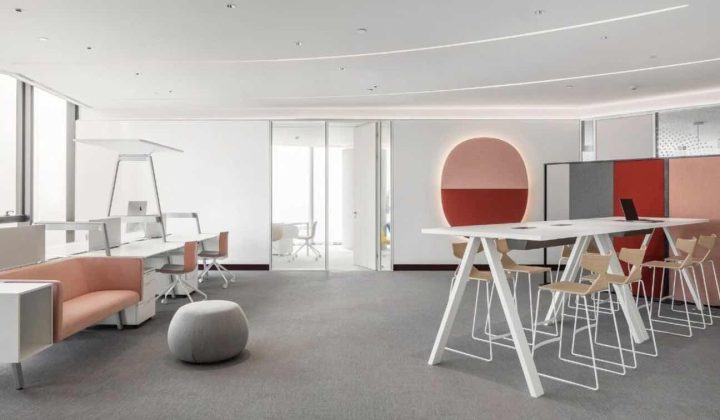
HONG Designworks Completes Private Office in Xi’an That Balances Memory, Materiality, and Long-Term Use
The Xi’an office by HONG Designworks integrates a folded steel staircase, retained furniture from a previous workspace, and a restrained purple-gray palette…
Read more
Handwoven Teak and Cord Outdoor Seating Debuts from Masaya and Abril Zepeda
Nicaraguan furniture brand Masaya has introduced two new handcrafted outdoor chairs — a rocking chair and a lounge chair — designed by…
Read more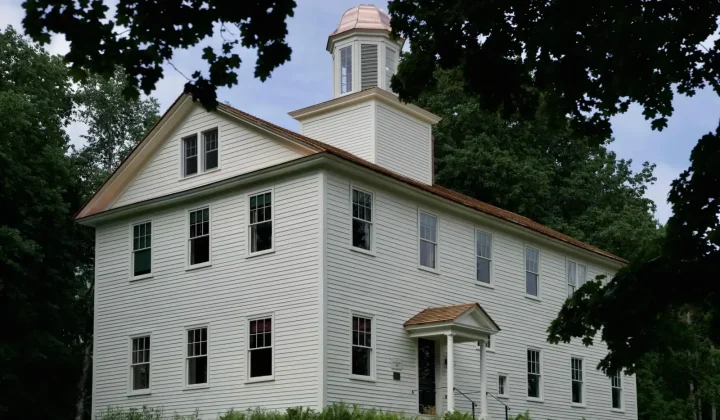
Place in Mind: Hendricks Churchill Launches Hospitality Group to Revive Historic Properties
The architecture and interior design studio Hendricks Churchill has launched Place in Mind, a new hospitality group focused on acquiring, restoring, and…
Read more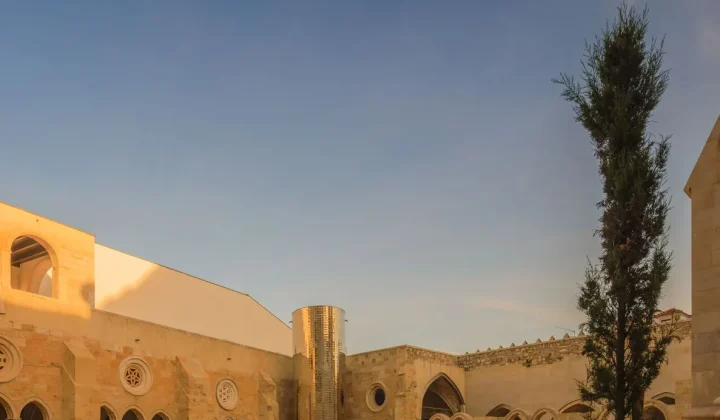
Adalberto Dias Architects Complete Restoration of Lisbon’s Patriarchal Cathedral and Archaeological Center
The restoration of the Sé de Lisboa by Adalberto Dias Arquitecto integrates a new archaeological center, preserved cloisters, and seven centuries of…
Read moreRelated wiki
Adaptive Reuse in Architecture
Reference page for reuse, retrofit, conversion, embodied carbon and design constraints.
Read more