Designers Explore the Subconscious Roots of Creativity at Milan Design Week
A panel discussion at Milan Design Week 2026 delved into how intuition and subconscious processes shape enduring design, challenging purely rational approaches.
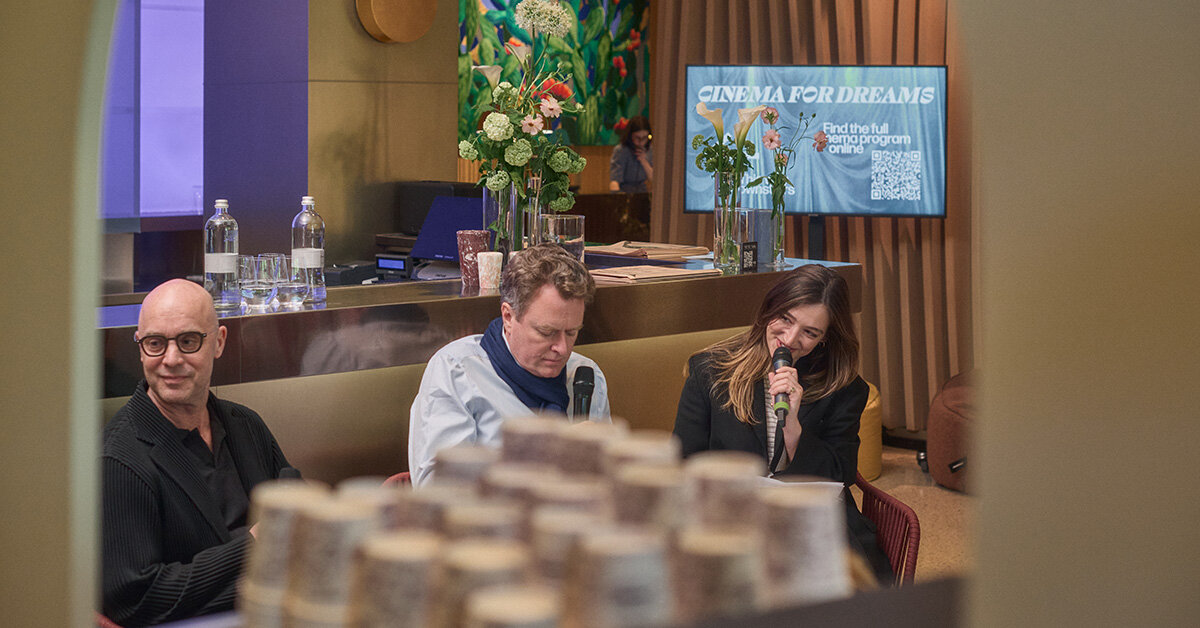
At Milan Design Week 2026, a compelling discussion titled “Design Intuition: When Creativity Emerges from the Subconscious” brought together prominent figures in the design world to explore the often-elusive origins of creative breakthroughs. Hosted within the immersive ROOM FOR DREAMS activation, the conversation challenged the notion of design as solely a product of logical deduction, emphasizing instead the power of subconscious thought and accumulated experience.
The panel featured Giovanni Moro, industrial designer and co-founder of UNIMATIC; Benoît Mintiens, industrial designer and founder of Ressence; and Mårten Claesson, architect and co-founder of Claesson Koivisto Rune. The discussion was moderated by Sofia Lekka Angelopoulou, designboom’s Editor-in-Chief.
Intuition as Accumulated Experience
Mårten Claesson articulated a key theme of the discussion: intuition is not a mystical endowment but rather a sophisticated accumulation of life practice and experience that surfaces when the conscious mind recedes. This supra-rational faculty, he explained, allows designers to tap into a state of flow where the sense of time dissolves and peripheral vision becomes paramount. By filtering out external noise and market trends, designers can act as conduits, translating years of observation into singular, instinctive gestures that feel both novel and familiar.
“Intuition is not magic. It’s not something god-given or anything. It is a sort of accumulation of experience that you tap into subconsciously,” Claesson stated. “Intuition works very well when you’re in a state of flow… You have to block everything else out and then you lose the sense of time.”
User-Centric Design and Empathy
Benoît Mintiens highlighted Ressence’s distinct approach to design, which prioritizes the user experience from the outset. Unlike traditional watchmaking, which often begins with the mechanical movement, Ressence’s design process is rooted in human needs and perceptions. This user-centric philosophy extends to harmonizing parameters such as ergonomics, aesthetics, and function to define a new reality for the product.
“Ressence’s starting point for design is more from the user. That’s very different from a watchmaker. A watchmaker typically starts with the movement,” Mintiens explained. “The moment I feel okay with the design is when I am able to make new positions for parameters — ergonomics, aesthetics, function etc — coherent with each other because then you have defined a new reality for that product.”
This empathetic approach fosters a deeper, more sustainable emotional bond between the product and the user, moving design beyond mere functionality towards creating meaningful connections.
Embracing Limitations for Innovation
Giovanni Moro suggested that true optimism in design arises from viewing limitations not as obstacles, but as fertile ground for creativity. By stepping away from the safety net of extensive market research, designers can forge unique paths and establish personal rules that guide the creation of original artifacts. This perspective encourages designers to trust their internal compass, leading to the development of artifacts that possess a distinct identity.
The panel also touched upon the future of object-making, envisioning a world where product biodiversity, achieved by mixing the distinct DNAs of different disciplines like architecture, industrial design, and horology, drives cultural evolution. This interdisciplinary fusion births new paradigms that transcend their original categories.
Creating Enduring Legacies
The desire to create non-disposable legacies, from everyday tools to monumental structures, was a recurring theme. The panelists proposed that by infusing objects with subconscious depth and meticulous attention to detail, designers can foster a lasting emotional connection. This vision suggests a future where design endures beyond its creator, serving as a testament to the power of intuition in shaping a more imaginative world.
“Humankind or any other species moved on and evolved through biodiversity by mixing the genes… To have these two DNAs — brains, thinking methods — mixed in one product… suddenly it’s something new,” concluded Mintiens. “This is evolution theory applied to products.”
The discussion underscored that design is evolving into a dialogue between the known and the felt, shifting towards a more empathetic, human-centric future where creativity emerges from the interplay of conscious intention and subconscious insight.
Datos clave
| Aspecto | Descripción |
|—|—|
| Tema principal | El papel de la intuición y el subconsciente en la creatividad del diseño. |
| Participantes | Benoît Mintiens (Ressence), Giovanni Moro (UNIMATIC), Mårten Claesson (Claesson Koivisto Rune). |
| Evento | ROOM FOR DREAMS, Milan Design Week 2026. |
| Fecha | 21 de abril de 2026 |
This conversation is relevant to Paionia7 readers as it delves into the philosophical underpinnings of design, exploring how intangible qualities like intuition and subconscious thought contribute to the creation of meaningful and enduring objects and spaces. It aligns with the site’s focus on design culture and the broader impact of design thinking.
Fuente: Designboom (https://www.designboom.com/design/ressence-unimatic-claesson-koivisto-rune-room-for-dreams-talk-milan-design-week-2026/)
Datos clave
| Punto | Detalle |
|---|---|
| Fuente | Designboom |
| Fecha | 2026-05-28T18:45:06+00:00 |
| Tema | ‘design intuition is not magic’: designers talk how creativity emerges subconsciously |
Source
Designboom Original publication: 2026-05-28T18:45:06+00:00
Related news

Handwoven Teak and Cord Outdoor Seating Debuts from Masaya and Abril Zepeda
Nicaraguan furniture brand Masaya has introduced two new handcrafted outdoor chairs — a rocking chair and a lounge chair — designed by…
Read more
Place in Mind: Hendricks Churchill Launches Hospitality Group to Revive Historic Properties
The architecture and interior design studio Hendricks Churchill has launched Place in Mind, a new hospitality group focused on acquiring, restoring, and…
Read more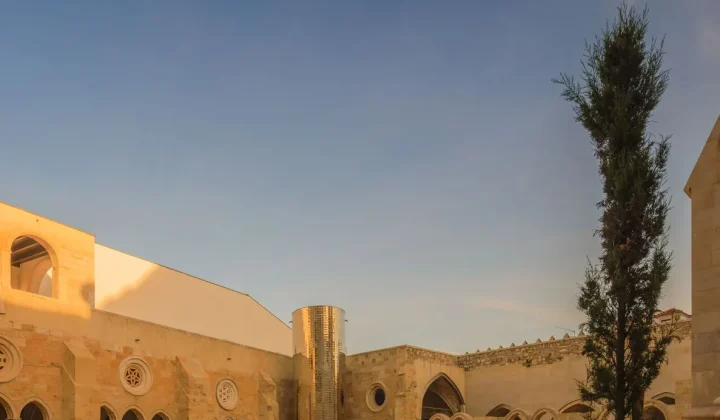
Adalberto Dias Architects Complete Restoration of Lisbon’s Patriarchal Cathedral and Archaeological Center
The restoration of the Sé de Lisboa by Adalberto Dias Arquitecto integrates a new archaeological center, preserved cloisters, and seven centuries of…
Read more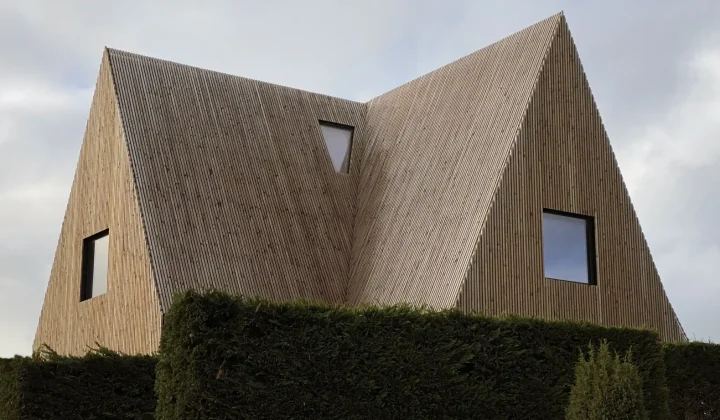
Vantieghem Talebi’s ‘House of Cards’ Brings Timber Geometry to Belgian Family Home
A new family house in Belgium by US- and Swiss-based practice Vantieghem Talebi uses a steeply pitched, card-house-inspired form clad in Douglas-fir…
Read moreRelated wiki

Adaptive Reuse in Architecture
Reference page for reuse, retrofit, conversion, embodied carbon and design constraints.
Read more