
Oscar Tanrero Degwitz Explores the Nuances of Architectural Criticism and Interpretation
Architect Oscar Tanrero Degwitz delves into the complexities of architectural criticism, drawing parallels with the philosophical insights of Ludwig Wittgenstein to question the limitations of language in expressing artistic and metaphysical dimensions.

Oscar Tanrero Degwitz, an architect, has recently articulated his perspectives on architectural criticism, addressing what he perceives as common misunderstandings. In a piece published on estudioarquitectos.cl, Degwitz expresses a distinct discomfort with the prevalent focus on “use and performance” in architectural critique, suggesting it detracts from deeper considerations.
The Nature of Critique
Degwitz posits that while he is not fond of the term “architectural criticism” itself, he accepts its necessity. He references his own written work, “On the Nature of Criticism,” to underscore his long-held understanding of its limitations and essence. His engagement with the field was significantly influenced by a pivotal moment when he encountered the profound ideas of Ludwig Wittgenstein.
Wittgenstein’s Influence on Language and Truth
A key influence on Degwitz’s thinking is Wittgenstein’s assertion that many philosophical propositions and questions are not false but absurd. This perspective, Degwitz explains, compels philosophical discourse to move beyond superficial forms and confront its core truth content. He elaborates on Wittgenstein’s exploration of tautologies – propositions that convey no new information and can be altered without changing their fundamental existence. Degwitz notes Wittgenstein’s finding that philosophy largely consists of such tautologies.
The Inexpressibility of Art and Philosophy
Furthermore, Degwitz highlights Wittgenstein’s rejection of interpretation, which he understands as an acknowledgment of language’s inability to fully capture what belongs to the artistic or philosophical-metaphysical dimensions of human experience. Wittgenstein suggested that explanations should be replaced by descriptions. Degwitz extends this idea, arguing that if this limitation applies to broader philosophical discourse, it is even more pertinent to the more confined realm of architectural criticism.
Ethics, Aesthetics, and the Mystery of Existence
Degwitz also touches upon Wittgenstein’s equation of ethics and aesthetics, citing the philosopher’s view that propositions in these domains cannot express anything “higher” and are inherently inexpressible and transcendent. This leads to the concept of the inexpressible, which Degwitz identifies as the core of mystery. He draws a connection between Wittgenstein’s ideas and the nature of the Gospels, suggesting they function as descriptive stories of life rather than attempts at explanation, with the exception of John’s mystical words about the Word becoming flesh.
Understanding vs. Explaining
The architect distinguishes between “understanding” and “explaining.” He warns that when attempting to explain complex ideas, especially those related to philosophical discourse, there is a significant risk of losing the original clarity, leading to confusion, contradiction, or a dilution of the intended meaning. This phenomenon, he observes, is prevalent in religious and philosophical discussions. Degwitz shares personal experiences where explanations, despite his apparent understanding of Wittgenstein’s impact, failed to resonate with others, suggesting a disconnect in how criticism is perceived and communicated.
Critique of a Wittgenstein Biography
Degwitz uses the book “Wittgenstein, Architect” as an example of a perspective he finds misaligned with Wittgenstein’s own thought. He argues that the book, while meticulously produced, attempts to forge connections that are ultimately impossible and to construct an intellectual discourse for a specific audience by leveraging aspects of Wittgenstein’s life and architectural work. He contends that this approach, in its reasoning and execution, ultimately betrays and overlooks the philosopher’s true essence. The brief period Wittgenstein spent as a registered architect in Vienna, constructing his sister Grete’s house, is noted as the primary focus of such biographical endeavors.
Datos clave:
| Aspecto | Descripción |
|—|—|
| Autor | Oscar Tanrero Degwitz |
| Tema principal | Crítica arquitectónica y la interpretación |
| Influencia filosófica | Ludwig Wittgenstein |
| Preocupación principal | Limitaciones del lenguaje en la crítica de arte y arquitectura |
| Ejemplo | Análisis del libro “Wittgenstein, Arquitecto” |
This exploration by Oscar Tanrero Degwitz offers a valuable perspective for architects, critics, and students of design, prompting a deeper consideration of how we articulate, understand, and critique the built environment. By engaging with Wittgenstein’s philosophical framework, Degwitz encourages a move beyond superficial analysis towards a more profound engagement with the meaning and impact of architectural works.
Fuente: estudioarquitectos.cl – Comprensión-Interpretación|Oscar Tanrero Degwitz – https://estudioarquitectos.cl/2026/05/31/comprension-interpretacionoscar-tanrero-degwitz/
Datos clave
| Punto | Detalle |
|---|---|
| Fuente | estudioarquitectos.cl |
| Fecha | 2026-05-31T23:34:41+00:00 |
| Tema | Comprensión-Interpretación |
Source
estudioarquitectos.cl Original publication: 2026-05-31T23:34:41+00:00
Related news

Handwoven Teak and Cord Outdoor Seating Debuts from Masaya and Abril Zepeda
Nicaraguan furniture brand Masaya has introduced two new handcrafted outdoor chairs — a rocking chair and a lounge chair — designed by…
Read more
Place in Mind: Hendricks Churchill Launches Hospitality Group to Revive Historic Properties
The architecture and interior design studio Hendricks Churchill has launched Place in Mind, a new hospitality group focused on acquiring, restoring, and…
Read more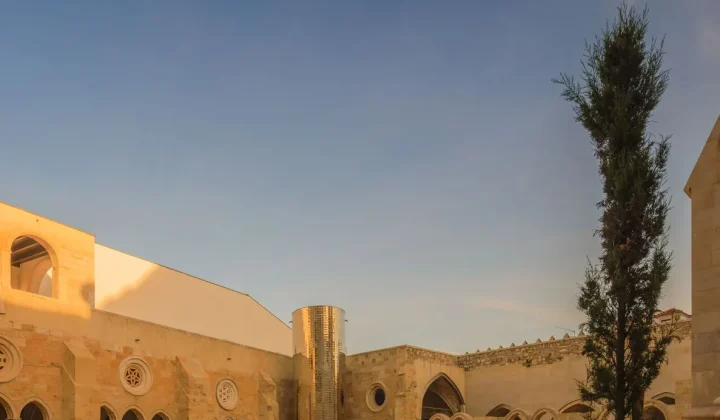
Adalberto Dias Architects Complete Restoration of Lisbon’s Patriarchal Cathedral and Archaeological Center
The restoration of the Sé de Lisboa by Adalberto Dias Arquitecto integrates a new archaeological center, preserved cloisters, and seven centuries of…
Read more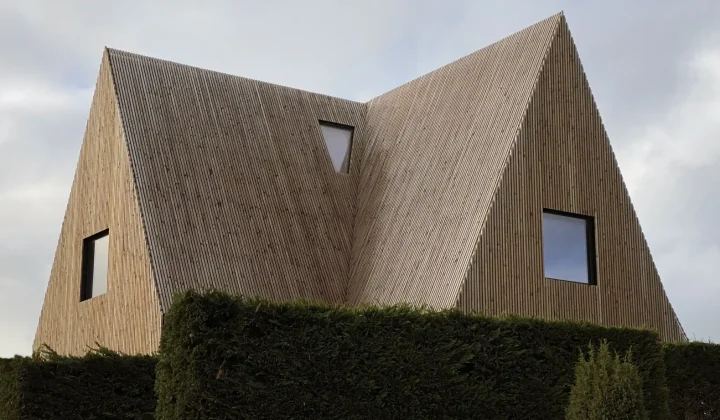
Vantieghem Talebi’s ‘House of Cards’ Brings Timber Geometry to Belgian Family Home
A new family house in Belgium by US- and Swiss-based practice Vantieghem Talebi uses a steeply pitched, card-house-inspired form clad in Douglas-fir…
Read moreRelated wiki

Adaptive Reuse in Architecture
Reference page for reuse, retrofit, conversion, embodied carbon and design constraints.
Read more