ArchiWorkshop’s “Urban Weave” Transforms Seoul Sports Complex into a Public Roof Terrace
A new proposal by ArchiWorkshop and Siaplan reimagines the Gwangjang-dong Multi-Sports Complex in Seoul as a continuous, multi-level public space, integrating sports, culture, and landscape.
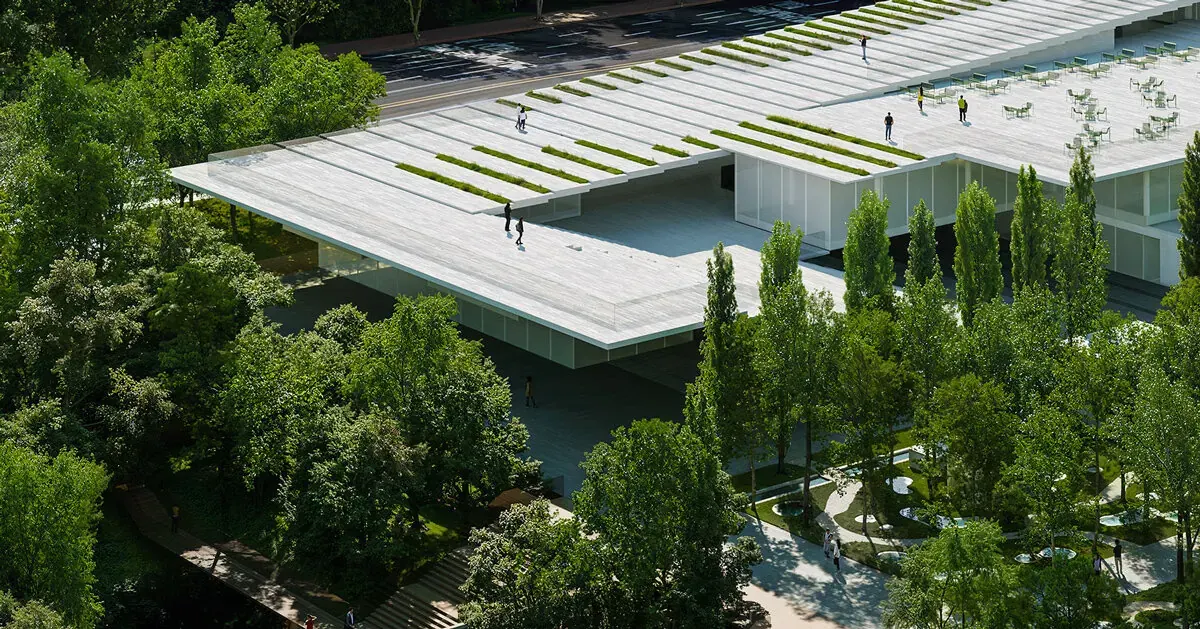
ArchiWorkshop, in collaboration with Siaplan, has unveiled “Urban Weave,” a visionary proposal to reimagine the Gwangjang-dong Multi-Sports Complex in Gwangnaru, Seoul. The project seeks to transform the existing site into an open, multi-level civic sports infrastructure that seamlessly integrates sport, landscape, and everyday public life, moving away from the traditional closed-off arena model.
A Continuous Public Roof Terrace
The core of the “Urban Weave” concept is a continuous public roof terrace that extends across the site, offering panoramic views toward the Han River. This elevated urban ground is designed to support circulation, gathering, and relaxation, serving as a key civic element that connects the complex to its surroundings. Beneath this expansive roofscape, shaded public zones and porous edges are envisioned to foster a dynamic interplay between interior programs and the urban fabric.
Reinterpreting Historical Context
Historically, Gwangnaru served as a vital river crossing, a place of movement, gathering, and dispersal that shaped urban activity. “Urban Weave” reinterprets this legacy not through historical mimicry, but by translating it into a contemporary spatial system that prioritizes movement, exchange, and public continuity. The architectural framework itself is conceived as an operative structure for organizing public life, positioning the sports complex as a civic platform where the city, landscape, and daily activities remain interconnected.
A Hybrid Active Grid
Instead of a conventional, event-driven container, the Gwangjang-dong Multi-Sports Complex is reimagined as an open, three-dimensional framework. This “Hybrid Active Grid” weaves together horizontal plates, terraces, circulation routes, and layered program zones. Sports, cultural, and community programs are distributed across multiple interconnected levels, with functions interwoven horizontally and vertically. This approach allows circulation and activity to overlap, creating continuous spatial relationships between movement, program, and the surrounding landscape.
Integrated Sports Facilities
At the heart of the “Urban Weave” structure is a fighting sports arena, designed to accommodate disciplines such as taekwondo and mixed martial arts. However, this arena is not conceived as a standalone venue. It is deeply embedded within the broader civic framework, ensuring that the complex supports both scheduled events and consistent daily use by the public.
Connecting Fragmented Areas
The proposal also addresses the fragmentation of existing facilities on the site. To the north, “Urban Weave” introduces a unified pedestrian network that reconnects these disparate elements. To the south and east, circulation pathways extend towards the river edge, establishing a crucial spatial link between the city and the waterfront. The entire site is envisioned as a transitional field, bridging the gap between landscape and urban infrastructure.
Key facts
| Feature | Detail |
|---|---|
| Project Name | Urban Weave |
| Location | Gwangnaru, Seoul, Republic of Korea |
| Architects | ArchiWorkshop, Siaplan |
| Area | 30,000 sqm |
| Concept | Continuous public roof terrace and multi-level civic sports infrastructure |
This development matters for Paionia7 readers as it presents an innovative approach to urban sports complex design, emphasizing public accessibility, integration with the urban fabric, and the creation of dynamic, multi-functional public spaces. The “Urban Weave” concept offers a compelling model for how sports facilities can evolve beyond traditional typologies to become vibrant civic hubs.
Source: https://www.designboom.com/architecture/archiworkshop-seoul-sports-complex-continuous-public-roof-terrace-urban-weave/
Source
Designboom Original publication: 2026-06-16T19:30:29+00:00
Related news
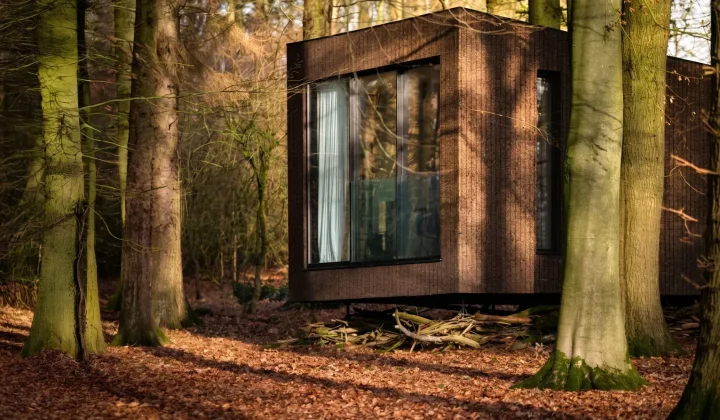
Koto launches Haku, a mobile prefab hotel suite built on a wheeled chassis to bypass UK planning restrictions
UK architecture studio Koto has unveiled Haku, a fully mobile prefabricated suite that legally qualifies as a caravan, allowing landowners and hotel…
Read more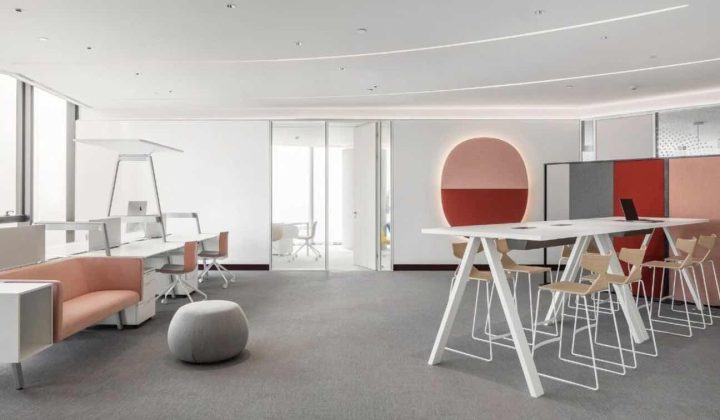
HONG Designworks Completes Private Office in Xi’an That Balances Memory, Materiality, and Long-Term Use
The Xi’an office by HONG Designworks integrates a folded steel staircase, retained furniture from a previous workspace, and a restrained purple-gray palette…
Read more
Handwoven Teak and Cord Outdoor Seating Debuts from Masaya and Abril Zepeda
Nicaraguan furniture brand Masaya has introduced two new handcrafted outdoor chairs — a rocking chair and a lounge chair — designed by…
Read more
Place in Mind: Hendricks Churchill Launches Hospitality Group to Revive Historic Properties
The architecture and interior design studio Hendricks Churchill has launched Place in Mind, a new hospitality group focused on acquiring, restoring, and…
Read moreRelated wiki
Adaptive Reuse in Architecture
Reference page for reuse, retrofit, conversion, embodied carbon and design constraints.
Read more