
Atelier Backlar Constructs Clifftop House in Azores Using Recycled Ocean Plastic
Portuguese studio Atelier Backlar has completed The Blue House on São Miguel Island, a striking coastal dwelling built within the ruins of a former whaler's tavern, clad in recycled ocean plastic and locally sourced timber.
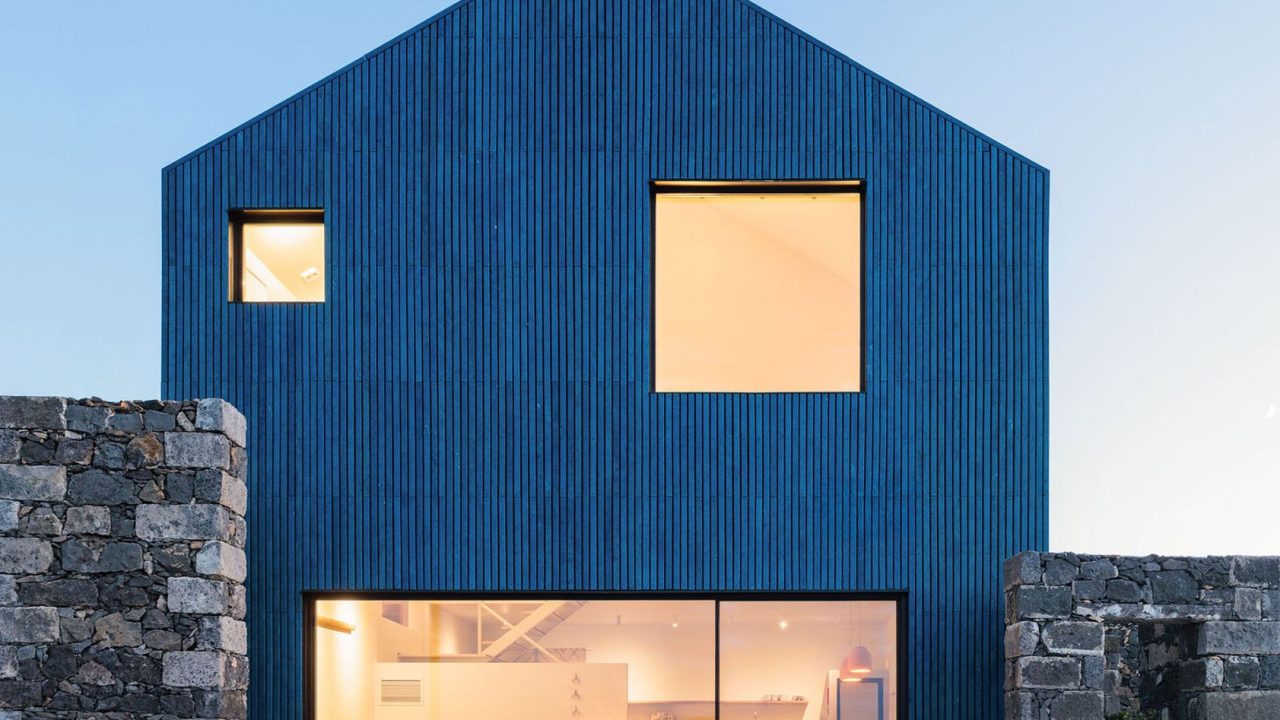
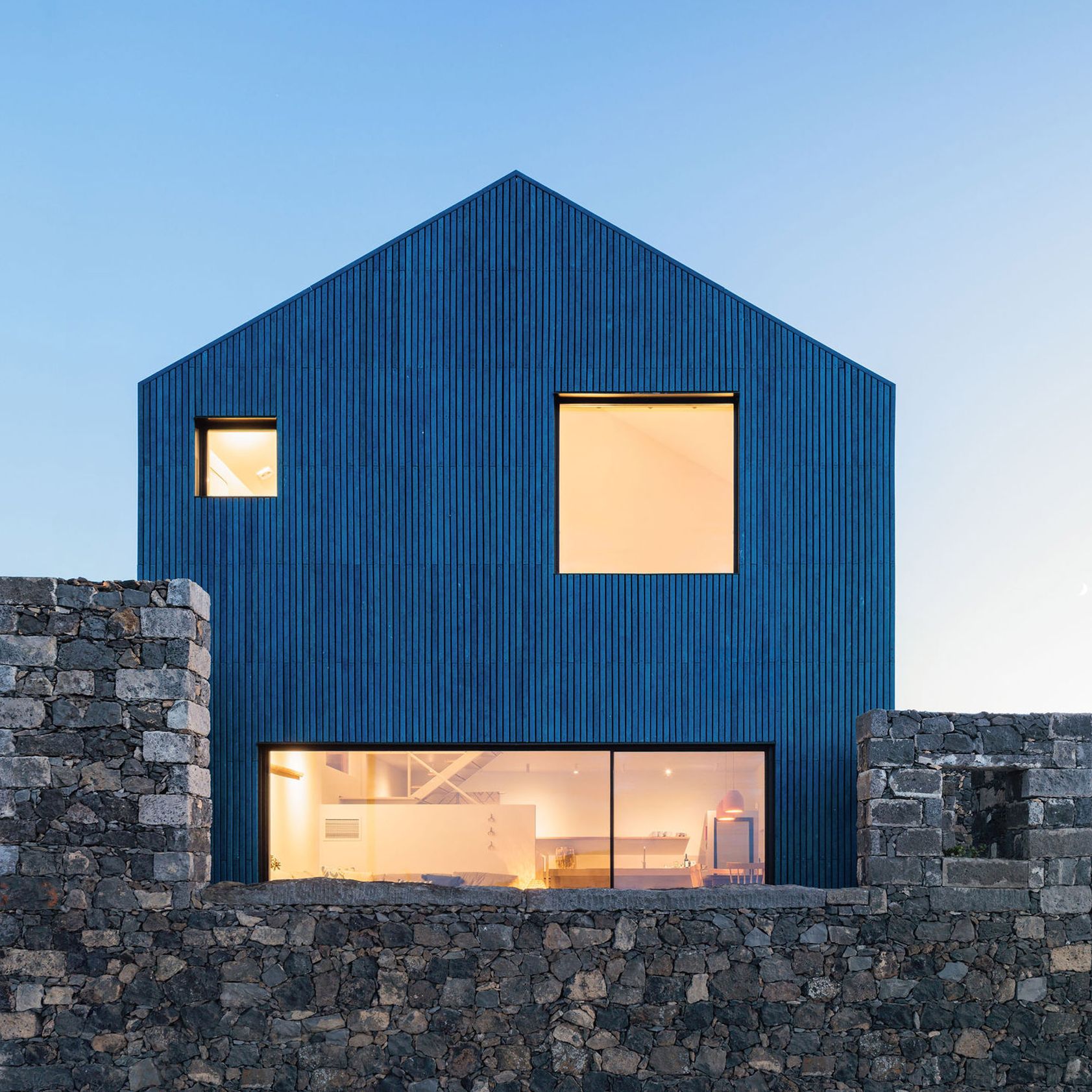
Portuguese architecture studio Atelier Backlar has completed The Blue House, a unique residential project situated on a clifftop on São Miguel Island in the Azores. The design integrates new construction with the ruins of a former whaler’s tavern, utilizing recycled ocean plastic for its distinctive blue facade and locally sourced timber for its structural elements. The house overlooks the traditional whaling bay of Capelas, blending historical context with contemporary sustainable building practices.
Preserving the Past, Building the Future
The project involved carefully preserving the perimeter basalt stone walls of the 1980s-ruined whaler’s tavern. Atelier Backlar collaborated with local basalt stone builders to maintain the integrity of these historical elements. Within the protected stone shell, the studio erected a new timber structure using prefabricated structural insulated panels (SIPs). This approach was chosen for its environmental performance, particularly its low embodied carbon.
“We chose to use a structurally insulated panel (SIP) timber system as we wanted wood to be the primary structural material due to its low embodied carbon and environmental performance,” Jeremy Stewart Backlar, co-founder of Atelier Backlar, told Dezeen. The prefabrication of SIPs allowed for high precision and rapid assembly on-site, with the timber structure erected in just 10 days. Stewart Backlar highlighted the system’s suitability for the Azorean climate and seismic conditions.
A Facade of Recycled Ocean Plastic
A defining feature of The Blue House is its exterior cladding, which covers the facade, roof, and external deck. This cladding is made from recycled ocean plastic, transforming waste into a durable material capable of withstanding the demanding coastal environment of the Azores. The studio noted that sourcing recycled plastic at this architectural scale presented a significant challenge, as recycling facilities typically produce smaller elements.
“Recycled ocean plastic is used within a circular strategy, transforming single-use waste into a protective material capable of resisting the demanding coastal conditions of the Azores, while adding narrative depth and textural character,” explained Backlar. The vibrant blue colour of the facade intentionally merges with the tones of the sky and sea, creating a subtle dialogue with the surrounding landscape and providing a striking contrast to the rough, natural basalt stone walls.
Design for Light and Views
The house’s southern facade is partially obscured by a neighboring property, influencing the placement of windows and openings. These were strategically positioned to maximize natural light penetration while framing views of the landscape and maintaining privacy from the street. A low, wide window in the open-plan living space, featuring an integrated timber seat, offers unobstructed views towards the bay. This design element draws inspiration from historical whalers’ lookout shelters, subtly referencing the island’s maritime heritage.
Material and Colour Palette
Atelier Backlar opted for a restrained material and colour palette throughout the interior, aiming for a serene and pared-back aesthetic. Much of the furniture was custom-made in collaboration with local craftspeople, including dining tables, coffee tables, wooden benches, and kitchen cabinetry. The warm, soft materiality of the wood furniture and built-in sofa contributes to a sense of comfort and tactile richness.
The downstairs floor is finished with microcement, which also forms a large built-in sofa facing the sea. An antique harpoon, once used for whaling in Capelas Bay, is mounted on the wall above the sofa. This artifact serves as a historical marker, transformed from a tool of exploitation to a symbol of changed cultural values, reflecting a shift towards whale protection.
The open-plan living and dining area flows into the kitchen, where counters are also finished with microcement. The staircase leading from the living room to the upper level was designed to be lightweight, using six-millimetre steel plates and timber treads to allow morning sunlight to filter into the space.
Upstairs, the three bedrooms feature wooden floors, pale walls, and accents of blue that echo the exterior facade. Finishes incorporate local craft traditions, such as willow lampshades made by local artisans using 17th-century Jesuit weaving techniques, and acacia door handles reinterpreting traditional Azorean wooden locking systems. Bathrooms are finished with neutral tones and include custom-made fixtures.
Key facts
- Project Type: Residential House
- Location: São Miguel Island, Azores, Portugal
- Architect: Atelier Backlar
- Key Materials: Recycled ocean plastic, locally sourced timber, basalt stone, microcement
- Construction Method: Prefabricated Structural Insulated Panels (SIPs)
This project offers a compelling case study in sustainable adaptive reuse and the innovative application of recycled materials in architecture. For designers and architects, The Blue House demonstrates how historical structures can be revitalized with contemporary, eco-conscious solutions. The use of recycled ocean plastic highlights the potential for waste materials to become valuable architectural components, while the timber SIPs showcase efficient and low-carbon construction methods relevant to global housing challenges. For residents and communities in coastal areas, it presents a model for building resiliently in challenging environments while respecting local heritage and natural resources. The integration of local craft traditions into the interior design also emphasizes the importance of cultural preservation within contemporary architectural practice.
Source: Dezeen – https://www.dezeen.com/2026/05/23/atelier-backlar-blue-house-azores-portugal-recycled-ocean-plastic/
Source
Dezeen Original publication: 2026-05-23T10:00:27+00:00
Related news

Handwoven Teak and Cord Outdoor Seating Debuts from Masaya and Abril Zepeda
Nicaraguan furniture brand Masaya has introduced two new handcrafted outdoor chairs — a rocking chair and a lounge chair — designed by…
Read more
Place in Mind: Hendricks Churchill Launches Hospitality Group to Revive Historic Properties
The architecture and interior design studio Hendricks Churchill has launched Place in Mind, a new hospitality group focused on acquiring, restoring, and…
Read more
Adalberto Dias Architects Complete Restoration of Lisbon’s Patriarchal Cathedral and Archaeological Center
The restoration of the Sé de Lisboa by Adalberto Dias Arquitecto integrates a new archaeological center, preserved cloisters, and seven centuries of…
Read more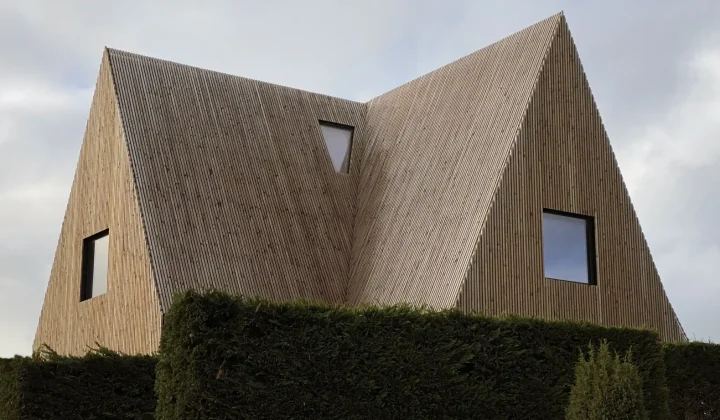
Vantieghem Talebi’s ‘House of Cards’ Brings Timber Geometry to Belgian Family Home
A new family house in Belgium by US- and Swiss-based practice Vantieghem Talebi uses a steeply pitched, card-house-inspired form clad in Douglas-fir…
Read moreRelated wiki

Adaptive Reuse in Architecture
Reference page for reuse, retrofit, conversion, embodied carbon and design constraints.
Read more