
Heliotrope Architects Designs Net-Zero Residence on San Juan Island’s Rugged Coastline
A new cedar-clad home by Heliotrope Architects draws inspiration from Sea Ranch, embracing a site-sensitive approach and net-zero energy goals on a windswept San Juan Island shore.
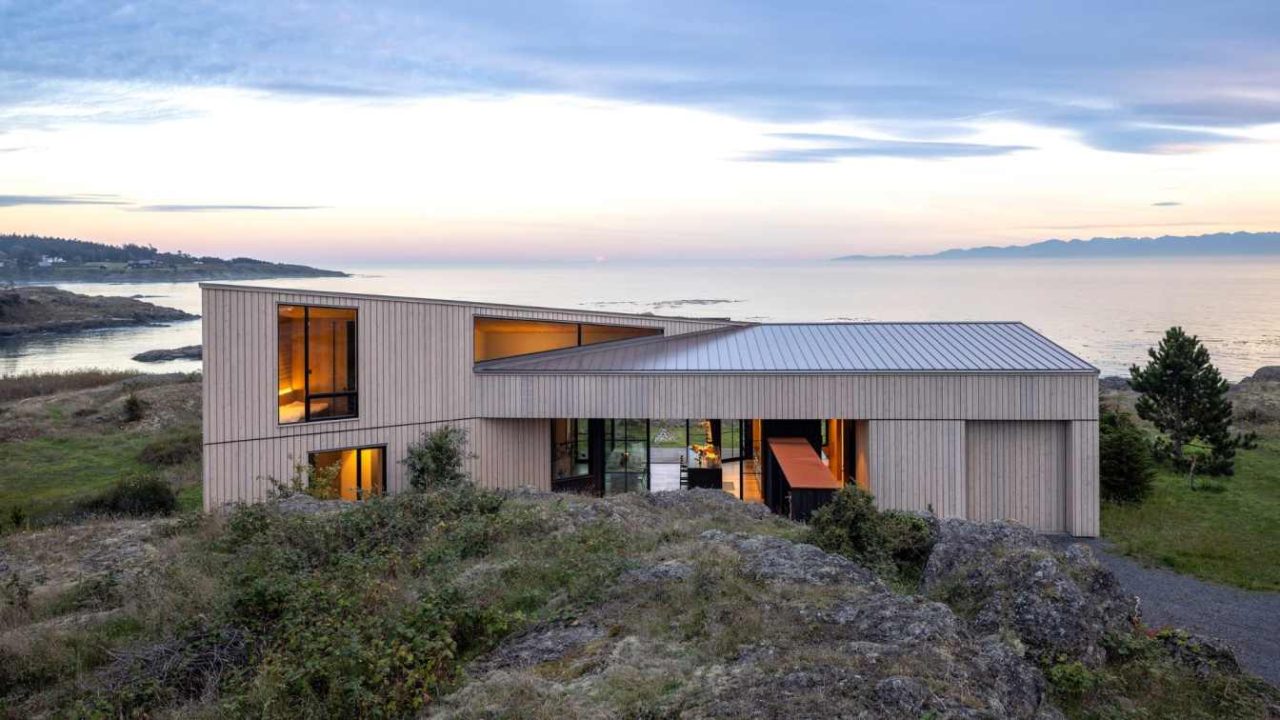
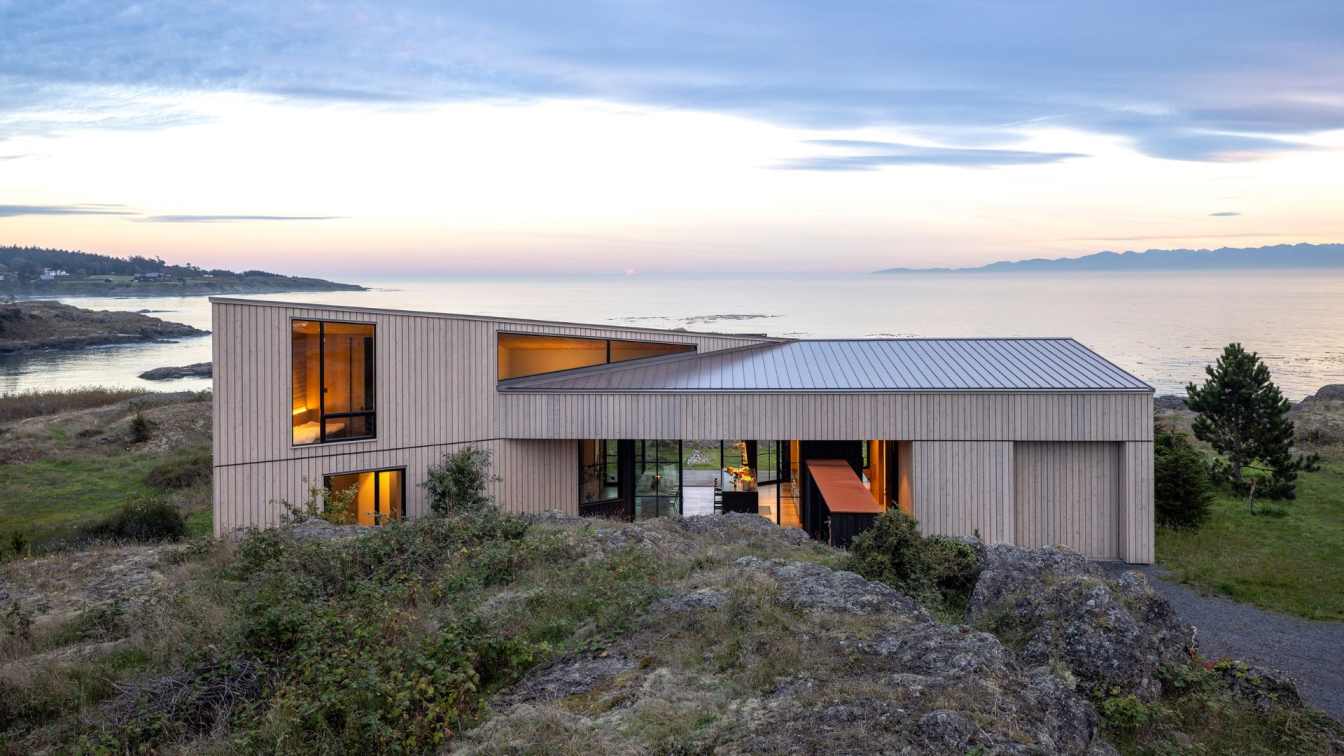
Heliotrope Architects has completed a new residence on San Juan Island, designed to serve as a comfortable getaway and a future primary home for clients who are long-time visitors to the archipelago. The 2,474-square-foot home is situated along a rocky, windswept shoreline, directly exposed to the elements from the Pacific Ocean via the Strait of Juan de Fuca.
Site Sensitivity and Inspiration
The design for the False Bay residence grew from a shared interest between the clients and Heliotrope Architects in a site-sensitive approach to design and a commitment to net-zero energy principles. The project’s aesthetic and material palette were significantly influenced by the iconic Sea Ranch development in Sonoma County, California. Recognizing a visual and environmental similarity between the rugged Salish Sea shoreline and the northern California coast, the design team and clients drew inspiration from Sea Ranch’s building forms and weathered materials.
Navigating the Landscape
The site’s numerous rock outcroppings presented a challenge in locating the structure. The architectural response carefully nestles the home between these natural features, employing a “bow tie” footprint adjacent to a substantial landward rock formation. This strategy minimizes site disturbance and allows the home to coexist harmoniously with its dramatic natural surroundings. The space created between the house and a prominent rock feature serves as a sheltered outdoor room, acting as a terrace protected from the prevailing winds—a crucial element on such an exposed location.
Views and Privacy
With neighboring homes situated to the east and west, the design strategically directs views. Primary vistas are oriented south towards the water and north towards the prominent rock feature. The building’s orientation and fenestration ensure privacy from adjacent properties, with opaque facades facing east and west.
Embracing the Environment
The exposed coastal environment limits the types of vegetation that can thrive. Monterey cypress and native shore pines have been incorporated to help shelter the residence, intermingling with native cactus and grasses to create a landscape that is both resilient and contextually appropriate.
Living Spaces
The False Bay residence features a thoughtful layout that accommodates both guests and the homeowners. Primary and guest suites are located on the ground floor. Upstairs, a loft suite includes bunk beds and a reading nook, offering elevated views northward over the rock outcropping.
Interior Design
The interiors are designed to be calming and neutral, creating a serene atmosphere that complements the dramatic exterior. A blend of cedar and plasterboard wall surfaces, complemented by wood floors and earth-toned tile work, defines the interior aesthetic. Furnishings are selected for comfort and coziness, arranged to maximize the abundant views available from every space.
The open-plan living areas are anchored by an 11-foot carbonized-wood dining table, which visually reinforces the connection between the home and the rocky shoreline. Large, sliding glass doors seamlessly connect the indoor living spaces with the outdoor terrace, blurring the lines between interior and exterior environments.
Sustainable Performance
The building envelope is engineered to exceed standard building codes, incorporating enhanced insulation and high-performance windows. A high-efficiency heating system with heat-recovery ventilation ensures optimal indoor air quality and energy conservation. The home’s airtightness has been tested to 1.5 ACH, and an 8 kW solar array contributes to its energy generation. The design is calculated to surpass the 2030 Challenge targets for energy performance, underscoring the commitment to net-zero energy goals.
This residence exemplifies how thoughtful design can respond to challenging coastal sites while prioritizing sustainability and occupant comfort. The integration of local inspiration, site-specific solutions, and advanced energy systems makes it a noteworthy project in residential architecture.
Datos clave
| Feature | Detail |
|—————————|———————————————————————|
| Location | San Juan Island Archipelago, Washington |
| Architect | Heliotrope Architects |
| Size | 2,474 square feet |
| Key Design Principles | Site-sensitive, Net-zero energy, Inspired by Sea Ranch |
| Notable Features | “Bow tie” footprint, Outdoor terrace, South-facing water views |
This project is relevant to Paionia7 readers for its demonstration of how architecture can engage with challenging natural environments. The emphasis on site-specific design, the use of natural materials, and the commitment to net-zero energy performance offer valuable insights into sustainable residential development in exposed coastal locations.
Fuente: Amazing Architecture – Heliotrope designs False Bay residence on San Juan Island – https://amazingarchitecture.com/houses/located-along-a-rocky-windswept-shoreline-heliotrope-designs-false-bay-residence-on-san-juan-island
Datos clave
| Punto | Detalle |
|---|---|
| Fuente | Amazing Architecture |
| Fecha | 2026-06-03T00:25:34+00:00 |
| Tema | Located along a rocky, windswept shoreline, Heliotrope designs False Bay residence on San Juan Island |
Source
Amazing Architecture Original publication: 2026-06-03T00:25:34+00:00
Related news

When Film Directors Become Interior Designers: Guadagnino, Lynch, Anderson and Almodóvar Step Off Screen
From Luca Guadagnino’s Zara Home collection to David Lynch’s Paris club and Wes Anderson’s train carriage, a wave of collaborations is blurring…
Read more
Jesus Mari Lazkano Examines Changing Landscapes Through Painting and Animated Film at Basque Luxury Studio
The Basque artist’s exhibition ‘Azken Natura’ brings together six large-scale paintings and a 22-minute animated film that traces the melting of the…
Read more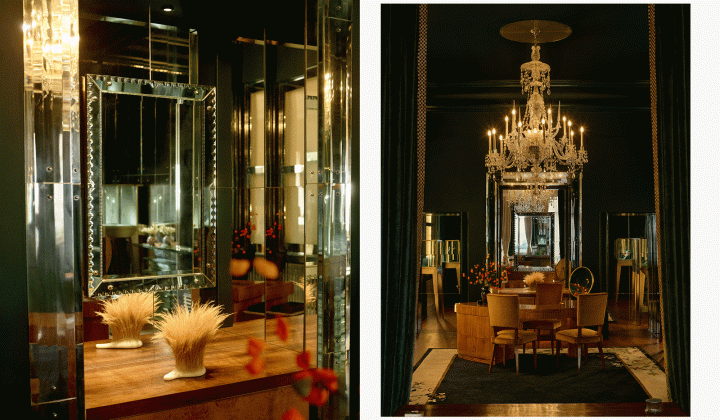
Glenn Spiro opens intimate jewellery atelier in Mayfair with designer Valerie Name Bolaño
The London jewellery house’s new boutique at 26 Bruton Street blends antiques, bespoke furniture and a monochrome palette to create a residential…
Read more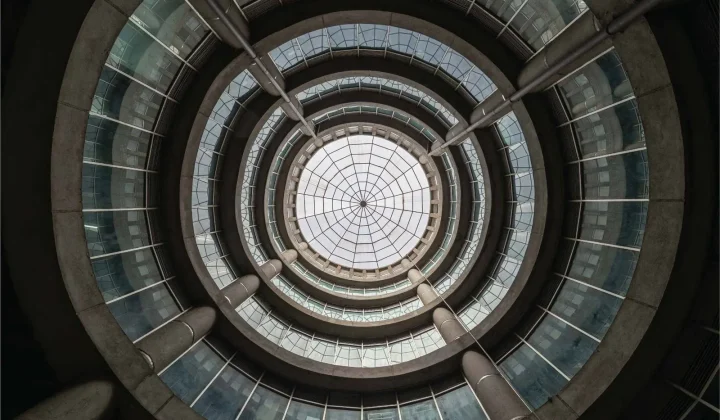
RIBA International Prize 2026 Shortlist Announced: Four Projects Vie for World’s Best Building
The Royal Institute of British Architects has revealed four projects competing for the 2026 International Prize, marking the award’s tenth anniversary with…
Read moreRelated wiki

Adaptive Reuse in Architecture
Reference page for reuse, retrofit, conversion, embodied carbon and design constraints.
Read more