
Housing, Residential Design, and Living Patterns: What Readers Can Verify Now
Housing is often discussed through environmental goals and design-led storytelling, but those frames do not prove how a home performs in daily life. Here is a practical guide to reading residential claims more carefully and knowing what to verify next.
Short answer
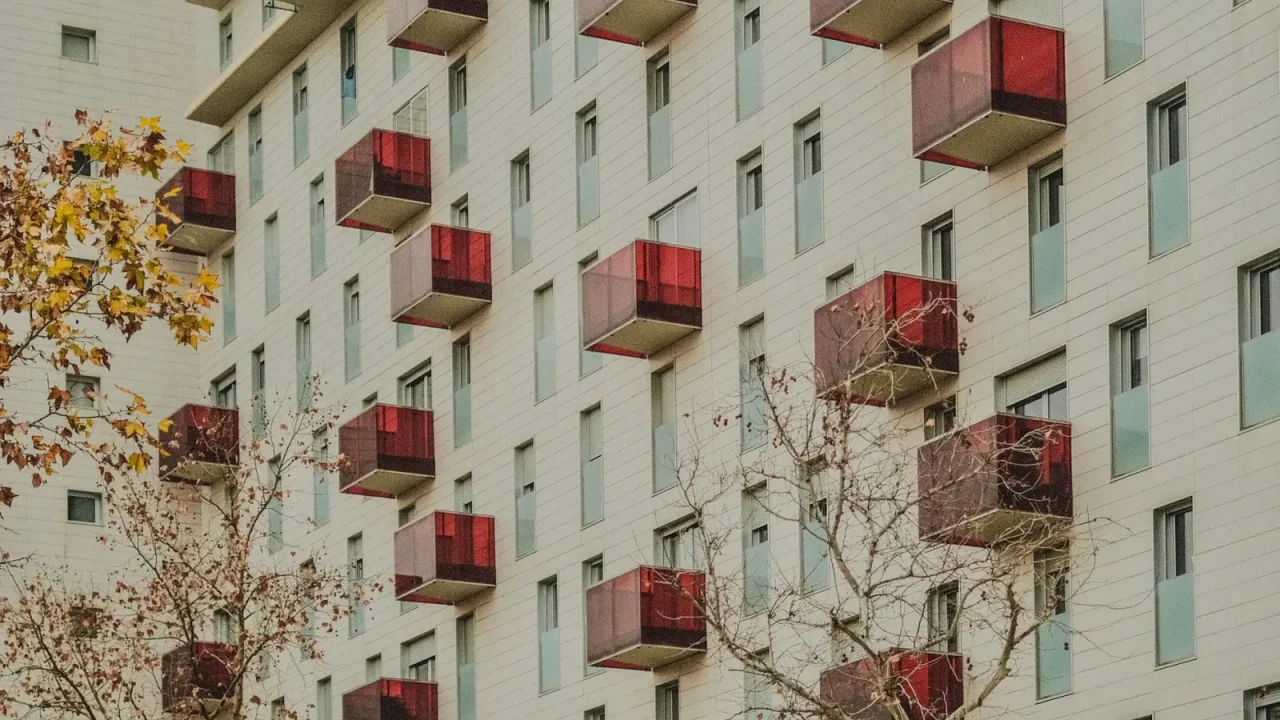
Many current housing discussions combine two things: broad environmental arguments about cities and highly curated presentation of individual projects. Public sources support the environmental context in general terms, and they also show how widely residential projects are now presented through architecture media. What those sources do not automatically prove is that a specific housing project is more sustainable, more flexible, or better to live in just because it is described that way. For readers, the practical takeaway is simple: separate the big-picture argument from the evidence shown for a particular building.
Checked against publicly available sources in this article: As of this revision, the cited sources support broad urban environmental framing and the existence of design-led project publishing. They do not substantiate stronger claims about household-size shifts, post-pandemic domestic change, affordability, regulation, or measured residential performance. Those points need additional current sourcing before publication if they are to be added.
What changed in how housing is discussed
Housing is often framed as part of a larger urban system
UNEP describes cities as major sites of resource use and environmental impact. Within that framework, housing is often discussed not only as shelter or architecture, but as part of land use, infrastructure, material use, and long-term urban efficiency. That supports a careful, limited conclusion: environmental reasoning now commonly shapes how residential design is presented in public discussion.
That same source does not justify a blanket claim that all housing has moved in one clear direction, or that any given project delivers better outcomes simply because it uses the language of efficiency, compactness, or sustainability.
Residential projects are often encountered through curated media
Architecture publishing platforms such as ArchDaily make it easy to browse completed housing projects, drawings, and photography from many places. For readers, that expands access to examples and design references.
But curated project coverage is selective. It usually foregrounds design intent, images, and key concepts. Unless a project page explicitly documents cost, occupancy, resident experience, or measured building performance, those outcomes should not be assumed from presentation quality alone.
What this means for readers
Treat trend language carefully
Words such as *flexible*, *community-focused*, *future-ready*, and *sustainable* may describe real design intentions, but they are not proof on their own. A strong public case usually includes plans, sections, diagrams, or a clear explanation of what is shared, retained, or newly built.
Separate project evidence from bigger narratives
A city-scale source can explain why resource efficiency matters. A project feature can show how one architect or developer presents a scheme. Neither source type, by itself, proves how well a home works in daily use. Readers get a clearer picture when they ask which claims are contextual and which are actually demonstrated.
Expect trade-offs, not only benefits
Housing design decisions usually involve trade-offs. Shared amenities may add value, but they may also coincide with smaller private areas. Compact planning may fit a broader land-use argument, while still raising practical questions about storage, privacy, daylight, circulation, or adaptability. These are not reasons to dismiss a project; they are reasons to read it more carefully.
A practical way to assess housing claims
Checklist for readers
Use this checklist when reviewing a housing feature, project page, or development description:
- Name the main claim. Is the project being sold as greener, denser, more communal, or more adaptable?
- Look for drawings before relying on adjectives. Plans and sections often reveal more than photography.
- Check what is actually shown. Can you identify private space, shared space, circulation, outdoor areas, and any retained fabric?
- Be cautious with undefined terms. If words like *flexible* or *community-led* are used, look for visible design evidence or documented outcomes.
- Notice what is missing. If there is no information about maintenance, occupancy, cost, or lived experience, treat the claims as partial.
- Prefer direct documentation. Official project materials or primary documentation are usually stronger than broad summaries.
Facts, limits, and implications at a glance
| Topic | What the cited sources support | What is not established here | Why readers should care |
|---|---|---|---|
| Environmental framing of housing | UNEP supports the broad idea that cities are major sites of resource use and environmental impact | That any individual housing project is successful on those terms | Big-picture context is useful, but it is not project proof |
| Public visibility of housing projects | Architecture media such as ArchDaily publish large numbers of project pages, drawings, and images | That published projects represent the sector as a whole | Visibility can widen access to examples, but selection matters |
| Sustainability claims | Public-facing project coverage may describe a project as sustainable | Measured performance, resident outcomes, or long-term results unless explicitly documented | Marketing language can outpace evidence |
| Shared-space claims | Shared amenities can be presented as a design strength | Whether they improve daily life in practice without more evidence | Readers should compare shared benefits with private-space trade-offs |
| Claims about “what changed” in living patterns | Not established by the current cited sources | Household change, post-pandemic behavior, affordability shifts, or regulatory effects | These are time-sensitive topics and need stronger current data |
Common reading mistakes to avoid
Do not mistake a polished project page for full evidence
Good photography and concise design language can make a project legible and appealing, but they do not substitute for evidence about long-term use, affordability, or resident satisfaction.
Do not assume one case study proves a trend
A single published project can illustrate an idea, but it does not establish that the same approach is widespread, effective, or transferable.
Do not confuse environmental context with verified building performance
A strong urban sustainability argument may explain why a design approach matters in principle. It still does not confirm the performance of a specific building unless that building's evidence is shown.
What to do next
If you are reading about housing for design insight, buying research, or general understanding, a practical next step is to compare more than one source type before drawing conclusions. Use city- or policy-level sources for context, and project-level sources for design specifics. If a claim could affect a real decision, recheck it against current official or primary documentation before relying on it.
Short answers
Has housing design changed in one clear direction?
No clear universal shift is established by the sources used here. A more defensible conclusion is that housing is often discussed through stronger environmental framing, while individual projects are widely presented through design-led media.
Are shared amenities proof of better housing?
No. They may be a strength, but readers should ask how they relate to private space, circulation, and everyday use.
Which facts still need verification?
Any claim about changing household patterns, post-pandemic domestic habits, affordability, regulation, or measured housing performance needs additional current and specific sourcing before it should be treated as established.
Sources
- UNEP: Cities and resource efficiency
- ArchDaily
- See our housing coverage for related context.
Related news

Handwoven Teak and Cord Outdoor Seating Debuts from Masaya and Abril Zepeda
Nicaraguan furniture brand Masaya has introduced two new handcrafted outdoor chairs — a rocking chair and a lounge chair — designed by…
Read more
Place in Mind: Hendricks Churchill Launches Hospitality Group to Revive Historic Properties
The architecture and interior design studio Hendricks Churchill has launched Place in Mind, a new hospitality group focused on acquiring, restoring, and…
Read more
Adalberto Dias Architects Complete Restoration of Lisbon’s Patriarchal Cathedral and Archaeological Center
The restoration of the Sé de Lisboa by Adalberto Dias Arquitecto integrates a new archaeological center, preserved cloisters, and seven centuries of…
Read more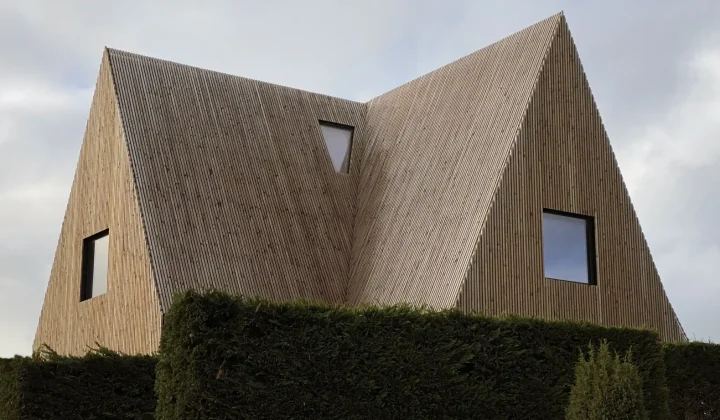
Vantieghem Talebi’s ‘House of Cards’ Brings Timber Geometry to Belgian Family Home
A new family house in Belgium by US- and Swiss-based practice Vantieghem Talebi uses a steeply pitched, card-house-inspired form clad in Douglas-fir…
Read moreRelated wiki
Adaptive Reuse in Architecture
Reference page for reuse, retrofit, conversion, embodied carbon and design constraints.
Read more