
Kate Diamond: A Legacy of Excellence in Public Architecture
A cautious editorial draft on how to assess Kate Diamond’s public-architecture legacy, with key award and project claims held for verification before publication.

Summary Box
Kate Diamond’s public-architecture legacy should be assessed through verified project roles, civic function, and documented public value rather than broad praise alone. The sources available for this draft support a cautious framework for evaluating architecture, cities, and source reliability, but they do not verify a specific award, project list, professional title, or biographical timeline for Diamond.
Short Answer
The careful answer is that Kate Diamond may be framed as a figure to evaluate through the standards of public architecture, but the present source base does not establish the specific award-winner claim in the title. Before publication, editors should confirm the award name, issuing body, year, official citation, current affiliation, and project credits from primary sources.
Public architecture matters because buildings and spaces used by civic, cultural, educational, or institutional communities carry obligations beyond private preference: they shape access, public identity, long-term maintenance, and the everyday experience of shared places. UNEP’s work on cities and resource efficiency also places urban environments within wider questions of resource use and sustainable development.
Context: What “Legacy” Should Mean Here
In architecture writing, a legacy claim is strongest when it connects a person’s documented role to built work, public use, institutional purpose, and independent evaluation. For a public-architecture profile, that means distinguishing between firm-wide credit, individual authorship, client goals, award language, and later critical reception.
This distinction matters because architecture coverage often combines project promotion, professional biography, visual description, and criticism. A careful profile should therefore avoid treating an award listing or portfolio summary as proof of long-term civic impact unless the claim is supported by official records or substantial independent coverage.
Why Public Architecture Requires a Higher Standard of Evidence
Public architecture is not only about how a building looks. It is also about who can use it, how it serves an institution or community, whether it can adapt over time, and how responsibly it sits within the environmental pressures of urban life.
For that reason, any profile of Diamond should separate verified facts from interpretation. A project can be visually compelling, but claims about accessibility, sustainability, performance, cost, public benefit, or community impact require stronger documentation than descriptive commentary.
Evidence Table for Editorial Review
| Claim area | What can be said now | What must be verified before publication | Best source type |
|---|---|---|---|
| Award-winner framing | Not established by the current cited sources | Award name, year, organiser, jury citation, and official announcement | Official award body or organiser page |
| Professional identity | Not established by the current cited sources | Preferred title, current affiliation, and professional role | Official biography, firm page, institutional profile |
| Public project legacy | Not established by the current cited sources | Project names, locations, clients, completion status, and Diamond’s specific role | Client, agency, institution, or firm project pages |
| Design significance | Can be discussed only as an evaluation framework | Independent reviews, interviews, lectures, and project documentation | Reputable architecture press and primary project records |
| Sustainability or performance | Should not be claimed specifically | Certifications, measured performance, materials claims, or resource outcomes | Certification body, owner, or technical case study |
How to Evaluate Kate Diamond’s Public-Architecture Legacy
Use the following checks before turning this draft into a full public profile:
- Confirm the recognition: identify the exact award, the organisation that granted it, the year, and the official language used to describe the achievement.
- Verify individual role: distinguish Diamond’s personal credit from firm-wide, partner-level, collaborator, consultant, or advisory roles.
- Test the public function: confirm whether each project serves civic, cultural, educational, institutional, or publicly accessible use.
- Separate design intent from outcome: attribute intentions to interviews, lectures, firm statements, or client briefs, and treat later performance claims separately.
- Check environmental claims carefully: do not describe a project as sustainable, resilient, low-carbon, or resource-efficient unless primary technical evidence supports it.
- Use independent criticism as context: architecture press can help explain reception, but it should not replace official records for project facts.
What Readers Should Watch Next
Readers interested in Diamond’s contribution should look for official project records, award announcements, and substantive architecture criticism rather than unsourced biographical summaries. The most useful evidence will show not only that a project exists, but also what role Diamond played and how the work served public users.
The strongest eventual version of this profile would pair a verified award citation with a small set of public-facing projects, each documented by primary sources and then interpreted through independent design coverage. Until those facts are confirmed, the article should remain framed as a cautious assessment rather than a definitive career legacy.
Sources
- UNEP: Cities and resource efficiency — official source for the broader relationship between cities, resources, and sustainable development.
- ArchDaily — architecture publication to use only for independently published project or profile coverage once a specific relevant article is identified.
- “Casting shadows of doubt: Perspectives of reputable journalists on fake news” — scholarly source supporting editorial caution around source reliability and verification.
Related news
Mariel Lozano Studio uses custom furniture to maximise compact Mexico City apartment
Mexico City-based Mariel Lozano Studio has designed the interiors and custom furniture for San Luis, a compact rental residence in Mexico City’s…
Read more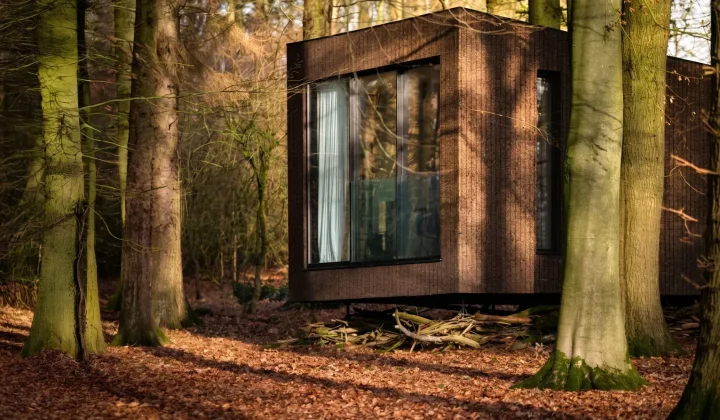
Koto launches Haku, a mobile prefab hotel suite built on a wheeled chassis to bypass UK planning restrictions
UK architecture studio Koto has unveiled Haku, a fully mobile prefabricated suite that legally qualifies as a caravan, allowing landowners and hotel…
Read more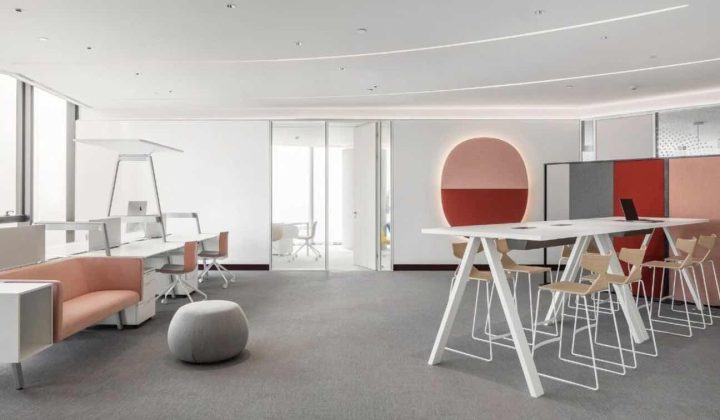
HONG Designworks Completes Private Office in Xi’an That Balances Memory, Materiality, and Long-Term Use
The Xi’an office by HONG Designworks integrates a folded steel staircase, retained furniture from a previous workspace, and a restrained purple-gray palette…
Read more
Handwoven Teak and Cord Outdoor Seating Debuts from Masaya and Abril Zepeda
Nicaraguan furniture brand Masaya has introduced two new handcrafted outdoor chairs — a rocking chair and a lounge chair — designed by…
Read moreRelated wiki
Adaptive Reuse in Architecture
Reference page for reuse, retrofit, conversion, embodied carbon and design constraints.
Read more