
Kengo Kuma Transforms Historic Guangzhou Shipyard into a Walkable Cultural Hub
The former Guangzhou Shipyard has been reimagined by Kengo Kuma and Associates into a vibrant arts and cultural center, preserving its industrial past through a unique rooftop landscape.
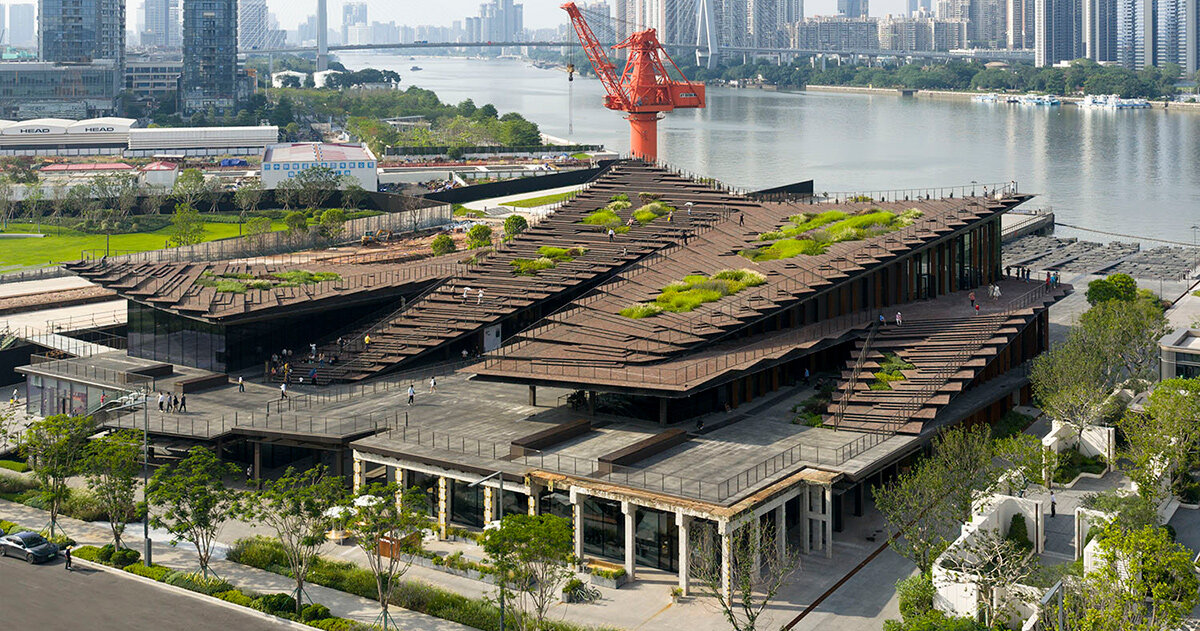
Kengo Kuma and Associates has unveiled Shipyard 1914, a striking redevelopment of a historic shipyard in Guangzhou, China. The project thoughtfully transforms the former industrial site into a 4,400-square-meter mixed-use complex dedicated to art, retail, cafés, and cultural programming. The design masterfully integrates the site’s industrial past, particularly its original slipway, into a contemporary public space that offers a new civic perspective on the city and the Pearl River.
A City’s Memory
Guangzhou, a city often characterized by its flat topography, possessed a unique constructed landscape in its former shipyard’s slipway, a ramp that once guided ships into the Pearl River. Kengo Kuma and Associates’ intervention honors this inherited infrastructure, not by erasing it, but by extending it. The project preserves the slope of the old slipway, elevating it into a layered roofscape that invites exploration, rest, and panoramic views. This approach ensures that the memory of the shipyard’s maritime history remains legible within the new architectural form.
The building’s name, Shipyard 1914, directly references the year the shipyard was founded, anchoring the contemporary design in its historical context. The architecture is shaped around the original ramp, treating it as both a circulation pathway and a vessel of memory. Instead of flattening the site, the design works with the existing incline, creating a dynamic interior life beneath the undulating roof. A central glass axis maintains a visual connection to the former launch path, a subtle yet powerful reminder of the site’s origins.
A Rooftop Landscape
The most prominent public feature of Shipyard 1914 is its expansive rooftop. This is not merely a covering but an elevated ground plane, designed to be traversed and occupied. Gentle inclines and steps encourage movement across the building, gradually revealing expansive views of the Pearl River and the bustling city beyond. This architectural gesture transforms a piece of industrial heritage into a civic lookout, imbuing the site with a new rhythm for public life without discarding its formative shape.
The material palette plays a crucial role in defining the project’s character. The rooftop surface is clad in a porous, reddish-brown volcanic stone. This choice was deliberate, selected for its granular texture and earthy weight, which creates a tactile and visually rich surface. Against the backdrop of Guangzhou’s modern high-rises, the stone introduces a more grounded, landscape-like quality to the architecture. It invites visitors to touch, cross, and inhabit the space, blurring the lines between building and environment.
Adaptive Reuse and Heritage
Shipyard 1914 contributes to a broader discourse on how post-industrial sites can retain and evolve their historical narratives. Kengo Kuma’s design eschews a static approach to preservation, instead reimagining heritage through continued use and thoughtful integration. The old slipway is reborn as a pathway, a roof, and a unique vantage point from which to experience Guangzhou. The project’s success lies in its directness: it allows the act of launching ships to remain present, even as the site transitions towards a future centered on culture and public engagement.
The complex now houses a variety of spaces, including art galleries, retail outlets, cafés, and venues for cultural events. This adaptive reuse strategy breathes new life into the industrial fabric, demonstrating a sensitive approach to urban regeneration that values both history and contemporary needs.
Datos clave
| Feature | Description |
|—|—|
| Project Name | Shipyard 1914 |
| Architect | Kengo Kuma & Associates |
| Location | Guangzhou, China |
| Key Element | Walkable volcanic stone rooftop integrated with historic slipway |
| Function | Arts, retail, cafés, cultural programming |
This development is significant for Paionia7 readers as it showcases exemplary adaptive reuse of industrial heritage, a crucial aspect of urban development and sustainable design. Kengo Kuma’s approach to integrating historical elements with contemporary architectural innovation provides valuable insights into how cities can evolve while respecting their past. The project’s focus on public space and material sensibility offers inspiration for future urban regeneration initiatives.
Fuente: Designboom https://www.designboom.com/architecture/historic-shipyard-china-walkable-volcanic-stone-rooftop-kengo-kuma-guangzhou-1914/
Datos clave
| Punto | Detalle |
|---|---|
| Fuente | Designboom |
| Fecha | 2026-05-30T01:45:24+00:00 |
| Tema | historic shipyard in china becomes walkable volcanic stone rooftop by kengo kuma |
Source
Designboom Original publication: 2026-05-30T01:45:24+00:00
Related news

Handwoven Teak and Cord Outdoor Seating Debuts from Masaya and Abril Zepeda
Nicaraguan furniture brand Masaya has introduced two new handcrafted outdoor chairs — a rocking chair and a lounge chair — designed by…
Read more
Place in Mind: Hendricks Churchill Launches Hospitality Group to Revive Historic Properties
The architecture and interior design studio Hendricks Churchill has launched Place in Mind, a new hospitality group focused on acquiring, restoring, and…
Read more
Adalberto Dias Architects Complete Restoration of Lisbon’s Patriarchal Cathedral and Archaeological Center
The restoration of the Sé de Lisboa by Adalberto Dias Arquitecto integrates a new archaeological center, preserved cloisters, and seven centuries of…
Read more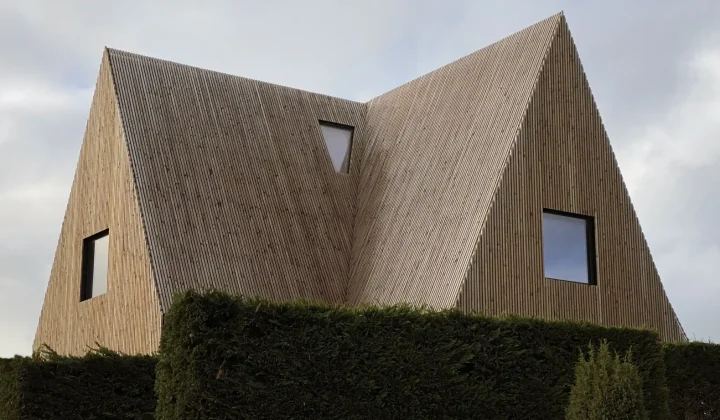
Vantieghem Talebi’s ‘House of Cards’ Brings Timber Geometry to Belgian Family Home
A new family house in Belgium by US- and Swiss-based practice Vantieghem Talebi uses a steeply pitched, card-house-inspired form clad in Douglas-fir…
Read moreRelated wiki

Adaptive Reuse in Architecture
Reference page for reuse, retrofit, conversion, embodied carbon and design constraints.
Read more