Artist Kleopatra Tsali Explores Interdependence Through Clay and Silkworm Networks
Athens-based artist Kleopatra Tsali delves into the intricate relationships between materials, communities, and hidden ecologies through her craft-based projects, focusing on clay archives and sericulture.
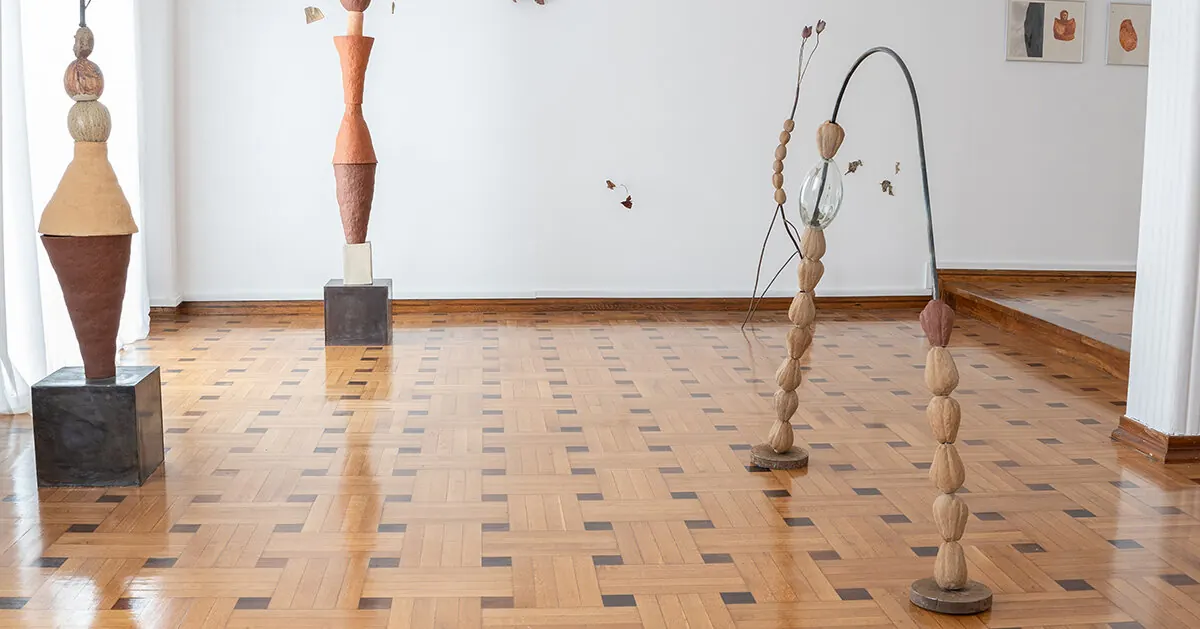
Kleopatra Tsali, an artist based in Athens, is forging a unique path in the art world by investigating the profound connections between materials, human communities, and the environment. Her practice, which spans a diverse range of mediums including clay, glass, silk fibers, metal, handmade paper, rocks, and found organic materials, fundamentally views craft not as the mere creation of objects, but as a dynamic process of listening and tracing relationships. Tsali’s work consistently probes the origins of materials, the histories they embody, and the often-invisible ways knowledge is transmitted beyond institutional settings, ultimately highlighting forms of interdependence.
“Craft practices carry social, ecological, and cultural histories; they reveal connections between people, materials, landscapes, and lived experience,” Tsali shared with Designboom. “I see craft less as the production of objects and more as an ongoing dialogue with materials and the worlds they connect us to.” This perspective positions her artistic output as a critical examination of how we understand and interact with the world around us.
This Mortal Soil: A Dialogue with Naxos Clay
A significant project that exemplifies Tsali’s approach is “This Mortal Soil,” developed through The Material Way program, which centers on natural materials in ceramics. The project originated from a deep, personal connection to Abram, a village on the Greek island of Naxos where Tsali spent her childhood summers. Engaging directly with local residents, she embarked on a research process to identify clay deposits and stone formations suitable for ceramic production and glazing.
The outcome was a meticulously crafted book map, accompanied by collected samples of clay and rock, that traces the physical geography of Abram and the narratives embedded within its soil. This endeavor serves a dual purpose: documenting a body of local knowledge that is at risk of fading and acting as a practice of mutual exchange. Tsali has returned the archive to the community of Abram, with the hope that it will continue to function as a valuable resource for future generations seeking to engage with local materials. Her methodology emphasizes that meaningful insights are rarely immediate, but emerge through sustained presence and engagement with a place, material, or community.
Morus Project: Weaving Knowledge Through Sericulture
Questions surrounding the transmission of knowledge also lie at the heart of the Morus project, a collaborative initiative founded in 2022 by Kleopatra Tsali, Irini Gonou, and Swedish artist Hanna Norrna. This project re-examines silk production by proposing home-sericulture – the small-scale breeding of silkworms within domestic environments. Participants in Greece and Sweden engage in synchronized breeding processes, meticulously documenting the lives of silkworms, mulberry trees, weather patterns, and local ecological conditions in a collective diary.
This ongoing research informed “Silk Cartographies,” an exhibition presented by the Morus Project in collaboration with curator Elli Leventaki. Displayed at the Museum of Agriculture of the Agricultural University of Athens, the exhibition brought together contemporary weaving, archival material, sericulture research, raw silk byproducts, and narratives from both Greece and Sweden. It aimed to map the cultural, ecological, and material networks that have shaped silk production across generations, operating simultaneously as an artwork, a research platform, and a community network. By focusing on domestic and small-scale practices, Morus brings to the forefront forms of knowledge often marginalized in official histories.
Redefining Expertise
Tsali challenges conventional notions of expertise, suggesting that “a teacher can take many forms.” This includes not only academics and specialists but also individuals with invaluable lived experience, such as an elderly woman who worked in a silk factory, an artisan sharing their craft, or even the natural processes of a silkworm spinning its cocoon. The collective archive generated by Morus further documents the intricate ecological relationships vital to contemporary silk production, recognizing silkworms, trees, weather systems, and human caretakers as active participants in a shared, interdependent process.
Both “This Mortal Soil” and the Morus project stem from Tsali’s deep attention to the inherent qualities and histories of the materials she employs. Whether foraging for clay in Naxos or observing silkworms, she allows the properties of each material and process to guide the creative outcome, rather than imposing a preconceived idea. This aligns with anthropologist Tim Ingold’s concept of correspondence, where making is understood as an ongoing, engaged dialogue with materials. The resulting artworks often possess a sense of ongoing formation, with vessels appearing to house architectural forms, clay structures balancing precariously, and delicate constructions held together by inherent tension, evoking simultaneous feelings of dwelling and wandering.
Key facts
| Project Name | Focus | Location(s) | Year Founded/Developed |
|———————|——————————————-|———————|————————|
| This Mortal Soil | Clay sourcing, local knowledge, archives | Naxos, Greece | 2024 |
| Morus Project | Home-sericulture, silk production history | Greece, Sweden | 2022 |
Tsali’s work offers a vital perspective for readers interested in architecture and design, emphasizing the importance of understanding the embedded histories and ecological entanglements of materials. Her approach encourages a more mindful and interconnected way of engaging with the built environment and the resources it relies upon.
Source: https://www.designboom.com/art/kleopatra-tsali-hidden-ecologies-clay-archives-silkworm-networks-interview/
Datos clave
| Punto | Detalle |
|---|---|
| Fuente | Designboom |
| Fecha | 2026-06-22T20:50:37+00:00 |
| Tema | kleopatra tsali traces hidden ecologies through clay archives and silkworm networks |
Source
Designboom Original publication: 2026-06-22T20:50:37+00:00
Related news

Handwoven Teak and Cord Outdoor Seating Debuts from Masaya and Abril Zepeda
Nicaraguan furniture brand Masaya has introduced two new handcrafted outdoor chairs — a rocking chair and a lounge chair — designed by…
Read more
Place in Mind: Hendricks Churchill Launches Hospitality Group to Revive Historic Properties
The architecture and interior design studio Hendricks Churchill has launched Place in Mind, a new hospitality group focused on acquiring, restoring, and…
Read more
Adalberto Dias Architects Complete Restoration of Lisbon’s Patriarchal Cathedral and Archaeological Center
The restoration of the Sé de Lisboa by Adalberto Dias Arquitecto integrates a new archaeological center, preserved cloisters, and seven centuries of…
Read more
Vantieghem Talebi’s ‘House of Cards’ Brings Timber Geometry to Belgian Family Home
A new family house in Belgium by US- and Swiss-based practice Vantieghem Talebi uses a steeply pitched, card-house-inspired form clad in Douglas-fir…
Read moreRelated wiki
Adaptive Reuse in Architecture
Reference page for reuse, retrofit, conversion, embodied carbon and design constraints.
Read more