
Luna Haverkorn’s Knitted Sculptures Invite Interactive Exploration
Dutch textile designer Luna Haverkorn creates body-scale knitted forms that encourage users to discover their own interactions, blurring the lines between sculpture and usable object.
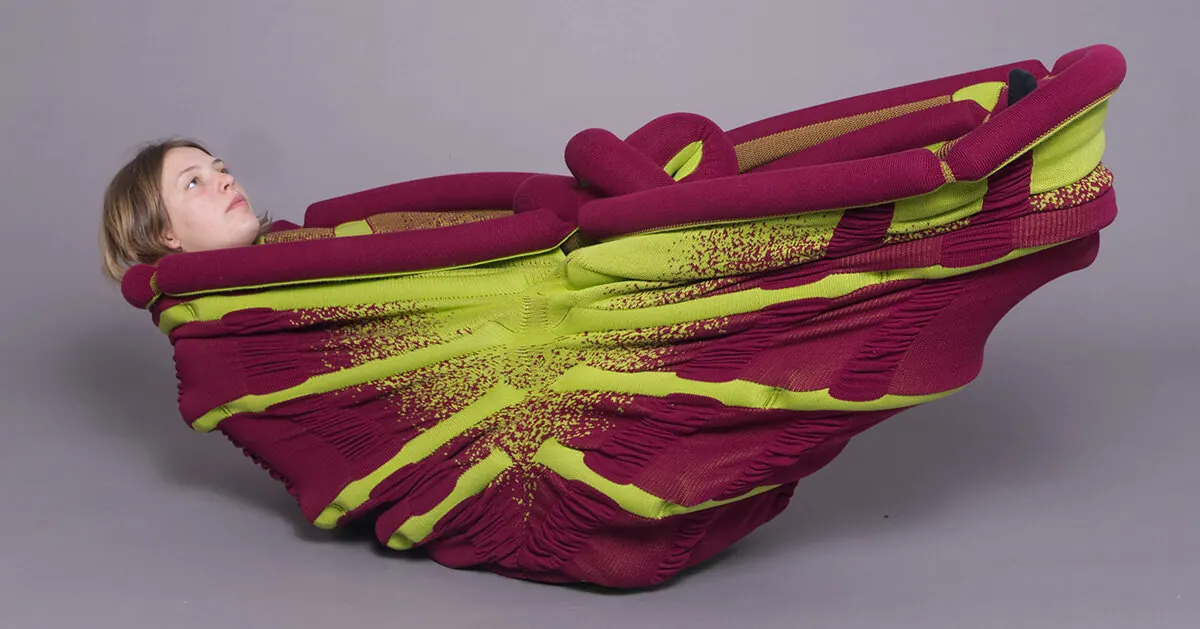
Dutch textile designer Luna Haverkorn is challenging perceptions of knitting with her body-scale creations that come alive through interaction. Currently pursuing a Master’s in Textile Interaction Design at the Swedish School of Textiles, Haverkorn’s work moves beyond traditional garments, focusing on sculptural, transformable objects that invite users to define their purpose.
Designing Through Making
Haverkorn emphasizes a hands-on approach to design, stating, “I design through making.” Her process begins with a deep engagement with materials, particularly knitting. By immersing herself in the technique, she identifies subtle modifications that lead to unexpected outcomes. This iterative cycle of observation, experimentation, and repetition allows her to push the boundaries of knitting as a structural system capable of producing dynamic, responsive objects.
“When I am trying to solve a problem, find a new form, or develop a new connection between elements, I look closely at my surroundings,” Haverkorn explains. She draws inspiration from natural structures, observing how plants combine rigidity with flexibility to inform her own construction methods. Technical precision is applied only after these discoveries are made, with knitting machines programmed to translate experimental findings into finished pieces.
Beyond Apparel
Haverkorn views knitting as a method for constructing three-dimensional forms, often knitting continuously to minimize seams and allow a single thread to build complex shapes. This approach deliberately challenges the common association of knitting with clothing or traditional crafts. Her background in programming industrial flatbed knitting machines has been instrumental in this perspective, allowing her to conceptualize entire objects growing from a single continuous thread.
“Working directly with a material and technique teaches you things that you otherwise cannot know,” she asserts. Years of working with knitting machines have cultivated an intuition for how minor adjustments can significantly impact the final result, demonstrating that craft itself can be a powerful engine for innovation.
Interactive and Transformable Objects
The defining characteristic of Haverkorn’s work is its inherent interactivity. Her objects are not static but are designed to transform and be played with, encouraging user participation. “When an object transforms, it can surprise the user and create a moment of discovery or play,” she shares. By designing pieces without a prescribed form, she empowers users, giving them agency in how the object is experienced.
Her body-scale textile works exemplify this philosophy. Visitors are encouraged to sit, lie down, fold, balance against, or even disappear inside the knitted forms. The same piece can facilitate movement, provide a resting place, or offer a sense of enclosure, depending on the user’s interaction. Haverkorn’s design principle is clear: “The design doesn’t define behavior. It invites exploration.”
Craft as Innovation
In an era often focused on emerging technologies, Haverkorn champions craft as a vital source of invention. “Innovation doesn’t have to come from new technology,” she argues. “It can also come from approaching an existing craft with new questions or using a familiar technique in an unexpected way.” Her work highlights how material, form, and interaction can reshape human-object relationships, suggesting that innovation can be found just as much in tactile experiences as in digital systems.
While acknowledging the potential of AI, Haverkorn maintains that fundamental discoveries often arise from physical experimentation. “Many of my ideas emerge while I’m making, through testing, making mistakes, or noticing unexpected behaviors in the material,” she notes. This hands-on knowledge, she believes, is irreplaceable.
Looking ahead, Haverkorn anticipates a greater integration of craft and technology. However, she posits that in an increasingly digital world, tactile experiences will become even more precious. “Craft offers experiences that screens cannot: touch, movement, and direct interaction,” she concludes, underscoring the enduring relevance of handmade and materially engaging objects.
Key facts
| Aspect | Detail |
|—|—|
| Designer | Luna Haverkorn |
| Education | Master’s in Textile Interaction Design (Swedish School of Textiles), Product Design (Willem de Kooning Academy) |
| Core Concept | Body-scale knitted sculptures that respond to user interaction |
| Design Philosophy | Designing through making, craft as innovation |
| Inspiration | Natural structures, material experimentation |
Haverkorn’s innovative approach to textile design offers a compelling perspective for architects, designers, and urban planners interested in the intersection of material, form, and human interaction. Her work underscores the potential for craft to drive innovation and create engaging, adaptable spaces and objects that prioritize tactile experience in an increasingly digital world.
Source: Designboom – https://www.designboom.com/design/knitted-sculptures-luna-haverkorn-life-interview/
Datos clave
| Punto | Detalle |
|---|---|
| Fuente | Designboom |
| Fecha | 2026-07-08T20:00:11+00:00 |
| Tema | knitted sculptures by luna haverkorn only come to life when you use them |
Source
Designboom Original publication: 2026-07-08T20:00:11+00:00
Related news
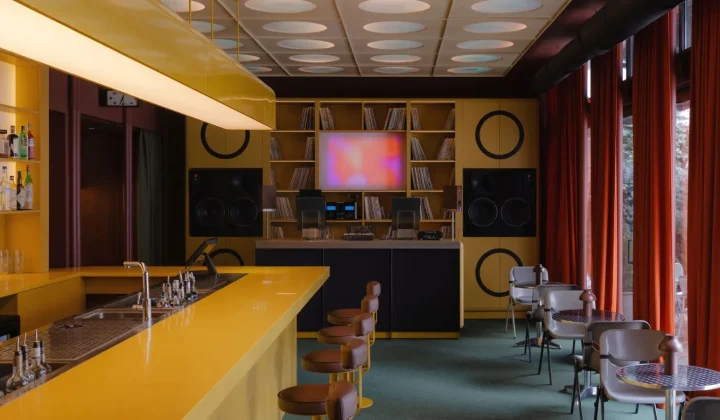
EJE brings K67-inspired futurism to a Belgrade listening bar
Esthetic Joys Embassy combines Yugoslav modernist references, high-fidelity vinyl listening and Asian-influenced dining inside a 1927 villa in Belgrade.
Read more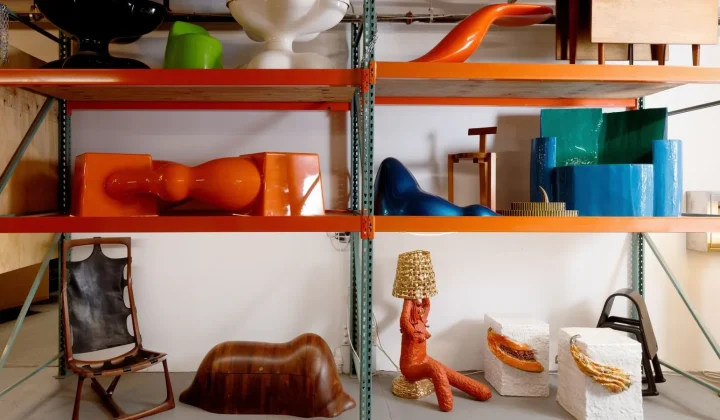
R & Company Opens Its Brooklyn Archive to the Public, Revealing 10 Rare Design Finds
The celebrated design gallery R & Company has opened its 16,000 sq ft storage facility, Building 86, in the Brooklyn Navy Yard…
Read more
SIITUA III to Gather International Researchers on Territory, Urbanism, and Architecture in Lima
The third edition of the International Seminar on Research in Territory, Urbanism, and Architecture (SIITUA III) will take place in Lima, organized…
Read more
Christopher Kane brings streamlined, heritage-driven vision to Mulberry in London Fashion Week debut
The Scottish designer presented his first collection for the British leather goods house at London Fashion Week, blending sharp tailoring, archival references…
Read moreRelated wiki
Adaptive Reuse in Architecture
Reference page for reuse, retrofit, conversion, embodied carbon and design constraints.
Read more