
Sensitive Interventions Breathe New Life into Historic Structures Worldwide
A roundup of seven projects showcases how contemporary design can respectfully engage with ancient ruins and historical buildings across the globe, from Iceland to Italy.
A collection of seven global projects highlights the art of sensitive architectural intervention, where contemporary design respectfully engages with ancient structures and historic ruins. These interventions aim to preserve heritage while enhancing accessibility and functionality for the public, demonstrating a nuanced approach to adaptive reuse.
Clifford’s Tower, UK
For the restoration of the 800-year-old Clifford’s Tower, part of York Castle, Hugh Broughton Architects designed a freestanding timber structure that slots within the ruin’s stone shell. This intervention includes a viewpoint offering city vistas and suspended walkways providing access to a historical chapel and toilet facilities. The new structure is designed to be reversible, ensuring the integrity of the original masonry is maintained.
Colosseum Piazza, Italy
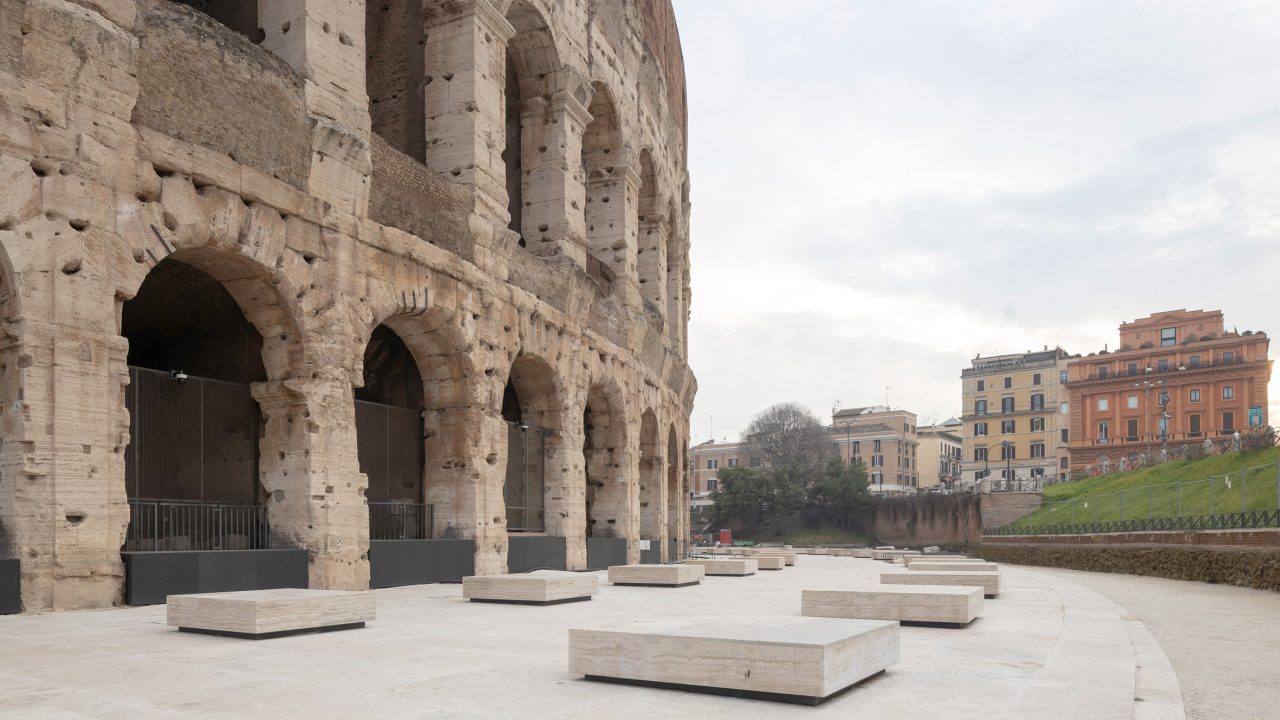
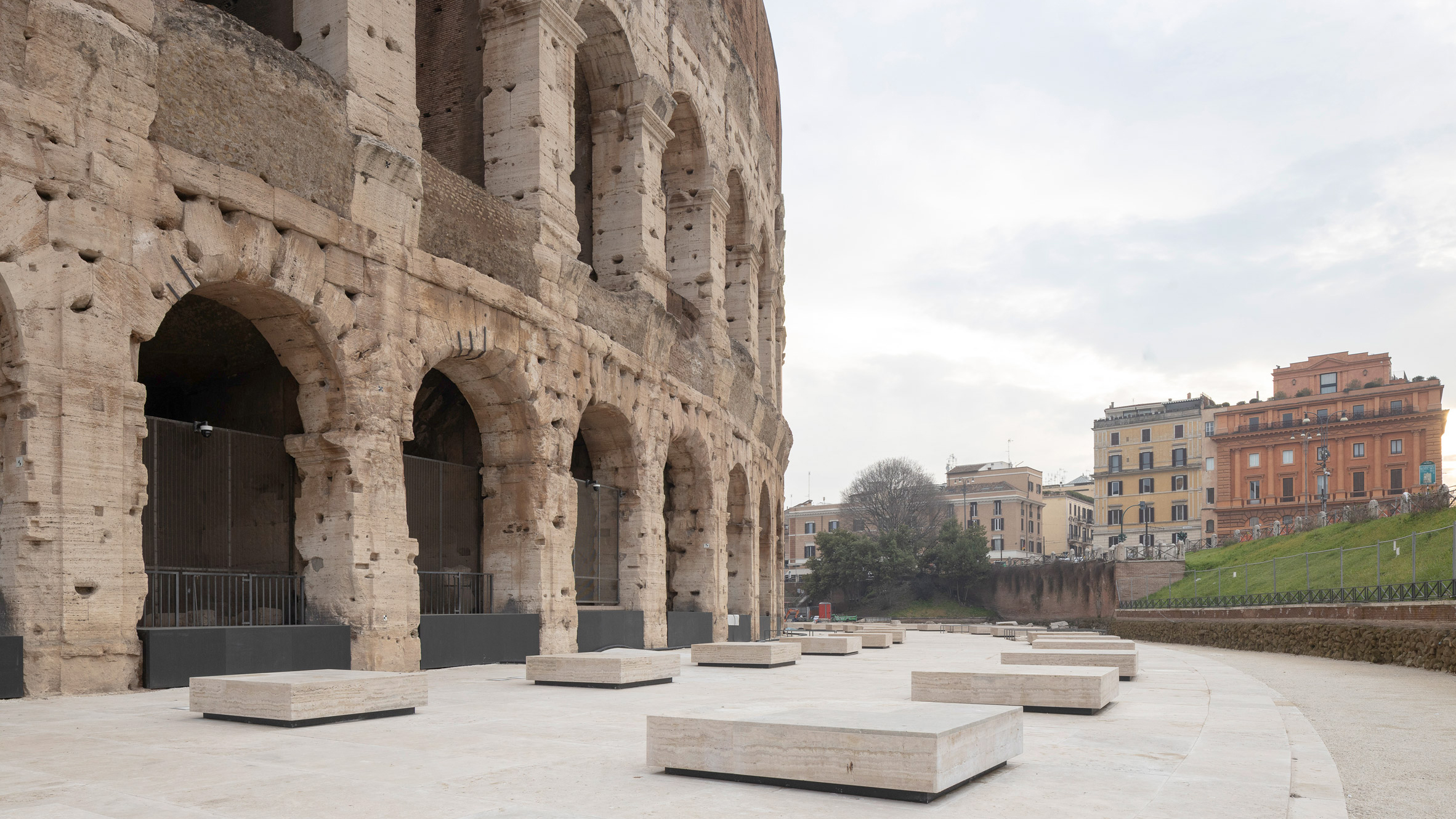
Stefano Boeri Interiors undertook the renovation of a semi-circular piazza adjacent to Rome’s Colosseum. The project involved replacing cobbled ground with travertine slabs and adding 44 stone benches. The design echoes the original Roman structure by positioning the benches in the former locations of columns from an outer wall, aiming to evoke the amphitheatre’s historical context.
Stöng, Iceland
Architecture firm Sp(r)int Studio has restored and extended a 1950s timber structure that shelters Stöng, an archaeological site featuring Viking longhouse ruins. The existing shelter, which had deteriorated, was reinforced with galvanised steel frames. Its exterior was clad in larch wood slats, and polycarbonate panels were incorporated into the gabled roof, allowing natural light to illuminate the preserved ruins while protecting them from the elements.
Zhang Yan Cultural Museum, China
Shenzhen Horizontal Design has created a white concrete structure within the remnants of a late Qing dynasty home in Shanghai’s Zhang Yan village. This museum is one of three galleries designed to showcase the reuse of old, rural Chinese architecture, offering a contemporary addition that respects the historical context of the site.
Beyond the Pantheon, Italy
Italian studio STARTT has opened up a previously inaccessible archaeological area behind Rome’s Pantheon to the public. Through a series of “micro-architectures,” the project introduces a route that doubles as an exhibition space. This path connects the Pantheon’s rotunda with the Basilica of Neptune, incorporating steel and stone elements that house essential services like a lift, toilets, and storage.
Seddülbahir Fortress, Turkey
KOOP Architects has revitalised the 17th-century Seddülbahir Fortress on Turkey’s Gallipoli Peninsula, creating both enclosed and open-air exhibition spaces. In response to damage sustained during World War I and subsequent earthquakes, the architects designed a timber-slat outline to represent the fortress’s former silhouette, honouring its history while presenting new public functions.
Žiče Charterhouse, Slovenia
Local studio Medprostor has installed an operable folding roof over a 900-year-old Romanesque church at Žiče Charterhouse. This intervention aims to protect the open structure and enhance its usability for visitors. The new half-gable roof system, constructed from black steel, blackened wood, and dark slate tiles, is intentionally designed to contrast with the original masonry of the church.
These projects collectively demonstrate a growing trend in architectural practice: the thoughtful integration of new elements into historical fabrics. They move beyond mere preservation to create dynamic spaces that engage with the past, offering visitors new perspectives on heritage sites. The careful selection of materials, from timber and steel to concrete and stone, alongside innovative structural solutions, ensures that these interventions are both aesthetically sensitive and functionally robust, providing a model for future heritage projects.
Key facts
- Clifford’s Tower: York, UK | Hugh Broughton Architects | Timber structure inside
- Colosseum Piazza: Rome, Italy | Stefano Boeri Interiors | Paving and benches
- Stöng: Iceland | Sp(r)int Studio | Reinforced shelter
- Zhang Yan Cultural Museum: Shanghai, China | Shenzhen Horizontal Design | Concrete museum
- Beyond the Pantheon: Rome, Italy | STARTT | Micro-architectures
- Seddülbahir Fortress: Gallipoli, Turkey | KOOP Architects | Timber silhouette outline
- Žiče Charterhouse: Slovenia | Medprostor | Folding roof
These projects offer valuable insights for architects and urban planners grappling with the challenges of heritage conservation in rapidly developing urban landscapes. They showcase how contemporary design can coexist with historical significance, creating new layers of experience for the public without compromising the integrity of the original structures. The approach taken by these studios emphasizes research, respect for context, and innovative material use, providing compelling examples for students and professionals alike who are interested in the intersection of history, design, and technology.
Source: Dezeen – https://www.dezeen.com/2026/05/23/interventions-ancient-structures-ruins-roundup/
Source
Dezeen Original publication: 2026-05-23T09:00:28+00:00
Related news

Handwoven Teak and Cord Outdoor Seating Debuts from Masaya and Abril Zepeda
Nicaraguan furniture brand Masaya has introduced two new handcrafted outdoor chairs — a rocking chair and a lounge chair — designed by…
Read more
Place in Mind: Hendricks Churchill Launches Hospitality Group to Revive Historic Properties
The architecture and interior design studio Hendricks Churchill has launched Place in Mind, a new hospitality group focused on acquiring, restoring, and…
Read more
Adalberto Dias Architects Complete Restoration of Lisbon’s Patriarchal Cathedral and Archaeological Center
The restoration of the Sé de Lisboa by Adalberto Dias Arquitecto integrates a new archaeological center, preserved cloisters, and seven centuries of…
Read more
Vantieghem Talebi’s ‘House of Cards’ Brings Timber Geometry to Belgian Family Home
A new family house in Belgium by US- and Swiss-based practice Vantieghem Talebi uses a steeply pitched, card-house-inspired form clad in Douglas-fir…
Read moreRelated wiki

Adaptive Reuse in Architecture
Reference page for reuse, retrofit, conversion, embodied carbon and design constraints.
Read more