WINT Design Lab Pioneers Regenerative Futures with Body-Centric, Bio-Based Innovations
WINT Design Lab is developing a new generation of products and textiles that reconnect humans with their bodies, moving away from screen dependence and fossil-fuel-based materials toward a more sustainable and biologically integrated future.
WINT Design Lab is at the forefront of a design movement focused on regenerative futures, developing innovative devices and biotextiles designed to foster a deeper connection between humans and their own bodies. The studio champions a shift away from the pervasive use of fossil-fuel-based materials and screen-centric interactions, instead prioritizing biological materials and technologies that adapt to the user.
Return to the Body, Return to Biology
In an era where the industry’s reliance on fossil fuels for material production poses significant environmental challenges, WINT Design Lab offers a compelling counter-narrative. Their core philosophy centers on returning to the body and embracing biology. This approach translates into projects that utilize touch as a primary interface, employ biological materials over petroleum-based synthetics, and create technology that is responsive to human needs rather than demanding user adaptation. The studio envisions a future where individuals are healthier, more present, and less dependent on systems that harm the environment. Their designs aim to serve as infrastructures that enhance our physical and sensory experiences through the integration of biosensors, physiotherapy devices, inflatable structures, bio-based textiles, and even advanced robotic paper folding.
AVA: Touch-Based Physiotherapy
A key project illustrating WINT Design Lab’s ethos is AVA, a wearable physiotherapy device developed in collaboration with CPI Electronics and supported by the European Commission’s Horizon 2020 initiative. AVA is designed for individuals recovering from muscle, ligament, or bone injuries. Traditionally, unsupervised home exercises can lead to incorrect execution and prolonged recovery times. AVA addresses this by acting as a compact device that attaches to any body part. It employs embedded machine learning to assess the correctness of movements, providing users with vibrotactile feedback—a physical pulse—to guide and correct their actions. Notably, AVA operates without screens or apps. Therapists train the device through guided movements, and the patient interacts with it solely through their body, with communication occurring via touch. This makes primary rehabilitation quiet, portable, and intensely personalized.
Soft Interfaces: Tactile Light Control
Bridging the gap between the body and the material world, WINT Design Lab’s “Soft Interfaces” project reimagines everyday objects. This lamp, for instance, responds not to a tap or swipe, but to the pressure applied to a stretched fabric surface. When a hand is pressed onto the textile, the lamp registers the pressure and adjusts its light temperature or intensity accordingly. This is made possible by liquid metal pathways embedded within the fabric. These pathways have a melting point below room temperature, allowing them to flex and stretch with the material without compromising the electrical circuit. The system interprets changes in the pathway’s cross-section to modify the light output. Both AVA and Soft Interfaces exemplify a design direction where objects communicate through the body’s natural languages—touch, pressure, and movement—reducing reliance on digital screens. This focus on bodily and physical interaction stands in contrast to a prevailing trend in innovative technologies that often prioritize processing speed or digital interfaces.
GOLD and ARA: Bio-Based Materials and Adaptive Structures
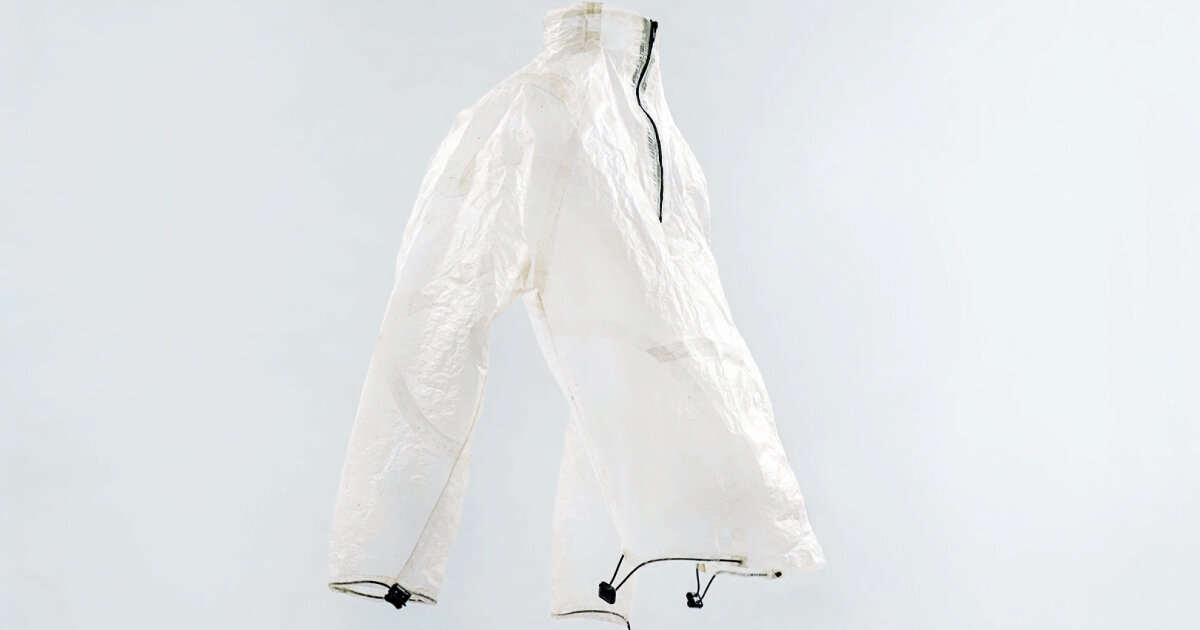
WINT Design Lab also challenges conventional material sourcing and end-of-life considerations. Their project GOLD, a collagen-based textile developed with Mimotype, demonstrates the potential of bio-based materials. A demonstrator jacket was constructed from cow gut tissue using robotic yarn laying and lamination, resulting in a biodegradable material that can be separated from fiber composites without toxic chemicals. This material also serves as a waterproof outer layer suitable for Arctic conditions. The studio’s presence at the Fiber Futures exhibition during the London Design Festival in 2024 highlighted their commitment to exploring bio-based alternatives to petroleum-derived synthetic fibers, which currently account for a significant portion of global textile production and are associated with substantial CO2 emissions.
Another project, ARA, explores air as a structural material. Utilizing parametric tessellation patterns inspired by biological systems, ARA creates inflatable structures that can adapt and provide protection without the need for rigid frames or excess material. These initiatives collectively contribute to a vision of a community where objects are in tune with the human body, clothing is biodegradable, structures are adaptive, and production is localized, moving away from globalized supply chains.
Key facts:
| Project Name | Description | Material/Technology |
|—|—|—|
| AVA | Wearable physiotherapy device | Machine learning, vibrotactile feedback |
| Soft Interfaces | Lamp controlled by fabric pressure | Liquid metal pathways in fabric |
| GOLD | Biodegradable textile | Collagen-based, cow gut tissue |
| ARA | Adaptive inflatable structures | Parametric tessellation, air |
WINT Design Lab’s work is particularly relevant to readers interested in the future of sustainable design, human-computer interaction, and the integration of biology and technology. Their regenerative approach offers a tangible path towards products that are not only environmentally responsible but also enhance human well-being by fostering a more intimate connection with our physical selves.
Source: Designboom – explore WINT design lab’s regenerative futures that connect humans with their bodies – https://www.designboom.com/technology/explore-wint-design-lab-regenerative-futures-humans-connect-bodies/
Datos clave
| Punto | Detalle |
|---|---|
| Fuente | Designboom |
| Fecha | 2026-06-28T20:30:19+00:00 |
| Tema | explore WINT design lab’s regenerative futures that connect humans with their bodies |
Source
Designboom Original publication: 2026-06-28T20:30:19+00:00
Related news
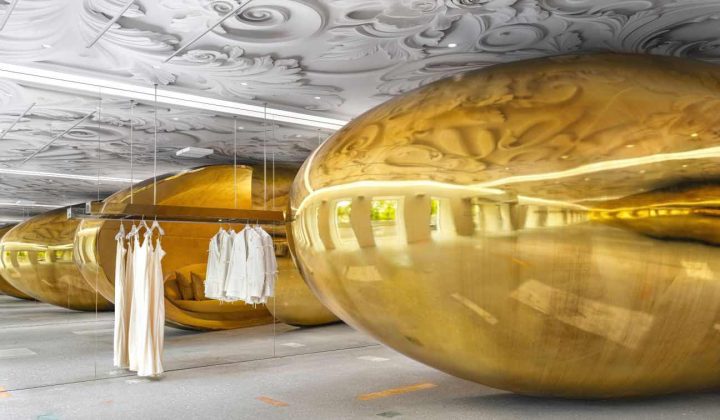
Biomorphic Sculpture Anchors Choux Flagship Store in Moscow by Elena Lokastova
Architect Elena Lokastova designs a two-level retail interior for fashion brand Choux in Moscow, where a gold bean-shaped sculpture and a white…
Read more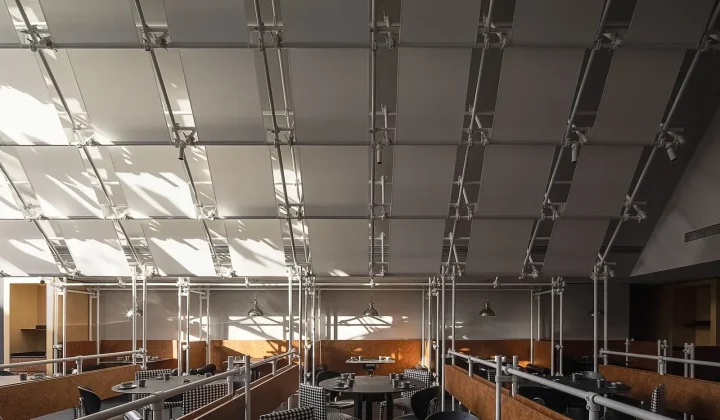
Scaffolding as Interior Architecture: Adaptable Systems Challenge the Divide Between Temporary and Permanent
A new article by Jonathan Yeung examines how modular scaffolding systems, from steel frames to Dieter Rams’ shelving, demonstrate that longevity in…
Read more
MIV Architects Proposes Wetland Pavilion That Prioritizes Non-Human Habitats Over Human Comfort
The Spanish firm’s “Nidos de Agua” concept for the Albufera natural park in Valencia aims to rebalance the relationship between building and…
Read more
Nelson Byrd Woltz Begins Construction on Restorative Eagle Courtyard at Walter Reed Medical Center
Construction has started on a redesigned Eagle Courtyard at Walter Reed National Military Medical Center, led by Nelson Byrd Woltz Landscape Architects.…
Read moreRelated wiki

Adaptive Reuse in Architecture
Reference page for reuse, retrofit, conversion, embodied carbon and design constraints.
Read more