World Environment Day Coverage Roundup: Best Built-Environment Ideas Worth Watching
World Environment Day often produces a rush of sustainability messaging. For built-environment readers, the most useful ideas are the ones tied to cities, materials, retrofit, and urban form—and to evidence that can be checked after the campaign day passes.

Short answer
World Environment Day is a useful editorial hook for architecture and city readers, but not every headline attached to it deserves equal weight. The ideas most worth watching are the ones that connect environmental ambition to the physical city: resource-efficient urban development, retrofit-minded thinking, passive climate response, circular use of existing structures and materials, and public-realm strategies that can be replicated beyond a single showcase moment. UNEP’s framing on cities and resource efficiency is especially relevant here because it places urban areas at the centre of resource use, environmental pressure, and the transition to more efficient systems. <!– sources: 1 –>
For readers in the built environment, the practical takeaway is simple: treat World Environment Day coverage as a starting point, not proof. The strongest concepts are those that can be checked against project status, implementation pathways, and evidence of performance rather than branding alone. Scholarly work on future built environments and on re-centring the built environment in a transforming world supports that broader need to assess ideas not just as slogans, but as spatial, material, and systemic changes. <!– sources: 3,5 –>
Context
World Environment Day tends to compress many environmental messages into a single media cycle. That can be helpful for visibility, but it can also flatten the difference between a campaign theme, a speculative concept, and a genuinely consequential built-environment shift. In practice, readers interested in architecture, design, and cities need to separate event-led attention from durable developments in how buildings, infrastructure, and urban systems are planned and adapted. <!– sources: 1,4 –>
UNEP’s work on cities and resource efficiency gives that distinction a useful frame. It emphasizes that cities are major sites of material consumption, energy demand, and environmental impact, which means built-environment decisions matter well beyond aesthetics. Against that backdrop, ideas linked to reuse, efficiency, urban systems, and long-term resilience are more substantive than one-off “green” gestures. <!– sources: 1 –>
What makes an idea worth watching
A built-environment idea is worth watching when it meets a few basic tests:
- it has direct relevance to buildings, streets, infrastructure, or urban systems;
- it suggests a path from concept to implementation;
- it can be assessed through primary documentation or durable institutional framing;
- it acknowledges trade-offs instead of presenting sustainability as frictionless;
- it matters after the event day is over.
Step-by-step guide
1) Deep retrofit over symbolic replacement
One durable idea in environmental design discourse is to look first at what already exists. That does not mean retrofit is always the best answer in every case, but it does mean the existing city should not be treated as disposable by default. Scholarly sources in the pack point toward a transforming built environment in which adaptation, reuse, and rethinking existing forms matter as much as headline-grabbing new construction. <!– sources: 3,5 –>
2) Passive design and climate-responsive comfort
Another idea worth following is the return to climate-responsive basics: orientation, shade, ventilation, envelope performance, and urban form that responds to heat and resource pressure. Even when public coverage uses broad sustainability language, the more grounded question is whether a design strategy reduces demand through form and operation rather than relying only on add-on technology. That emphasis aligns with broader future-built-environment thinking in the scholarly material provided. <!– sources: 5 –>
3) Adaptive reuse and circular construction
Adaptive reuse remains compelling because it links environmental restraint with architectural imagination. Reworking an existing structure, or planning for longer material life, can shift a project away from a linear extract-build-discard model. Within the limits of the current source pack, the strongest support is conceptual rather than project-specific: built-environment transformation is increasingly discussed in terms of systems, continuity, and resource-conscious forms rather than tabula-rasa development. <!– sources: 3,5 –>
4) Lower-carbon materials with stricter proof standards
Material claims deserve attention precisely because they are easy to overstate. Around World Environment Day, readers should be wary of language that presents any single product or system as inherently sustainable without context. The more credible direction is not allegiance to one material category, but stricter scrutiny of sourcing, lifecycle framing, durability, and evidence. That skeptical stance is consistent with an expert built-environment reading of future-oriented sustainability debates. <!– sources: 3,5 –>
5) Walkable, resource-efficient urban change
At city scale, the strongest environmental ideas are usually not isolated objects but patterns of urban development. UNEP’s resource-efficiency framing makes this clear: cities are central to how resources are consumed and managed. That makes walkability, compactness, public-space quality, and coordinated urban systems more meaningful than decorative sustainability rhetoric attached to a single building. <!– sources: 1 –>
6) Nature-based urban infrastructure that is judged by function
Nature-based strategies remain important, but they are most useful when discussed as infrastructure rather than image. Planting, landscape systems, and ecological urban measures should be read in terms of function, maintenance, and fit within wider urban systems. A careful built-environment lens asks not whether a project looks green, but whether it performs a lasting role in a resource-conscious city. <!– sources: 1,5 –>
Table
| Idea/theme | Why it matters | Status in this roundup | What is confirmed | What still needs proof |
|---|---|---|---|---|
| Deep retrofit | Keeps attention on existing building stock rather than default replacement | Strong concept to watch | Supported as a serious direction in broader built-environment transformation discourse | Project-by-project outcomes, costs, and measured performance need separate primary sourcing |
| Passive design | Focuses on reducing demand through form, envelope, and climate response | Strong concept to watch | Supported as a future-facing built-environment approach | Specific cooling, comfort, or energy outcomes need technical or project evidence |
| Adaptive reuse and circular construction | Links environmental restraint with design continuity and material care | Strong concept to watch | Supported conceptually in transformation-focused built-environment literature | Claims about carbon or waste savings need case-specific proof |
| Lower-carbon materials with proof standards | Shifts attention from marketing claims to verification | High-priority filter for readers | It is reasonable to treat verification as essential before accepting sustainability claims | Product-level lifecycle claims need primary technical documentation |
| Walkable, resource-efficient urban change | Connects environmental goals to the shape and operation of cities | Strong city-scale idea | UNEP explicitly frames cities as central to resource efficiency | Local policy effects and implementation require city-specific sources |
| Nature-based urban infrastructure | Useful when treated as functioning urban infrastructure, not image-making | Worth watching with caution | Fits resource-conscious and system-based urban thinking | Performance depends on local conditions and must be verified case by case |
Myth vs reality: how to read World Environment Day sustainability claims
Myth: A high-profile concept proves mainstream change
Reality: attention is not the same as adoption. World Environment Day can spotlight important themes, but a prominent example does not by itself show sector-wide implementation. <!– sources: 1,4 –>
Myth: “Low-carbon” automatically means low-impact
Reality: material and design claims need context. A compelling label does not remove questions about lifecycle, durability, or broader resource consequences. <!– sources: 3,5 –>
Myth: Green features guarantee environmental performance
Reality: design intent and real-world outcomes are not identical. The careful reader should distinguish between aspiration, design strategy, and demonstrated results. <!– sources: 3,5 –>
Myth: More greenery is always enough
Reality: in the built environment, landscape measures matter most when they are integrated into functioning urban systems rather than treated as visual proof of sustainability. <!– sources: 1,5 –>
Reader examples
If you are an architect or designer
Use this roundup as a filter. The most useful themes are the ones that can shape briefs, specifications, and reuse decisions long after the event itself. Pay closest attention to retrofit logic, passive performance, and material claims that can be documented. <!– sources: 3,5 –>
If you are a city-focused reader
Look for ideas that operate at district or city scale rather than only at the level of a single photogenic project. UNEP’s cities work supports a systems view: resource efficiency is fundamentally urban as well as architectural. <!– sources: 1 –>
If you are a homeowner or housing reader
The practical lesson is to value claims that affect comfort, resource use, and longevity over symbolic green branding. Passive measures and careful reuse thinking are often easier to translate into everyday decisions than abstract sustainability language. <!– sources: 5 –>
If you follow products and materials
Treat this moment as a reminder to verify, not to assume. The more a claim depends on technical performance or lifecycle benefit, the more it needs documentation beyond promotional language. <!– sources: 3,5 –>
What changed today, and what readers should watch next
What changes around World Environment Day is often the visibility of ideas rather than their proof. The immediate value for readers is to identify which themes have moved into sharper focus and which still remain largely rhetorical. Based on the current source pack, the strongest themes to watch are resource-efficient cities, transformation of existing built form, and future-oriented design approaches that prioritize systems over spectacle. <!– sources: 1,3,5 –>
What readers should watch next
- Whether a widely shared idea is backed by primary documentation rather than only commentary.
- Whether the concept applies to existing buildings and streets, not just exceptional new projects.
- Whether the environmental promise is framed as a target, a design intention, or a measured outcome.
- Whether the idea scales beyond a single flagship example.
- Whether maintenance, durability, and urban-system fit are part of the story.
Checklist
How to verify whether a built-environment idea is substantive
- Check whether the claim concerns a city system, a building strategy, or a symbolic campaign message.
- Check whether the underlying source is official, scholarly, or merely promotional.
- Check whether the language describes a concept, an implementation, or a measured result.
- Check whether trade-offs are visible or hidden.
- Check whether the idea remains useful after the event-day attention fades.
FAQ
Is World Environment Day coverage useful for architecture and city readers?
Yes—if it is used as a filter rather than a conclusion. It can help surface built-environment themes, but those themes still need to be assessed on evidence and implementation. <!– sources: 1,4 –>
Which built-environment ideas are most worth following after the event?
Within the limits of the current source pack, the strongest ideas are resource-efficient urban development, retrofit-minded thinking, passive design, adaptive reuse, and stricter scrutiny of material claims. <!– sources: 1,3,5 –>
How can readers judge whether a sustainability claim is credible?
Start by identifying whether the claim is conceptual or proven, then check for official or scholarly backing and for any sign of measurable follow-through. <!– sources: 1,3,5 –>
Are showcase projects enough to change the sector?
No. They may influence design culture, but wider change depends on replication, systems thinking, and implementation beyond media attention. <!– sources: 1,3,4 –>
Sources
- UNEP, Cities and resource efficiency: https://www.unep.org/explore-topics/resource-efficiency/what-we-do/cities
- Built Form, Re-Centring the Built Environment and Forms in a Transforming World: https://doi.org/10.63955/builtform.29
- Springer, Current Ideas for Future Built Environments: https://doi.org/10.1007/978-3-030-77783-8_2
- Greenwood Publishing Group, The World Is Watching: Real-Time News: https://doi.org/10.5040/9798400662126.ch-007
- ArchDaily homepage for current architecture context: https://www.archdaily.com/
Related news
Handwoven Teak and Cord Outdoor Seating Debuts from Masaya and Abril Zepeda
Nicaraguan furniture brand Masaya has introduced two new handcrafted outdoor chairs — a rocking chair and a lounge chair — designed by…
Read more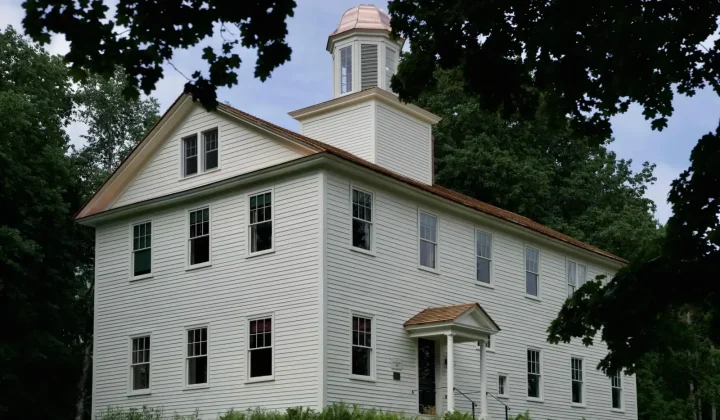
Place in Mind: Hendricks Churchill Launches Hospitality Group to Revive Historic Properties
The architecture and interior design studio Hendricks Churchill has launched Place in Mind, a new hospitality group focused on acquiring, restoring, and…
Read more
Adalberto Dias Architects Complete Restoration of Lisbon’s Patriarchal Cathedral and Archaeological Center
The restoration of the Sé de Lisboa by Adalberto Dias Arquitecto integrates a new archaeological center, preserved cloisters, and seven centuries of…
Read more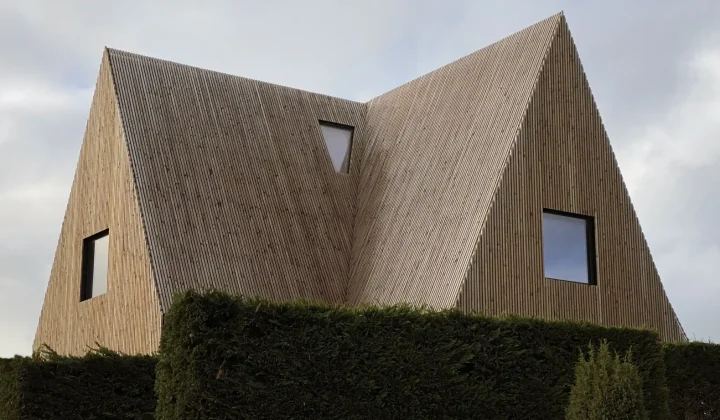
Vantieghem Talebi’s ‘House of Cards’ Brings Timber Geometry to Belgian Family Home
A new family house in Belgium by US- and Swiss-based practice Vantieghem Talebi uses a steeply pitched, card-house-inspired form clad in Douglas-fir…
Read moreRelated wiki
Adaptive Reuse in Architecture
Reference page for reuse, retrofit, conversion, embodied carbon and design constraints.
Read more