Paeonia: Understanding the Name and Its Numerical Representations
Delve into the concept of 'paeonia' and explore how numbers, words, and specific years like 2016 are represented and understood.


What is Paeonia and Its Context?
The term “paeonia” can refer to several things, most notably the genus of flowering plants known for their large, fragrant blooms. However, in the context of recent semantic audits and keyword research, “paeonia” has also emerged as a primary keyword related to understanding numerical and textual representations, particularly in the context of writing numbers as words. This guide aims to clarify the concept and provide insights into how numbers, including specific years like 2016, are converted into their word-based equivalents.
The Importance of Writing Numbers as Words
Writing numbers as words is a crucial skill, especially in formal contexts like financial documents, legal agreements, and even official correspondence. It helps prevent ambiguity and reduces the risk of errors or fraudulent alterations. For instance, writing “one thousand two hundred and fifty dollars” is clearer and more secure than simply using “1250”. This practice ensures that the intended value is unequivocally understood.
Understanding Numerical Conversions
The process of converting numbers into words involves understanding place values and the standard conventions for writing them out. This includes handling units, tens, hundreds, thousands, and millions.
The “Paeonia” Cluster and Numerical Concepts
While “paeonia” itself is not directly a numerical term, the search cluster around it has highlighted a significant interest in how numbers are expressed. This suggests a need for resources that can demystify this process. The following sections will explore specific numerical concepts that have emerged as relevant.
Two Thousand Sixteen
The year “two thousand sixteen” serves as a prominent example in numerical conversion. When written out, it follows a clear pattern:
* Thousands: Two Thousand
* Hundreds: (if applicable, e.g., if it were 2116, it would be One Hundred)
* Tens and Units: Sixteen
Thus, the full representation is “Two Thousand Sixteen”. This demonstrates the basic structure of converting four-digit numbers into words.
Thousand Sixteen
“Thousand sixteen” as a standalone phrase is less common in formal writing but can appear in specific contexts, perhaps as a shorthand or in informal discussions. When referring to a quantity of thousands, it would typically be structured differently. For example, “a thousand and sixteen” would refer to 1016. If the intent is to represent a quantity like 1000 + 16, it’s usually written as “one thousand sixteen”.
Thousand
The word “thousand” signifies a quantity of 1,000. It’s a fundamental unit in our number system. When used in larger numbers, it indicates the magnitude of the digits preceding it. For instance, in “five thousand,” the “five” represents five groups of one thousand.
Number and Numbers
“Number” and “numbers” are generic terms referring to mathematical figures or quantities. In the context of writing them out, the focus is on the specific digits and how they translate into words.
Words
The term “words” is central to this discussion, as the objective is to convert numerical digits into their linguistic equivalents. This encompasses all numerical figures, from single digits to large, complex numbers.
Specific Word Combinations
- Words Two: This phrase could refer to the word “two” itself, or a quantity of two words. In numerical context, it’s a building block.
- Words Two Thousand: This could refer to the phrase “two thousand” or a quantity of words that themselves represent “two thousand.”
- Words Words: This repetition might signify a need for clarity on the concept of “words” themselves or a placeholder in a broader linguistic analysis.
Practical Table: Number to Word Conversion Examples
| Number | Written As Words | Notes |
|---|---|---|
| 16 | Sixteen | Basic unit |
| 100 | One Hundred | Represents hundreds |
| 1016 | One Thousand Sixteen | Combines thousands and units |
| 2016 | Two Thousand Sixteen | Specific year example |
| 1,000,000 | One Million | Represents millions |
Checking and Verification
When dealing with numerical conversions, especially for important documents, it’s essential to double-check the accuracy. Using online number-to-word converters or cross-referencing with reliable guides can help ensure that the written form correctly represents the numerical value. The goal is to eliminate any potential for misinterpretation.
Risks and Trust Signals
In the realm of numerical representation, risks can arise from simple transcription errors or deliberate manipulation. Trust signals are built through clarity, accuracy, and adherence to standard conventions. When encountering information about numbers and their word equivalents, look for clear explanations, verifiable examples, and reputable sources.
Frequently Asked Questions (FAQ)
What should readers know about paeonia in this context?
In this context, “paeonia” serves as a primary keyword for a topic focused on understanding how numbers are written as words, particularly for specific years like 2016 and general numerical conversions.
How should readers compare options around numerical representation?
Readers should compare by looking for accuracy, clarity, and consistency in how numbers are converted to words. Using reliable tools and cross-referencing examples are good practices.
What risks should be checked when writing numbers as words?
Key risks include transcription errors, incorrect handling of place values (hundreds, thousands), and potential for ambiguity or alteration in formal documents. Always verify the written form against the numerical original.
How will this content stay updated?
This content is based on established linguistic and numerical conventions. While the core principles remain stable, future updates may incorporate new examples or address emerging trends in digital communication if relevant to numerical representation.
Next Steps
For further exploration, consider researching specific number-to-word conversion tools or guides that detail the rules for writing out larger or more complex numbers. Understanding these conventions is key to clear and accurate communication.
Source
Related news

R & Company Opens Its Brooklyn Archive to the Public, Revealing 10 Rare Design Finds
The celebrated design gallery R & Company has opened its 16,000 sq ft storage facility, Building 86, in the Brooklyn Navy Yard…
Read more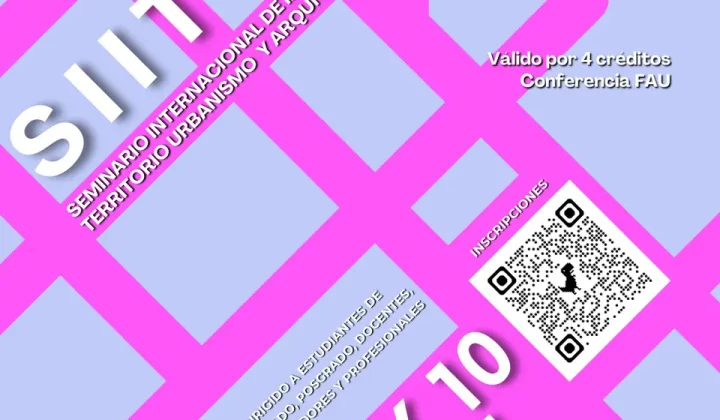
SIITUA III to Gather International Researchers on Territory, Urbanism, and Architecture in Lima
The third edition of the International Seminar on Research in Territory, Urbanism, and Architecture (SIITUA III) will take place in Lima, organized…
Read more
Christopher Kane brings streamlined, heritage-driven vision to Mulberry in London Fashion Week debut
The Scottish designer presented his first collection for the British leather goods house at London Fashion Week, blending sharp tailoring, archival references…
Read more
When Film Directors Become Interior Designers: Guadagnino, Lynch, Anderson and Almodóvar Step Off Screen
From Luca Guadagnino’s Zara Home collection to David Lynch’s Paris club and Wes Anderson’s train carriage, a wave of collaborations is blurring…
Read moreRelated wiki
Adaptive Reuse in Architecture
Reference page for reuse, retrofit, conversion, embodied carbon and design constraints.
Read more