
Bangkok’s Streetlights Transformed into Colorful Urban Canopies with Recycled Fabrics
A temporary installation at Bangkok City Hall Square reimagines streetlights as structural elements for a vibrant, shaded public space using recyclable Thai textiles.
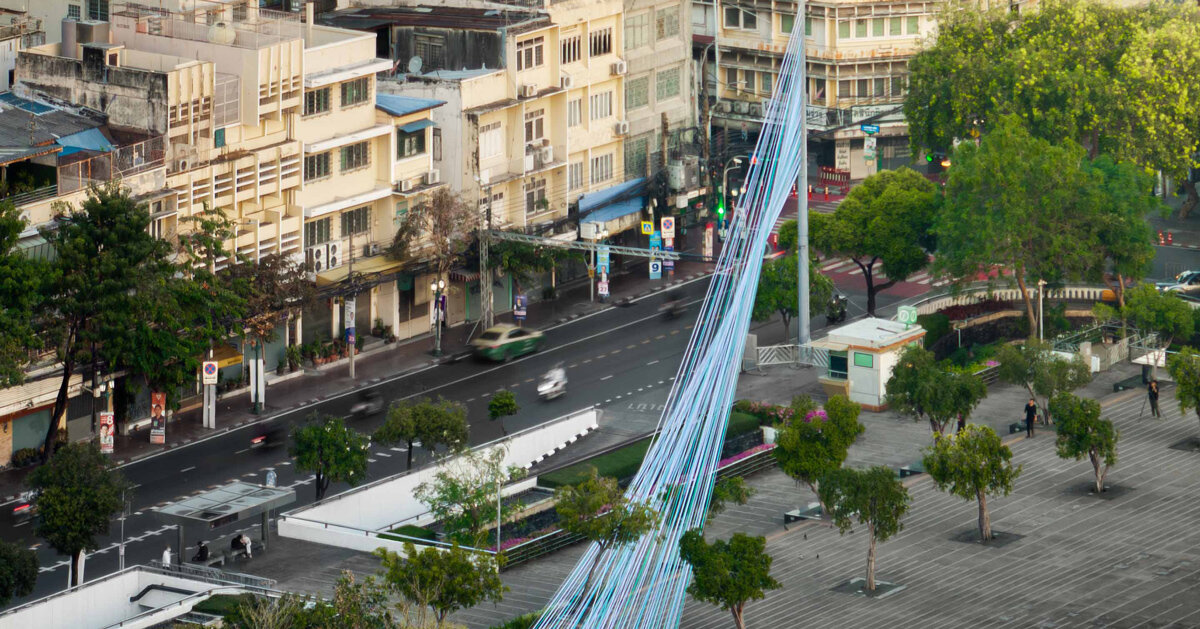
HAS Design and Research has unveiled “High Line Bangkok,” a temporary public art installation that creatively reclaims Bangkok’s ubiquitous streetlights, transforming them into the structural supports for a captivating urban canopy. Situated in Bangkok City Hall Square, the project, led by architects Jenchieh Hung and Kulthida Songkittipakdee, reimagines the potential of existing urban infrastructure to foster social interaction and spatial engagement.
The intervention directly addresses the underutilization of many urban elements in Thailand. While millions of streetlights serve a functional purpose, they rarely contribute to the broader social fabric or public life of the city. “High Line Bangkok” proposes an innovative solution by integrating locally sourced, recyclable Thai fabrics with the existing streetlight infrastructure. This approach creates a lightweight, elegant canopy that provides much-needed shade and ventilation without requiring new construction or additional foundations.
Urban Canopy Design
The installation is strategically located at Lan Khon Mueang Town Square, opposite the Bangkok Metropolitan Administration headquarters and adjacent to the historic Wat Suthat Thepwararam. Its design is a thoughtful response to the distinct climatic conditions that influence public life in tropical cities. Through site observations, the architects noted a common pattern: during the hottest parts of the day, people seek refuge under natural shade like trees, while cooler evenings draw them towards the illuminated areas around streetlights.
“High Line Bangkok” bridges these two behavioral patterns by linking existing streetlights and nearby trees with a suspended textile structure. This creates a cohesive spatial system that harmoniously integrates urban infrastructure, natural vegetation, shade, and light. The project cleverly repurposes existing streetlights, minimizing material consumption and demonstrating how everyday urban fixtures can be adapted for public benefit.
Color and Light Interaction
The core of the installation features over 100 meters of locally sourced, recyclable Thai fabric. These textiles are intentionally shaped into curved, tubular forms, extending between the light poles and trees across the plaza. During daylight hours, the fabric canopy acts as a sophisticated light filter. It allows sunlight to pass through its colored surfaces, creating dappled shade patterns on the ground below and introducing a dynamic play of light and color throughout the day. This semi-outdoor environment is designed to encourage extended use of the public space.
As night falls, the textile elements engage with the existing streetlight infrastructure. They diffuse and amplify the illumination, transforming the installation from a daytime shading device into a luminous architectural feature. This shift extends the pavilion’s utility beyond daylight hours, reinforcing the symbiotic relationship between light, public activity, and the urban environment.
Cultural Resonance
The geometric design of the structure subtly references the architectural features of the nearby Wat Suthat Thepwararam. Angular forms echo the profile of the temple’s roof, while incorporated fish-scale patterns in the ground treatment pay homage to traditional roof tiles. These elements thoughtfully weave local cultural references into a contemporary architectural framework.
Key facts
| Feature | Detail |
|---|---|
| Project Name | High Line Bangkok |
| Architects | HAS Design and Research |
| Location | Bangkok City Hall Square, Phra Nakhon, Bangkok, Thailand |
| Materials | Recyclable Thai fabrics, existing streetlights |
| Installation Type | Temporary public installation |
| Design Focus | Reimagining urban infrastructure, public space design, climate response, cultural integration |
Significance for Urban Design
“High Line Bangkok” serves as both a site-specific installation and a broader commentary on how existing infrastructure can be leveraged to enhance public life. By adapting streetlights into a framework for shade, gathering, and environmental comfort, the project offers a compelling model for the future of urban design. It highlights the potential for existing infrastructural networks to be re-envisioned as active, engaging components of the public realm, moving beyond their purely technical utility. The project’s emphasis on recyclable materials and adaptive reuse also underscores a commitment to sustainable design principles within a tropical urban context.
Source: https://www.designboom.com/design/recyclable-fabric-ribbons-streetlights-colorful-urban-canopy-high-line-bangkok-has-design-research/
Source
Designboom Original publication: 2026-06-12T01:15:22+00:00
Related news
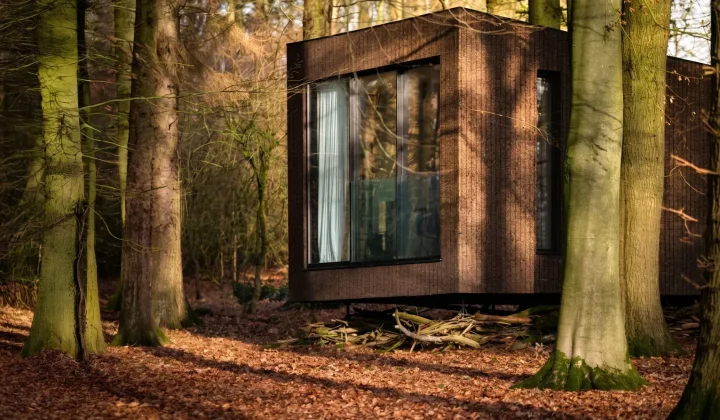
Koto launches Haku, a mobile prefab hotel suite built on a wheeled chassis to bypass UK planning restrictions
UK architecture studio Koto has unveiled Haku, a fully mobile prefabricated suite that legally qualifies as a caravan, allowing landowners and hotel…
Read more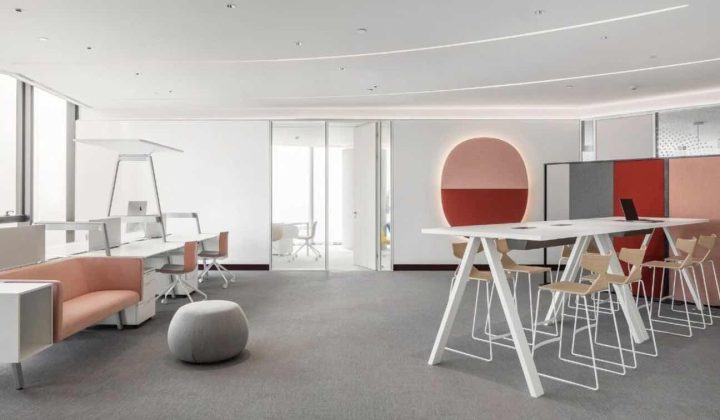
HONG Designworks Completes Private Office in Xi’an That Balances Memory, Materiality, and Long-Term Use
The Xi’an office by HONG Designworks integrates a folded steel staircase, retained furniture from a previous workspace, and a restrained purple-gray palette…
Read more
Handwoven Teak and Cord Outdoor Seating Debuts from Masaya and Abril Zepeda
Nicaraguan furniture brand Masaya has introduced two new handcrafted outdoor chairs — a rocking chair and a lounge chair — designed by…
Read more
Place in Mind: Hendricks Churchill Launches Hospitality Group to Revive Historic Properties
The architecture and interior design studio Hendricks Churchill has launched Place in Mind, a new hospitality group focused on acquiring, restoring, and…
Read moreRelated wiki

Adaptive Reuse in Architecture
Reference page for reuse, retrofit, conversion, embodied carbon and design constraints.
Read more