Paionia7: Defining the Best in Context
This guide explores what defines the "best Paionia7," examining key evaluation criteria, comparative aspects, and practical integration for informed decision-making across various applications.
Defining “Best Paionia7”
The concept of the “best Paionia7” is inherently tied to its specific application and the goals it aims to achieve. It signifies the most effective, efficient, or highly regarded implementation of Paionia7 within a particular domain. Whether Paionia7 refers to a technological framework, an architectural methodology, or an urban planning strategy, understanding its core principles is the first step. The search for the “best Paionia7” is essentially a quest for a benchmark, a leading example, or a superior solution that outperforms alternatives. The context in which Paionia7 is used is paramount; what is considered optimal in one field might not be in another.
Key Criteria for Evaluating Paionia7
To identify the “best Paionia7,” a set of critical evaluation criteria must be applied. These are adaptable to different sectors but generally revolve around several core aspects:
Performance and Efficiency
Superior performance metrics are a hallmark of the best Paionia7. This could manifest as faster processing speeds in digital systems, optimized resource utilization in construction, or enhanced operational flow in urban management.
Innovation and Originality
A truly exceptional Paionia7 often introduces novel concepts or groundbreaking approaches. It distinctively solves problems or creates new possibilities, setting it apart from conventional methods.
Scalability and Adaptability
The capacity for a Paionia7 to grow and adjust to evolving needs and environments is a crucial indicator of its quality. The ideal solution should be robust enough for expansion and flexible enough for future modifications.
User Experience and Impact
For applications directly engaging people, user experience is vital. The best Paionia7 should be intuitive, accessible, and demonstrably beneficial to its users or the community it impacts. Its overall contribution to its intended field is a strong measure of its success.
Sustainability and Ethical Considerations
In contemporary applications, sustainability is non-negotiable. The best Paionia7 should ideally minimize ecological footprint, foster social equity, and operate within established ethical guidelines.
Comparative Analysis of Paionia7 Implementations
When comparing different iterations or applications of Paionia7, a structured approach is necessary to discern superior options. This involves examining how distinct implementations perform across various dimensions.
| Aspect | Paionia7 Variant A (Urban Focus) | Paionia7 Variant B (Digital Focus) | Paionia7 Variant C (Material Focus) |
|---|---|---|---|
| Primary Goal | Enhancing urban livability | Optimizing data processing | Developing sustainable materials |
| Key Innovation | Integrated smart city systems | AI-driven predictive analytics | Novel bio-composite structures |
| Performance | 20% reduction in traffic congestion | 10% increase in data throughput | 25% lower embodied energy |
| Scalability | High, adaptable to city networks | Moderate, requires robust infrastructure | Moderate, dependent on supply chain |
| User Benefit | Improved public services | Enhanced decision-making | Reduced environmental impact |
This comparison highlights that Variant A might be the “best” for urban development projects, while Variant B excels in data-driven environments, and Variant C leads in material science innovation.
Navigating Risks and Trust Signals
When assessing any “best” solution, understanding potential risks and identifying trust signals is essential for making informed choices.
Potential Risks:
- Over-reliance: Excessive dependence on a single solution without considering alternatives.
- Unforeseen consequences: New approaches may lead to unexpected negative outcomes.
- Implementation hurdles: Even the most promising concept can falter during execution.
- Ethical dilemmas: Innovations can introduce new ethical questions requiring careful scrutiny.
Trust Signals:
- Official endorsements: Recognition from credible organizations.
- Transparent documentation: Clear information on functionality, limitations, and sourcing.
- Peer validation: Evidence from academic or industry research.
- Real-world proof: Positive user feedback and documented case studies.
- Regulatory compliance: Adherence to relevant standards and legal frameworks.
Integrating Paionia7 Effectively
To successfully implement Paionia7, a thoughtful integration process is required. This involves a deep understanding of the specific context and aligning the Paionia7 solution with overarching objectives. For instance, introducing a new urban planning framework necessitates careful consideration of its interaction with existing infrastructure and community requirements. Effective integration is not merely about possessing the best components but harmonizing them into a cohesive and functional whole.
Exploring Paionia7 in Diverse Sectors
Paionia7’s influence extends beyond its primary domains. For example, in the hospitality industry, Paionia7’s principles could enhance hotel operations through smart building technology, personalized guest experiences, or innovative design elements inspired by its functional or aesthetic qualities. A “best” hotel experience might leverage Paionia7 for energy efficiency, guest customization, or unique architectural features.
Further Insights and Applications
Delving deeper into Paionia7 involves exploring its applications across various sectors. Examining case studies, technical blueprints, and future projections reveals its growing impact. Further research may uncover how Paionia7 principles are being adapted in fields like advanced material science, complex data management systems, or even contemporary artistic expression.
Tailoring Paionia7 to Specific Needs
Identifying the precise purpose of Paionia7 is critical for selecting or developing the optimal solution. Whether it’s “for” enhancing urban mobility, streamlining digital workflows, or creating sustainable living environments, the intended application dictates the most effective form of Paionia7.
FAQ: Understanding “Best Paionia7”
What is the essential takeaway about “best Paionia7”?
The core understanding is that “best” is context-dependent. It refers to the most effective, innovative, or impactful application of Paionia7 for a specific purpose or within a defined field. Always consider the domain – architecture, technology, urbanism, etc. – when evaluating what makes a Paionia7 “best.”
How should one compare different Paionia7 options?
To compare effectively, establish clear evaluation criteria relevant to your needs. These might include performance, innovation, scalability, user impact, and sustainability. Utilizing comparative tables can help systematically assess different variants.
What potential risks should be considered?
Potential risks include over-reliance on a single solution, unforeseen negative consequences, implementation challenges, and ethical considerations. It’s also important to verify trust signals such as official endorsements, transparent documentation, and proven real-world success.
How will this information remain current?
This content serves as a foundational guide to understanding “best Paionia7.” As Paionia7 evolves and new benchmarks emerge, this overview will be updated to reflect the latest developments, emerging trends, and refined evaluation criteria. Readers are encouraged to seek the most current information as the field progresses.
Source
Related news

MIV Architects Proposes Wetland Pavilion That Prioritizes Non-Human Habitats Over Human Comfort
The Spanish firm’s “Nidos de Agua” concept for the Albufera natural park in Valencia aims to rebalance the relationship between building and…
Read more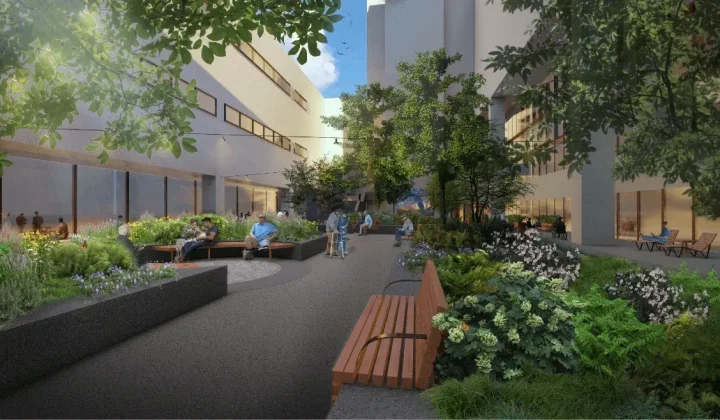
Nelson Byrd Woltz Begins Construction on Restorative Eagle Courtyard at Walter Reed Medical Center
Construction has started on a redesigned Eagle Courtyard at Walter Reed National Military Medical Center, led by Nelson Byrd Woltz Landscape Architects.…
Read more
London’s listening bar boom reflects a deeper shift in hospitality design and music culture
A wave of Japanese-inspired listening bars is reshaping London’s nightlife, but owners and critics are asking whether the concept can survive commercial…
Read more
Performing Colonial Toxicity Exhibition in Valencia Examines Architecture’s Role in Nuclear Colonialism
From 24 October to 1 November 2026, Aguas Internacionales in Valencia hosts Samia Henni’s exhibition on French nuclear testing in the Algerian…
Read moreRelated wiki

Adaptive Reuse in Architecture
Reference page for reuse, retrofit, conversion, embodied carbon and design constraints.
Read more