
Designing for Tomorrow: A Guide to Integrating Sustainable Practices in Urban Projects
A practical, source-backed guide to integrating sustainability into urban projects, from the first brief to long-term operation and review.

Summary
Sustainable urban design is less about adding isolated green features and more about shaping a project as a connected system. In practice, that means setting clear goals early, reading site conditions carefully, checking claims against evidence, and treating long-term operation as part of design rather than an afterthought.
What happened
Sustainable practice in cities has moved from a specialist concern to a mainstream design and planning question. UNEP’s overview of cities and resource efficiency frames urban areas as central to how resources are used and how environmental pressures are addressed, which helps explain why sustainability now sits near the core of conversations about buildings, infrastructure, public space, and urban growth rather than at the edge of them. <!– sources: 1 –>
This shift also changes how urban projects are discussed. Instead of treating sustainability as a single technology or certification target, designers and planners increasingly need to think across land use, materials, energy demand, public realm, and long-term stewardship. Broad architectural coverage reflects that wider framing, even if project-specific claims still need closer verification case by case. <!– sources: 1,2 –>
Why it matters
Urban projects have effects that extend beyond a single building line. Decisions about layout, density, circulation, and open space influence how people move, how surfaces absorb or shed heat, how landscapes perform, and how durable a place may be over time. That makes sustainability in urban work a design problem at multiple scales: the room, the building, the street, the block, and the district. <!– sources: 1,2 –>
It also means that visual ambition is not enough. A scheme can appear environmentally progressive while still leaving key questions unresolved: what resources it depends on, how adaptable it is, how its materials are justified, and whether its public-facing claims are likely to hold up in operation. For readers, clients, and review teams, the most useful stance is therefore a careful one: ask what is being measured, what is being assumed, and what will only be known after use. <!– sources: 2,3 –>
What is confirmed
Sustainable urban design starts with the brief
A sustainable outcome usually depends on choices made before formal design is far advanced. If a project brief defines sustainability only in broad language, later decisions can become reactive or cosmetic. A stronger approach is to set explicit priorities at the outset, then use those priorities to test design options, consultant scopes, and procurement choices. <!– sources: 1,2 –>
In practical terms, that early brief should clarify whether the project is trying to improve resource efficiency, support lower-impact urban living, reuse existing assets, strengthen public realm quality, or combine several of those goals. The more clearly the project boundary and purpose are defined, the easier it becomes to judge whether later design moves are genuinely aligned with them. <!– sources: 1,3 –>
Site and context often shape the biggest gains
Urban sustainability is highly dependent on context. Existing infrastructure, surrounding density, access routes, landscape conditions, and the relationship between built form and public space can all influence outcomes. UNEP’s framing of cities through resource efficiency supports a simple but important principle: location and urban systems matter, not just the specification of one building in isolation. <!– sources: 1 –>
That is one reason retrofit, adaptive reuse, infill, or district-level coordination may sometimes deserve as much attention as stand-alone new construction. The article-level lesson is not that one option is always best, but that sustainable design becomes more credible when alternatives are compared rather than assumed away. <!– sources: 2,3 –>
The main strategy areas to assess
A useful review of any urban project usually includes several linked questions: how much demand the design may lock in, how people are expected to access and use the place, what material choices are being justified, and how landscapes or public spaces are expected to perform over time. Looking across these areas helps prevent one highly visible feature from distracting attention from weaker fundamentals. <!– sources: 1,2 –>
| Strategy area | Primary goal | What to verify early | Common caution |
|---|---|---|---|
| Site and urban context | Align the project with existing systems and constraints | Access, surrounding uses, infrastructure, and public-space connections | A strong building concept may still underperform in a weak urban setting |
| Resource efficiency | Reduce unnecessary demand on energy, water, and materials | Whether goals are defined in the brief and tracked through design | Broad sustainability language can mask vague targets |
| Materials and construction | Support lower-impact delivery and longer-term durability | What evidence supports material claims and whether alternatives were tested | Product-level claims may not explain whole-project impact |
| Public realm and movement | Improve day-to-day usability beyond the building footprint | Walkability, circulation, comfort, and integration with the wider area | A technically advanced project can still create poor everyday urban experience |
| Long-term operation | Keep performance credible after completion | Who measures outcomes, who maintains systems, and what success looks like | Design intent is not the same as measured use |
Certification and claims need careful reading
Architecture media often covers sustainability through labels, targets, and headline features. Those can be useful entry points, but they are not complete evidence on their own. A published project description may explain intent and design strategy; it may not establish how a place performs in use, whether assumptions proved accurate, or how trade-offs were handled during delivery. <!– sources: 2 –>
That is why readers should distinguish between four different things: design intent, modeled or projected performance, third-party recognition, and measured outcomes in operation. Treating them as interchangeable can make a project sound more resolved than it really is. <!– sources: 2,3 –>
What readers should do
Pre-design checklist for sustainable urban projects
- Define the project boundary clearly: building, block, district, corridor, or public realm.
- Set measurable sustainability priorities in the brief instead of relying on general language.
- Compare reuse, retrofit, infill, and new-build options before narrowing the concept.
- Review the site as part of a wider urban system, not as an isolated plot.
- Ask what evidence supports major claims about materials, performance, or environmental benefit.
- Separate what is promised at design stage from what will be checked after completion.
- Identify who will be responsible for maintenance, monitoring, and long-term stewardship. <!– sources: 1,2,3 –>
Questions to ask when reviewing a “sustainable” urban scheme
- What problem is the project solving at the urban scale, beyond the building itself?
- Which sustainability outcomes are clearly defined, and which are still aspirational?
- Are public realm, movement, and everyday usability integral to the proposal or secondary to it?
- What evidence is provided for material or resource-efficiency claims?
- Does the project explain how long-term operation will be assessed? <!– sources: 1,2 –>
What may change
The broad direction of travel is clear, but specific methods, benchmarks, and expectations will continue to evolve. Urban sustainability is shaped by changing technical guidance, new project data, and shifting interpretations of what good performance should include. That means even well-framed projects may need to revisit assumptions as standards and evidence develop. <!– sources: 1,2 –>
Readers should also expect the language around sustainability to keep changing. Terms can migrate quickly from specialist use into marketing, where they may lose precision. For editorial and project review alike, the safest approach is to return to the same core test: what is the claim, what evidence supports it, and what remains uncertain? <!– sources: 2,3 –>
Sources
Related news
Handwoven Teak and Cord Outdoor Seating Debuts from Masaya and Abril Zepeda
Nicaraguan furniture brand Masaya has introduced two new handcrafted outdoor chairs — a rocking chair and a lounge chair — designed by…
Read more
Place in Mind: Hendricks Churchill Launches Hospitality Group to Revive Historic Properties
The architecture and interior design studio Hendricks Churchill has launched Place in Mind, a new hospitality group focused on acquiring, restoring, and…
Read more
Adalberto Dias Architects Complete Restoration of Lisbon’s Patriarchal Cathedral and Archaeological Center
The restoration of the Sé de Lisboa by Adalberto Dias Arquitecto integrates a new archaeological center, preserved cloisters, and seven centuries of…
Read more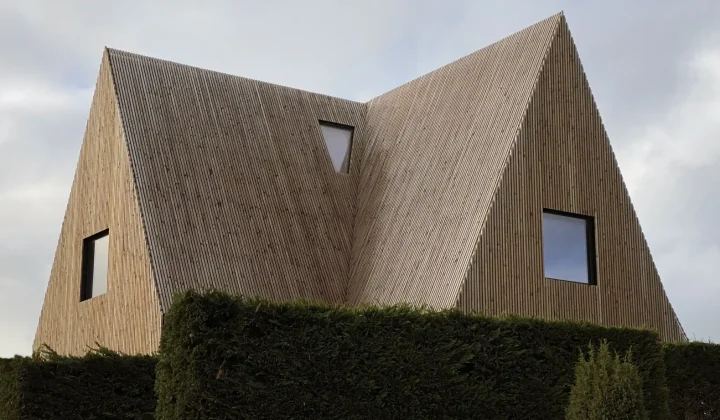
Vantieghem Talebi’s ‘House of Cards’ Brings Timber Geometry to Belgian Family Home
A new family house in Belgium by US- and Swiss-based practice Vantieghem Talebi uses a steeply pitched, card-house-inspired form clad in Douglas-fir…
Read moreRelated wiki
Adaptive Reuse in Architecture
Reference page for reuse, retrofit, conversion, embodied carbon and design constraints.
Read more