
Biophilic Interior Design: Benefits, Limits, and What Actually Works
Biophilic interior design is more than adding plants. This guide explains what the term means, where its benefits are most credible, where claims are often overstated, and which strategies tend to work best in real spaces.

Short answer
Biophilic interior design is best understood as a design approach that tries to strengthen people’s relationship with nature inside buildings rather than as a single style or a promise of measurable health outcomes. In practice, that means looking beyond decorative planting to include daylight, views, material texture, natural patterns, and spatial qualities that make interiors feel less sealed off from the wider environment. A scholarly source in the field frames biophilic design as an interior-environment strategy concerned with human interaction and experience, while mainstream architecture coverage shows that the term is used broadly across residential, workplace, hospitality, and civic interiors. <!– sources: 2,3 –>
The most credible takeaway is practical rather than miraculous: biophilic interiors can make spaces feel calmer, richer, and more connected when they are integrated thoughtfully, but they are not a substitute for sound building performance, maintenance, or evidence-based claims about health. For readers making design decisions, the safest priorities are usually the durable ones: good daylight management, meaningful views, carefully chosen natural materials, and realistic upkeep for any living systems. <!– sources: 2,3 –>
Context: what biophilic interior design actually means
In design discussion, biophilic interiors are often reduced to greenery, but the idea is wider than that. The dissertation in the verified source pack treats biophilic design as an interior design question involving interaction, perception, and environmental experience. That broader framing matters because an interior can feel strongly biophilic with little or no planting if it uses light, shadow, material warmth, natural reference, and a clearer connection to outdoor conditions. <!– sources: 3 –>
Architecture publishing has also helped normalise this wider reading of the term by presenting biophilic design through built examples rather than a single formula. That matters for practice: a home, office, school, or hotel will not all use the same toolkit, and the design value often comes from how several modest moves work together rather than from one eye-catching feature. <!– sources: 2 –>
There is also a sustainability context worth keeping in view. UNEP’s work on cities and resource efficiency emphasises that urban environments concentrate resource use and environmental pressures, which helps explain why designers keep returning to questions of how buildings relate to nature, comfort, and urban living. That does not prove that every biophilic gesture is sustainable, but it does place the interest in nature-connected interiors within a larger built-environment debate rather than a passing aesthetic trend. <!– sources: 1 –>
Benefits: where the idea is useful
The strongest public-facing case for biophilic interior design is experiential. It offers a framework for designing interiors that feel less inert and more responsive through texture, daylight, visual depth, and sensory variation. In that sense, its value is often clearest in atmosphere and spatial quality: rooms can feel more restorative, less flat, and more inhabitable when they avoid overly sealed, uniformly artificial environments. <!– sources: 2,3 –>
This is also why the most convincing biophilic spaces are often not the most heavily decorated ones. Projects commonly highlighted in architecture media tend to work because natural references are embedded into the whole composition of the interior, not because plants are added at the end. Readers should therefore treat biophilic design less as a shopping list and more as a way of organising priorities inside the design process. <!– sources: 2 –>
Limits: where claims often go too far
Biophilic design should not be presented as a guaranteed route to better health, higher productivity, or universal wellbeing. The verified sources support discussing it as a design approach and as an experiential framework, but they do not justify precise medical or performance claims. That distinction is important editorially and practically: a space can be visually compelling and emotionally supportive without yielding outcomes that can be promised in advance. <!– sources: 2,3 –>
A second limit is that visible “nature” is not the same thing as good environmental performance. A green wall or timber finish may contribute to atmosphere, but neither automatically proves low resource use, low maintenance burden, or broader sustainability value. UNEP’s resource-efficiency framing is a useful reminder that built-environment claims should still be tested against materials, operations, and long-term use rather than appearance alone. <!– sources: 1,2 –>
A third limit is operational. The more a design depends on living or high-maintenance elements, the more it depends on care, access, and ongoing management. In real interiors, that can separate what photographs well from what ages well. A restrained scheme with durable materials and strong daylight may deliver more lasting value than a maintenance-heavy installation that declines quickly. <!– sources: 2,3 –>
What actually works in practice
For most interiors, the most reliable biophilic moves are the ones tied to the architecture of the room itself: bringing in daylight carefully, strengthening views, using materials with visible grain or tactility, and avoiding a uniformly artificial visual field. These strategies tend to matter because they shape everyday experience continuously rather than as occasional visual events. <!– sources: 2,3 –>
It also helps to distinguish between low-maintenance and high-maintenance interventions. Natural light, spatial layering, and material selection are usually foundational decisions. Planting, water features, and living installations are more conditional: they can be effective, but only when the space, budget, and upkeep are aligned. <!– sources: 2,3 –>
Comparison table: common biophilic strategies
| Biophilic strategy | Where it tends to work best | Likely value | Main limitation | Best use case |
|---|---|---|---|---|
| Daylight and controlled views | Homes, workplaces, hospitality, education | Ongoing spatial quality and stronger connection to time, weather, and outdoors | Can disappoint if the room has poor orientation or limited openings | Early-stage design or renovation decisions |
| Natural materials and tactile finishes | Almost any interior type | Warmth, texture, visual depth, less synthetic feel | Can be superficial if material choices are only cosmetic | Fit-outs where finishes are being reconsidered |
| Indoor plants | Reception areas, homes, shared rooms, focal corners | Visible softness and immediate nature cue | Easy to overuse or neglect | Small-scale additions with clear maintenance responsibility |
| Living walls or large planted features | Commercial, hospitality, public interiors | Strong visual identity | High upkeep and uneven long-term performance | Signature spaces with maintenance capacity |
| Nature-referencing forms, patterns, and layered spatial composition | Residential and commercial interiors alike | Biophilic effect without relying on living systems | Can become theme-like if handled literally | Projects seeking a subtle approach |
Step-by-step guide: how to apply the idea without overclaiming it
- Start with the room, not the accessories. Look first at daylight, openings, orientation, and whether the interior has any meaningful relationship to the outside.
- Use plants selectively. Treat planting as one tool among many, not the definition of the scheme.
- Prioritise materials people actually touch and notice. Grain, texture, variation, and finish matter more than a generic “natural” label.
- Avoid one-feature thinking. A single dramatic installation rarely compensates for a poorly lit or visually flat room.
- Match ambition to maintenance. The more elaborate the living system, the more important long-term care becomes.
- Judge success by everyday experience. If the room feels calmer, more legible, and less synthetic over time, the approach is probably working. <!– sources: 2,3 –>
Checklist: what to verify before you commit
- Is the design improving the basic experience of light, view, and material quality, or just adding green decoration?
- Will the space still work well if planting looks sparse, changes seasonally, or is removed later?
- Are “natural” materials being chosen for real durability and suitability, not only for image?
- Does the concept depend on a maintenance regime that the client or occupier can actually sustain?
- Is any sustainability language being backed by resource and lifecycle thinking rather than appearance alone? <!– sources: 1,2,3 –>
FAQ
Is biophilic interior design just about adding plants?
No. The verified sources support a broader understanding that includes interior experience, interaction, and architecture-led spatial qualities. Plants may help, but they are only one possible component. <!– sources: 2,3 –>
Does biophilic design guarantee wellbeing benefits?
No. It is more accurate to say that biophilic design is used to support a stronger sense of connection with nature and a more satisfying interior atmosphere. The verified sources do not support guaranteed medical or performance outcomes. <!– sources: 2,3 –>
Is biophilic design always expensive?
Not necessarily. Some of the most durable moves are design-led rather than equipment-led, such as improving light, choosing better materials, and refining spatial composition. More elaborate planted systems are likely to be more demanding. <!– sources: 2,3 –>
What is the most reliable starting point?
Begin with the permanent qualities of the room: daylight, views, material tactility, and spatial variety. Those are usually more dependable than feature-driven add-ons. <!– sources: 2,3 –>
Can a biophilic interior also be unsustainable?
Yes. A space can look nature-connected while still relying on resource-intensive materials or difficult upkeep. UNEP’s resource-efficiency framing is a useful reminder that environmental value should not be assumed from appearance alone. <!– sources: 1 –>
Sources
- UNEP, Cities and resource efficiency: https://www.unep.org/explore-topics/resource-efficiency/what-we-do/cities
- ArchDaily: https://www.archdaily.com/
- Ryan Kallai, Investigating interactive biophilic design in interior environments (Carleton University): https://doi.org/10.22215/etd/2010-08859
Related news

Materials, Craft & Construction: what changed and what it means for readers
A careful guide to what has actually shifted in materials and construction discourse, why resource efficiency and documentation matter more, and how…
Read more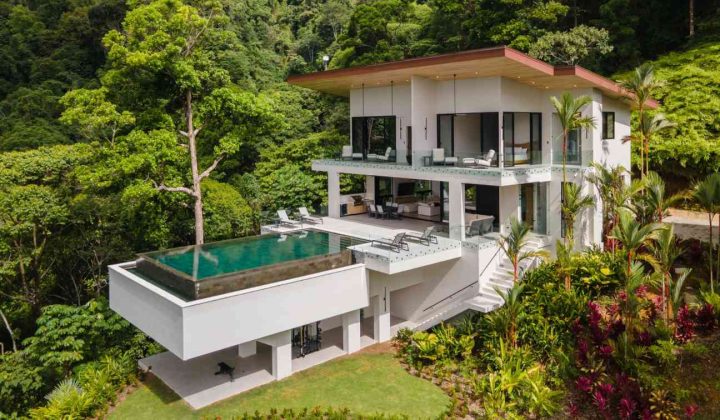
Hailey’s Hideaway: Paradise Homes Costa Rica Integrates Luxury with Nature in Uvita
Paradise Homes Costa Rica unveils Hailey's Hideaway, a residential project in Uvita that masterfully blends advanced engineering with a deep respect for…
Read more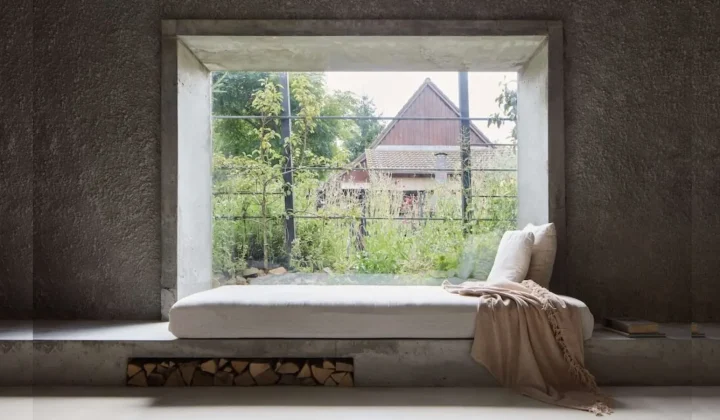
Pigsty Transformed into a Minimalist Summer House in Czech Republic
Architect Lenka Milerová renovates a former pigsty in Panoší Újezd, Czech Republic, into a raw, industrial-style summer house, emphasizing exposed concrete and…
Read more
Large-Format Graphics Reshape Commercial Architecture with Enhanced Branding and Immersive Experiences
Architects are increasingly leveraging large-format graphics to transform commercial spaces, integrating dynamic branding, wayfinding, and immersive visual solutions that go beyond traditional…
Read moreRelated wiki

Adaptive Reuse in Architecture
Reference page for reuse, retrofit, conversion, embodied carbon and design constraints.
Read more