Why 3 Days of Design Matters Beyond Furniture
For built-environment readers, 3 Days of Design is useful not only as a furniture event but as a way to read interiors, material presentation, and the public culture around design.
Short answer
3 Days of Design matters beyond furniture because events built around products also shape how interiors are staged, how materials are perceived, and how design ideas circulate in public. For architecture and interiors readers, the value is not only in what is displayed, but in how space, atmosphere, and cultural framing help give those displays meaning.
This article takes a cautious approach. Because the currently verified source set does not include official event pages, edition-specific schedules, or program details, it does not make time-sensitive claims about the latest festival's dates, venues, theme, or exhibitor count. Instead, it explains why an event of this type matters to built-environment readers, using source-backed general claims. *Date-checked note: this draft is limited to source-supported, non-edition-specific claims unless primary event sources are added before publication.*
Why built-environment readers should care
Interiors are part of the message
A design festival is not just a collection of objects. Showrooms, installations, hospitality settings, and branded environments help construct how visitors understand those objects. Commercial interiors research supports the idea that interior space acts as an active medium, not a neutral backdrop. That makes layout, lighting, surfaces, circulation, and atmosphere part of the design communication itself.
Materials are read through context, not only specification
Materials are understood partly through technical data and partly through perception. Finish, texture, reflectance, contrast, and joinery often become legible through spatial presentation. For readers interested in architecture and interiors, that means a festival can function as a comparative viewing ground for material expression, even though it cannot replace formal technical documentation.
Design culture forms in public
Design culture does not emerge from products alone. It is shaped through institutions, media, commercial settings, and the social contexts in which people interpret meaning. That broader cultural lens helps explain why city-based design events matter editorially: they gather objects, spaces, language, and audiences into a visible public moment.
How to read the festival beyond product launches
Look at the space before the object
A useful first question is not simply "What is new?" but "What kind of interior or public setting is being constructed here?" Spatial composition can suggest whether a product is being framed as domestic, workplace-oriented, civic, or hospitality-led.
Separate mood from evidence
A persuasive installation can communicate quality, craft, or innovation through atmosphere alone. But atmosphere is not the same as proof. Built-environment readers should distinguish between perceptual presentation and substantiated claims about durability, sourcing, or performance.
Watch which ideas repeat across venues and coverage
When similar material palettes, spatial strategies, or cultural themes recur, they may indicate a broader design conversation rather than one brand's isolated story. That is where editorial coverage and public discussion become useful: they help show how meaning is being framed and repeated.
Practical guide: what to assess on the ground or in coverage
Use a festival like 3 Days of Design as a reading tool, not just a launch list.
- Start with the spatial setting: showroom, installation, domestic interior, hospitality venue, or street-facing display.
- Note how lighting and surface choices affect material perception.
- Compare repeated material or color themes across more than one venue or brand.
- Check whether claims are backed by specifications or remain purely atmospheric.
- Read independent editorial coverage as a counterweight to promotional framing.
- Pay attention to talks, essays, and collaborations, which often reveal the cultural framing around the objects.
Table: narrow reading vs broader built-environment reading
| Reading approach | Main question | What it reveals | Main limitation |
|---|---|---|---|
| Product-only reading | What was launched? | New objects, forms, and brand positioning | Misses the role of space and context |
| Interior reading | How are objects staged in rooms? | Spatial strategy, atmosphere, and intended use | Can still overvalue presentation |
| Material reading | How do finishes and surfaces behave in context? | Perceptual qualities and recurring themes | Does not replace technical verification |
| Cultural reading | How are ideas discussed and circulated? | Design discourse, media framing, and public meaning | More interpretive than measurable |
What readers should do next
If you are following remotely
Use reputable design coverage to compare how multiple spaces are presented, rather than relying on a single promotional image set. Generic publication homepages are not enough on their own; look for specific reporting or project coverage before drawing conclusions.
If you are assessing products for real projects
Treat festival presentation as an early signal, not a final specification basis. Use it to identify themes, shortlists, and questions for follow-up, then verify technical and commercial details separately.
What still needs verification before a more event-specific version can publish
- Official edition dates
- Confirmed locations or districts
- Official theme or curatorial framing
- Program structure, including talks or exhibitions
- Named examples of exhibitors, installations, or institutional partners
- Any claims about scale, access model, or attendance
Bottom line
For built-environment readers, 3 Days of Design is most useful when read as a temporary ecosystem of interiors, material presentations, and public design culture. That broader view helps explain why a furniture-led event can still matter to architects, interior designers, specifiers, and urban-minded readers: it shows how design is staged, interpreted, and circulated in space.
Sources
- UNEP: cities and resource efficiency – UNEP.
- ArchDaily – ArchDaily.
- Work: Commercial Interiors – Bloomsbury Publishing Inc.
- Why culture matters: Social context and how we make sense of our lives – Peter Lang.
- The Council of Industrial Design: Official Articulations of Street Furniture Design – Bloomsbury Publishing Plc.
Related news

Handwoven Teak and Cord Outdoor Seating Debuts from Masaya and Abril Zepeda
Nicaraguan furniture brand Masaya has introduced two new handcrafted outdoor chairs — a rocking chair and a lounge chair — designed by…
Read more
Place in Mind: Hendricks Churchill Launches Hospitality Group to Revive Historic Properties
The architecture and interior design studio Hendricks Churchill has launched Place in Mind, a new hospitality group focused on acquiring, restoring, and…
Read more
Adalberto Dias Architects Complete Restoration of Lisbon’s Patriarchal Cathedral and Archaeological Center
The restoration of the Sé de Lisboa by Adalberto Dias Arquitecto integrates a new archaeological center, preserved cloisters, and seven centuries of…
Read more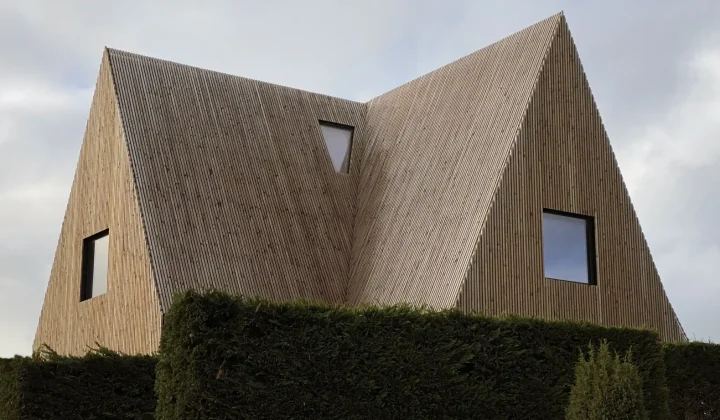
Vantieghem Talebi’s ‘House of Cards’ Brings Timber Geometry to Belgian Family Home
A new family house in Belgium by US- and Swiss-based practice Vantieghem Talebi uses a steeply pitched, card-house-inspired form clad in Douglas-fir…
Read moreRelated wiki
Adaptive Reuse in Architecture
Reference page for reuse, retrofit, conversion, embodied carbon and design constraints.
Read more