
Nóema Craft Prize Exhibition Celebrates Evolving Greek Craftsmanship in Athens
The inaugural Nóema Craft Prize exhibition in Athens showcases 15 emerging artists reinterpreting traditional Greek craft through material innovation and contemporary themes, with Kostas Lambridis taking home the top award.
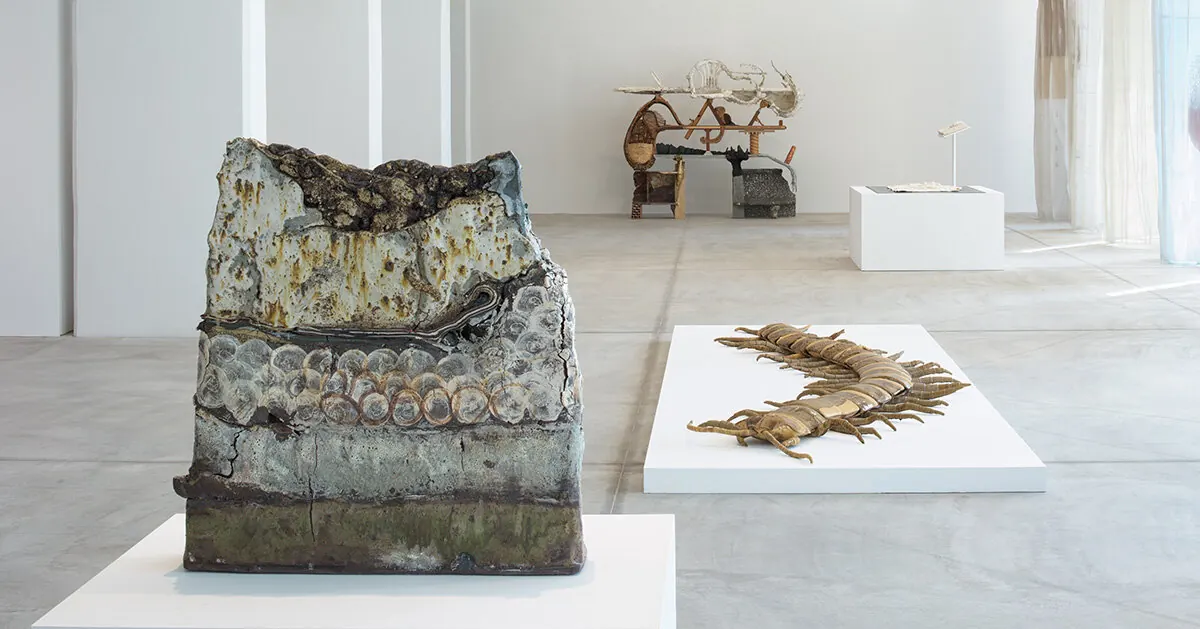
A new cultural platform, Nóema, has launched its inaugural Craft Prize exhibition in Athens, offering a compelling look at the evolving landscape of Greek craftsmanship. Hosted within the historic former Public Tobacco Factory of the Hellenic Parliament, the exhibition presents the work of 15 finalists who are pushing the boundaries of traditional techniques to address pressing contemporary issues.
The Nóema Craft Prize aims to place contemporary craft at the forefront of discussions spanning design, architecture, art, and emerging technologies. The exhibition frames craft not as a static practice, but as a dynamic discipline where inherited skills are reinterpreted to explore themes of identity, ecology, material experimentation, and social change.
Kostas Lambridis was announced as the winner of the first Nóema Craft Prize for his significant work, “It’s Not Enough.” This large-scale piece is a deliberate exploration of material hierarchies, combining marble, granite, ceramic, minerals, steel, aluminum, brass, copper, wood, and plastic in an intentionally exposed construction. The jury also recognized Dimitra Konstantinidi for “Mother’s Hug, 5+1 Stories Spoken Through the Caryatids” and Shekine Naidi for “Meteorite” with special mentions.
Nóema positions itself as an interdisciplinary hub, fostering connections between artisans, designers, artists, architects, and researchers. The prize received hundreds of submissions from across Greece, indicating a strong resurgence of interest in practices grounded in regional knowledge while simultaneously engaging with modern concerns.
Material Innovation and Social Commentary
A common thread throughout the exhibition is the innovative use of materials. Traditional elements such as marble, wool, clay, weaving, and wood are juxtaposed with reclaimed industrial waste, biomaterials, and experimental fabrication methods, thereby broadening the definition of contemporary craft.
Several artists are using familiar materials to confront urgent social issues. Argiris Rallias’ “Dowry” transforms marble and a bedside table into a memorial for victims of femicide, re-examining the historical dowry tradition through sculpture. Dimitra Konstantinidi’s “Mother’s Hug, 5+1 Stories Spoken Through the Caryatids,” a textile installation, reimagines the Caryatid figure to represent narratives of displacement and collective responsibility, utilizing embroidery and soft architecture. Alexia Psaradeli’s ceramic installation, “Mīres,” draws on a Balkan myth related to roof-tile production to explore themes of femininity and labor.
Material experimentation is another prominent theme. Ariadne Strofylla’s ceramic centipede, “Scolopendra,” is a four-meter-long piece constructed from hundreds of individually fired stoneware components enhanced with foraged minerals. Giorgos Vavatsis incorporates raw clays from Mount Chortiatis into his sculptural landscapes. Winner Kostas Lambridis continues his exploration of material hierarchies with “It’s Not Enough,” a work that emphasizes process through its exposed combination of diverse materials.
Sustainability is also a key focus for many of the participating artists. Ifigeneia Pappa’s “Litany” is an installation crafted from orange peel powder, agave fibers, coffee residues, and beeswax, transforming food waste into a sensory experience activated by light and scent. Nikos Podias uses discarded fishing nets and used tea bags to create a suspended woven piece that evokes archaeological textiles and marine ecosystems. Shekine Naidi’s felted wool installation, “Meteorite,” connects ancestral wool-processing traditions from Greece and Iran with reflections on conflict and environmental uncertainty.
The Evolution of Textile Practices
Textile arts are particularly well-represented, demonstrating how weaving is evolving beyond its purely functional applications. Valia Kapeletzi manipulates cotton and linen, using thread removal techniques to create translucent surfaces that respond to light. Maria Stavropoulou’s layered handwoven structures integrate movement directly into the fabric. Maro Fasouli combines vernacular architecture with weaving, challenging established divisions between domestic space, labor, and gender.
The finalists collectively illustrate how a new generation of Greek makers is adapting traditional techniques to engage with contemporary dialogues. Across ceramics, textiles, biomaterials, and sculpture, inherited knowledge serves as a foundation for novel forms of material and cultural exploration.
Key facts:
Exhibition Name | Nóema Craft Prize 2026 Exhibition
Organizer | Nóema Greece
Winner | Kostas Lambridis
Special Mentions | Dimitra Konstantinidi, Shekine Naidi
Location | Former Public Tobacco Factory of the Hellenic Parliament, Athens, Greece
Dates | June 18th – July 5th, 2026
The Nóema Craft Prize exhibition provides a vital platform for understanding the current state and future direction of Greek craft. It highlights how contemporary artists are using traditional skills and materials to address complex social, environmental, and cultural issues, making it a significant event for anyone interested in the intersection of art, design, and cultural heritage.
Source: https://www.designboom.com/art/noema-craft-prize-exhibition-evolving-language-greek-craft-athens/
Datos clave
| Punto | Detalle |
|---|---|
| Fuente | Designboom |
| Fecha | 2026-06-30T21:00:08+00:00 |
| Tema | nóema craft prize exhibition examines the evolving language of greek craft in athens |
Source
Designboom Original publication: 2026-06-30T21:00:08+00:00
Related news

Koto launches Haku, a mobile prefab hotel suite built on a wheeled chassis to bypass UK planning restrictions
UK architecture studio Koto has unveiled Haku, a fully mobile prefabricated suite that legally qualifies as a caravan, allowing landowners and hotel…
Read more
HONG Designworks Completes Private Office in Xi’an That Balances Memory, Materiality, and Long-Term Use
The Xi’an office by HONG Designworks integrates a folded steel staircase, retained furniture from a previous workspace, and a restrained purple-gray palette…
Read more
Handwoven Teak and Cord Outdoor Seating Debuts from Masaya and Abril Zepeda
Nicaraguan furniture brand Masaya has introduced two new handcrafted outdoor chairs — a rocking chair and a lounge chair — designed by…
Read more
Place in Mind: Hendricks Churchill Launches Hospitality Group to Revive Historic Properties
The architecture and interior design studio Hendricks Churchill has launched Place in Mind, a new hospitality group focused on acquiring, restoring, and…
Read moreRelated wiki

Adaptive Reuse in Architecture
Reference page for reuse, retrofit, conversion, embodied carbon and design constraints.
Read more