
Frank Bowling’s Drawings Take Center Stage in London Exhibition
An exhibition at The Royal Drawing School highlights over 60 years of sketches and works on paper by the celebrated British painter, revealing drawing as a fundamental element of his artistic practice.
TITLE: Frank Bowling’s Drawings Take Center Stage in London Exhibition
SLUG: frank-bowling-drawings-london-exhibition
EXCERPT: An exhibition at The Royal Drawing School highlights over 60 years of sketches and works on paper by the celebrated British painter, revealing drawing as a fundamental element of his artistic practice.
CATEGORY: Architecture News
TAGS: Frank Bowling, drawing, art exhibition, Royal Drawing School, London, contemporary art, works on paper
SEO_TITLE: Frank Bowling’s ‘Driven to Draw’ Exhibition Explores Decades of Artistic Practice
SEO_DESCRIPTION: Discover Frank Bowling’s extensive body of drawings and works on paper at The Royal Drawing School in London, an exhibition that reframes his celebrated painting career through the lens of his foundational drawing practice.
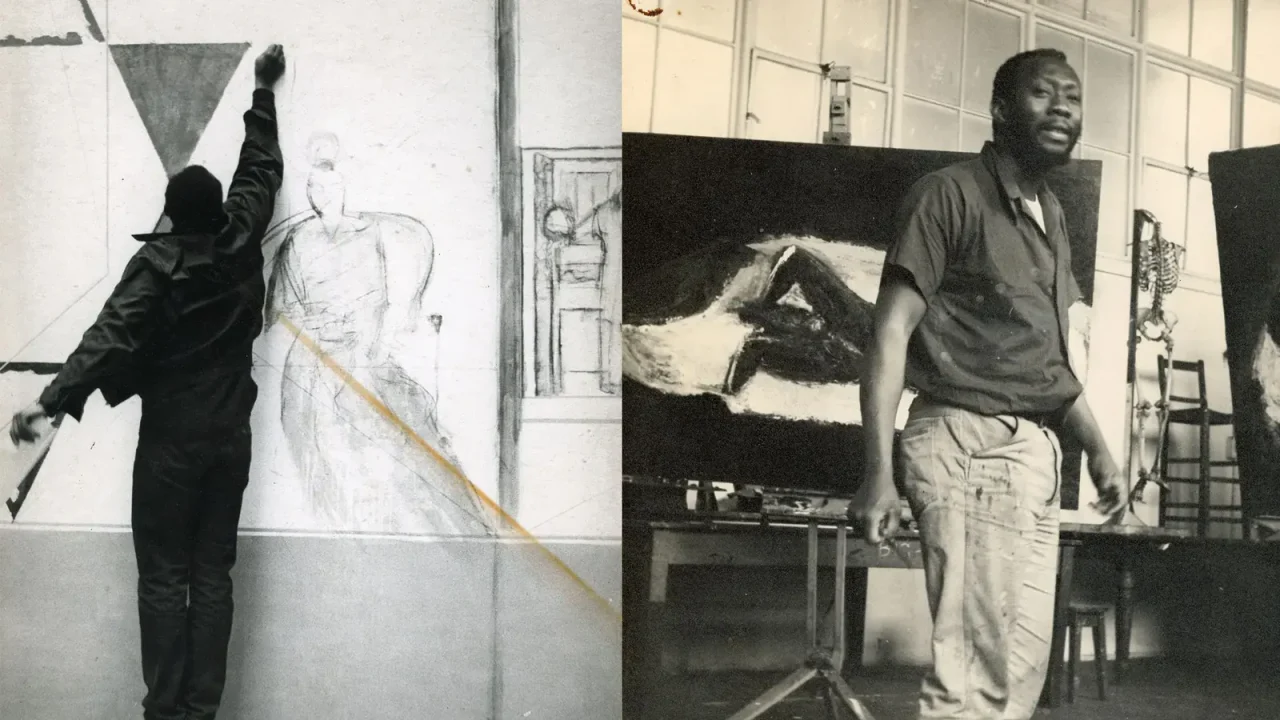
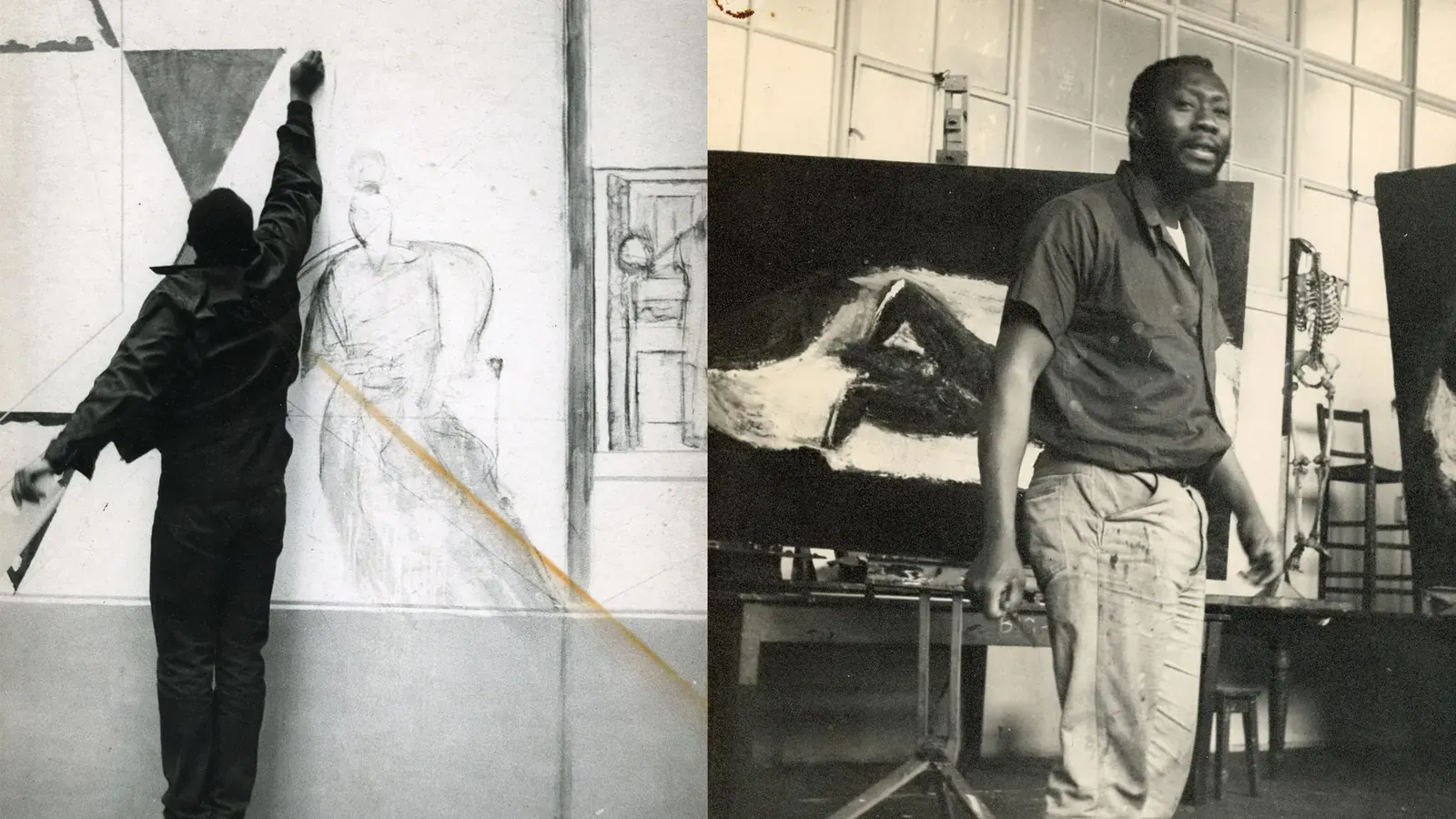
MEDIA_QUERY: Sir Frank Bowling working on a piece, Royal Drawing School, London
IMAGE_ALT: Sir Frank Bowling is pictured working on a piece in an art studio environment at The Royal Drawing School in London.
Frank Bowling, a celebrated figure in contemporary art, is the subject of a new exhibition at The Royal Drawing School in London. Titled ‘Driven to Draw,’ the show, curated by Claudia Tobin in collaboration with the artist, delves into more than six decades of Bowling’s sketches, collages, and works on paper, offering a fresh perspective on his renowned painting career.
The exhibition, running from June 25 to August 22, 2026, underscores drawing not just as a preparatory step, but as an integral and continuous thread throughout Bowling’s artistic journey. Even at ninety years old, Bowling approaches drawing with a daily commitment characterized by chance, discipline, and acquired skill.
A Foundation in Line
While Bowling is widely recognized for his large-scale, immersive paintings where color flows expansively beyond the canvas, ‘Driven to Draw’ invites viewers to examine the intricate details of his process. The exhibition reveals the importance of line, surface, and the tactile nature of paper in his practice.
Bowling himself views drawing and painting as inseparable. “I’ve been saying for years that I’m drawing in my paintings, drawing with the materials themselves,” he stated. For him, tools such as spray guns, palette knives, and even residual paint in a bucket are all instruments of drawing. He often allows paint to pour and settle organically, letting the material dictate the formation of lines. Paper, in contrast, offers a unique immediacy. “Perhaps it’s the nakedness of it,” Bowling muses. “The paper doesn’t wait, and it doesn’t forgive.”
Evolution of Practice
The exhibition is structured into three distinct sections. The first showcases early drawings from Bowling’s student years in the 1950s and 1960s. The second section, “Expanded Drawings,” features works from the mid-1960s onwards, demonstrating the evolution of his technique. The final section presents recent works that continue his exploration across diverse mediums on paper and surface.
Born in British Guiana (now Guyana) in 1934, Bowling’s artistic path led him to London. After completing national service, he studied at the Royal College of Art alongside contemporaries like David Hockney. His move to New York in 1966 marked a significant period where his work engaged with abstraction and color-field painting. Bowling’s career, though celebrated globally and marked by accolades such as a knighthood and becoming a Royal Academician, has been noted for a delayed widespread recognition within the art world.
Early Influences and Personal Narratives
The early drawings on display reveal an artist deeply engaged in learning through observation, capturing subjects like houses, construction sites, figures, and portraits. Many of these works were rediscovered from a portfolio stored away for years.
During a period of limited resources after national service, Bowling found solace and inspiration in writing poetry and visiting museums, studying masters like Titian, Rembrandt, Goya, and Vermeer. It was during this time that drawing began to take precedence. “There was a time when drawing was the only thing standing between me and nothing,” he reflects. “If I have to get out of bed, if I have to be awake, then I’m going to draw.”
A recurring and potent motif in Bowling’s oeuvre is the map. His childhood in Guyana was marked by the repeated, freehand drawing of the country’s outline in school, an exercise he described as an “agony.” Years later, in New York, he observed the unexpected appearance of South America’s outline in one of his paintings, a moment that would lead to it becoming a familiar element in his work. He also speaks of tracing images from Vermeer postcards, viewing tracing as an act of deliberate revision and argument.
Materiality and Memory
In his more recent creations, drawing becomes interwoven with threads, fabric, and manual dexterity. Bowling describes the tactile sensations of threads “scrunching and spooling,” staples gathering like debris, and ribbons of paint moving across paper. These materials evoke a connection to his mother, a dressmaker and milliner, and her intimate knowledge of making that shaped his early understanding of touch, repetition, and care. He employs the German term *Fingerspitzengefühl*—meaning “fingertips feeling”—to describe her skilled handling of fabric and tools.
Reflecting on his mother’s work, the recurring circular forms in Bowling’s paintings gain new significance, suggesting continuity and the enduring presence of family, particularly in relation to works like “Tracing of a photograph of Frank Bowling’s mother.”
Key facts:
| Feature | Detail |
|—|—|
| Exhibition Title | ‘Driven to Draw’ |
| Artist | Frank Bowling |
| Venue | The Royal Drawing School, London |
| Dates | June 25 – August 22, 2026 |
| Focus | Over 60 years of sketches and works on paper |
This exhibition offers a compelling opportunity for art enthusiasts and designers to explore the foundational role of drawing in the practice of a significant contemporary artist. It highlights how meticulous line work and material exploration contribute to the conceptual depth of his celebrated paintings, providing insights into his artistic evolution and the personal narratives that inform his work.
Source: https://www.wallpaper.com/art/exhibitions-shows/frank-bowling-interview-driven-to-draw-london
Datos clave
| Punto | Detalle |
|---|---|
| Fuente | Wallpaper |
| Fecha | 2026-06-30T16:41:46+00:00 |
| Tema | ‘I’m drawing in my paintings’: Frank Bowling on the practice behind a life’s work |
Source
Wallpaper Original publication: 2026-06-30T16:41:46+00:00
Related news
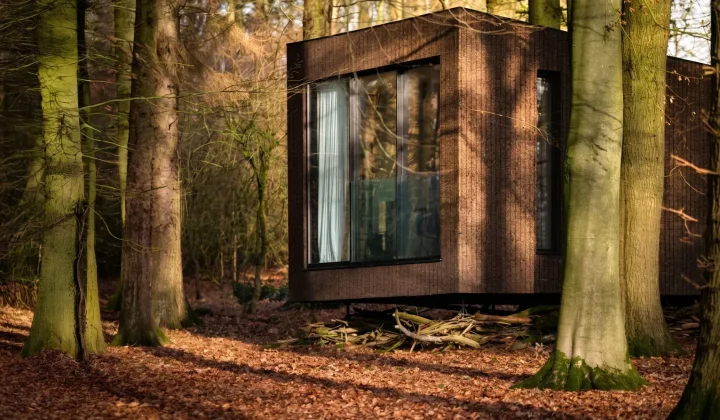
Koto launches Haku, a mobile prefab hotel suite built on a wheeled chassis to bypass UK planning restrictions
UK architecture studio Koto has unveiled Haku, a fully mobile prefabricated suite that legally qualifies as a caravan, allowing landowners and hotel…
Read more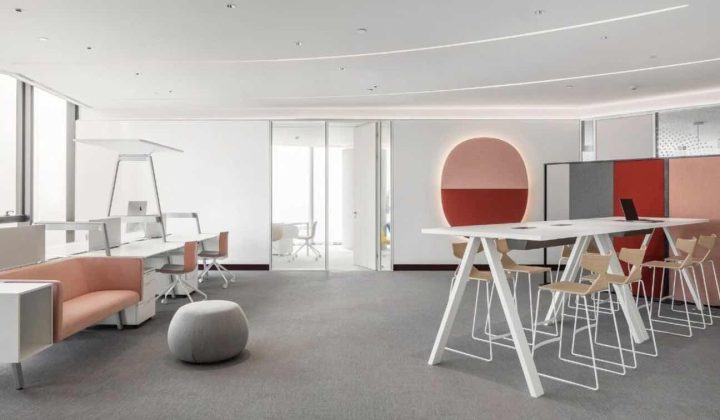
HONG Designworks Completes Private Office in Xi’an That Balances Memory, Materiality, and Long-Term Use
The Xi’an office by HONG Designworks integrates a folded steel staircase, retained furniture from a previous workspace, and a restrained purple-gray palette…
Read more
Handwoven Teak and Cord Outdoor Seating Debuts from Masaya and Abril Zepeda
Nicaraguan furniture brand Masaya has introduced two new handcrafted outdoor chairs — a rocking chair and a lounge chair — designed by…
Read more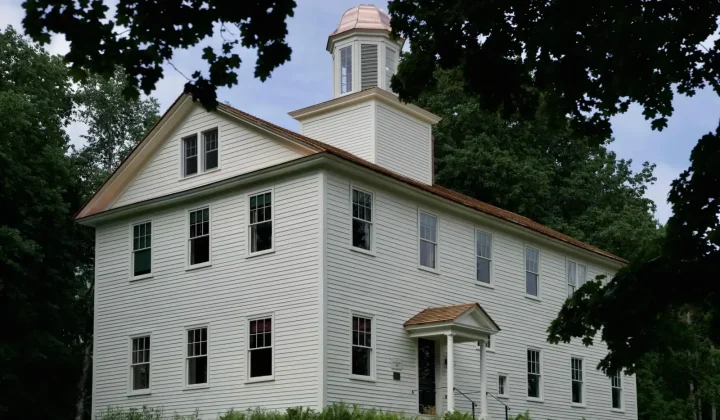
Place in Mind: Hendricks Churchill Launches Hospitality Group to Revive Historic Properties
The architecture and interior design studio Hendricks Churchill has launched Place in Mind, a new hospitality group focused on acquiring, restoring, and…
Read moreRelated wiki
Adaptive Reuse in Architecture
Reference page for reuse, retrofit, conversion, embodied carbon and design constraints.
Read more