
Scaffolding Transformed into Street Furniture for Osaka Development Site Activation
A temporary urban platform, GAS STAND, utilizes repurposed scaffolding pipes and familiar street elements to activate a vacant development site in Osaka, fostering community engagement before permanent construction begins.
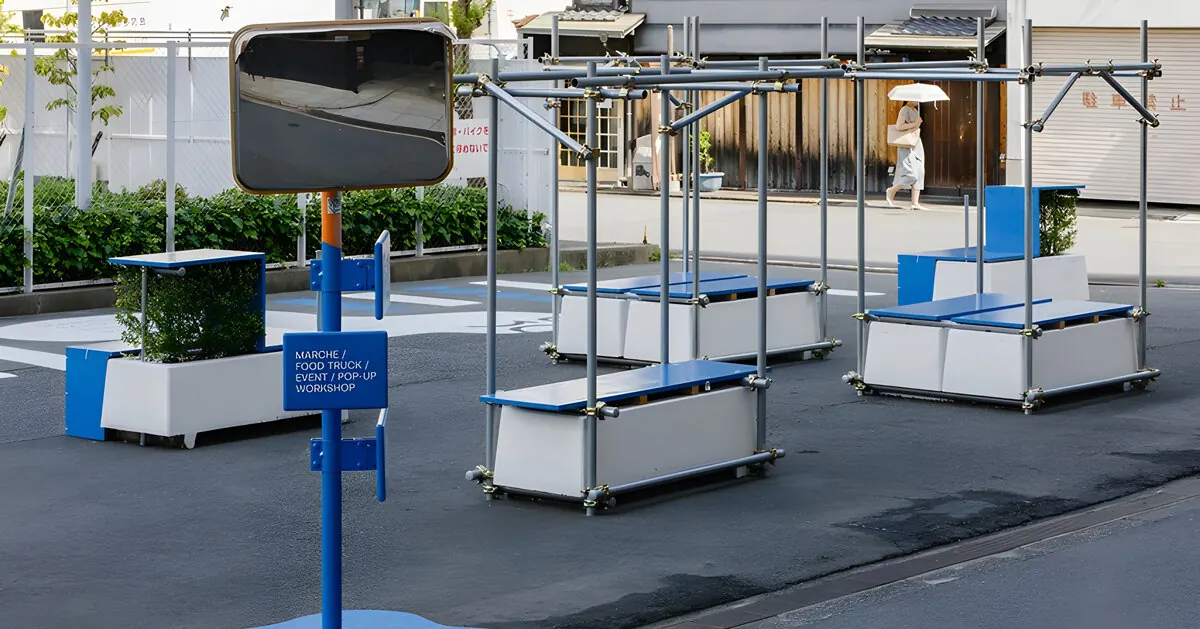
A vacant development site in Osaka has been transformed into a vibrant public space through an innovative temporary urban activation project called GAS STAND. Designed by team raw row for Osaka Gas Urban Development, the initiative repurposes familiar urban components, including scaffolding pipes, to create street furniture and gathering areas on a site slated for a future mixed-use building.
The project aims to activate the undeveloped land along Osaka’s Midosuji boulevard, a major north-south artery, during the pre-construction phase. GAS STAND provides a public platform for community activities, informal gatherings, and everyday use, preventing the site from remaining vacant and unused. This intervention serves as a temporary spatial framework that encourages public occupation and tests new approaches to site management and community programming.
Operated by Osaka Gas Urban Development, GAS STAND functions as an interim environment designed to bring together office workers, local residents, and visitors. It fosters engagement through informal activities, local initiatives, and neighborhood events. The design thoughtfully responds to the surrounding business district’s character, where bustling weekdays contrast with quieter weekends and where limited public spaces are available for lingering.
Extending the Urban Logic
Instead of creating a conventional, isolated plaza, GAS STAND extends the logic of the existing urban environment into the site. This approach blurs the boundaries between public and private space, positioning the temporary intervention as an extension of the streetscape rather than a separate destination. This integration ensures the temporary platform feels connected to the daily rhythms of the neighborhood.
The spatial composition of GAS STAND is assembled from readily identifiable urban components. These include benches, standing counters, bulletin boards, graphic markings, planters, and traffic mirrors, all commonly found in streetscapes and construction sites. By reconfiguring these everyday elements, the project supports activities like sitting, gathering, and information sharing, all while maintaining visual continuity with the surrounding city.
Adaptable Elements for Participation
The individual components of GAS STAND are designed to function as adaptable tools rather than fixed amenities. This adaptability encourages participation and allows the space to accommodate a variety of changing activities over time. Their temporary nature means the site can evolve while remaining closely connected to the daily life of the neighborhood.
Conceived as the initial stage of a broader urban transformation, GAS STAND explores how public life can emerge even before permanent architecture is completed. By activating the site through temporary design interventions, the project establishes an early framework for community use, spatial identity, and future occupation. It anticipates the role the permanent mixed-use development will eventually play.
Key facts
| Feature | Detail |
|---|---|
| Project Name | GAS STAND |
| Designer | team raw row |
| Location | Midosuji, Osaka, Japan |
| Purpose | Temporary urban activation of a development site |
| Materials | Repurposed scaffolding pipes, street furniture elements |
The activation of development sites with temporary installations like GAS STAND offers a valuable model for urban planning. It demonstrates how vacant or pre-construction land can be actively used to benefit the community, fostering social interaction and a sense of place before major development is realized. This approach not only enriches the urban fabric but also tests potential programming and public engagement strategies for future permanent structures.
Source: https://www.designboom.com/design/scaffolding-pipes-street-furniture-activating-future-development-site-osaka-gas-stand-team-raw-row/
Source
Designboom Original publication: 2026-07-04T00:55:25+00:00
Related news
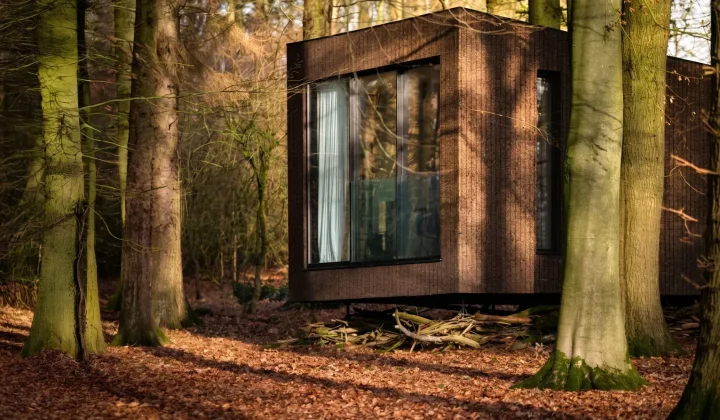
Koto launches Haku, a mobile prefab hotel suite built on a wheeled chassis to bypass UK planning restrictions
UK architecture studio Koto has unveiled Haku, a fully mobile prefabricated suite that legally qualifies as a caravan, allowing landowners and hotel…
Read more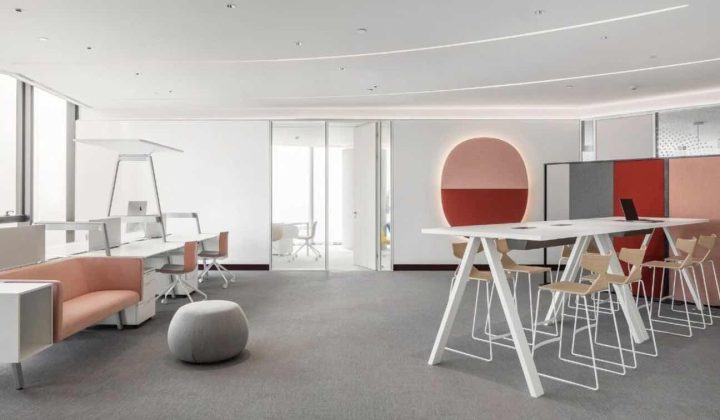
HONG Designworks Completes Private Office in Xi’an That Balances Memory, Materiality, and Long-Term Use
The Xi’an office by HONG Designworks integrates a folded steel staircase, retained furniture from a previous workspace, and a restrained purple-gray palette…
Read more
Handwoven Teak and Cord Outdoor Seating Debuts from Masaya and Abril Zepeda
Nicaraguan furniture brand Masaya has introduced two new handcrafted outdoor chairs — a rocking chair and a lounge chair — designed by…
Read more
Place in Mind: Hendricks Churchill Launches Hospitality Group to Revive Historic Properties
The architecture and interior design studio Hendricks Churchill has launched Place in Mind, a new hospitality group focused on acquiring, restoring, and…
Read moreRelated wiki

Adaptive Reuse in Architecture
Reference page for reuse, retrofit, conversion, embodied carbon and design constraints.
Read more