Critical Factors for Selecting Aluminum Extrusion Suppliers in Manufacturing
A guide to choosing the right aluminum extrusion supplier, highlighting quality, lead times, pricing, engineering support, and reliability to avoid project delays and budget overruns.
Selecting the appropriate aluminum extrusion supplier is a critical decision that can significantly impact a product launch’s timeline, project budgets, and the overall quality of manufactured parts. With a crowded market, differentiating between suppliers requires a close examination of several key factors beyond initial impressions.
Manufacturing Depth and Capabilities
A primary consideration is the supplier’s manufacturing depth. Some facilities specialize in standard alloys and profiles, while others possess the capability to produce custom cross-sections in a wider range of alloys, such as 6061, 6063, or 7075. It is essential to ascertain upfront whether a supplier can accommodate specific geometric and alloy requirements. Inquiring about their die capabilities, press tonnage options, and the alloys they regularly stock or source is crucial. Examining technical sheets for details on tolerances, wall thicknesses, and minimum order quantities (MOQs) provides further insight. Additionally, evaluating whether the supplier offers in-house secondary operations like anodizing, cutting, drilling, or powder coating can streamline the process, reduce coordination time, and minimize dimensional variations associated with multi-facility handling. Transparency regarding their machinery, including recent updates to presses and dies, indicates a supplier’s commitment to consistent output and ability to handle complex profiles.
Quality Control and Certification
Robust quality control is a non-negotiable aspect of selecting a reliable supplier. Reputable suppliers will have documented inspection processes, from die entry to final shipment, rather than relying on verbal assurances. Seeking suppliers with ISO 9001 certification demonstrates an independently verified quality management system. For specific industries like aerospace, automotive, or structural construction, certifications such as AS9100 or NADCAP may be required. Adherence to industry standards for dimensional tolerances, such as those published by The Aluminum Association, is also vital. Suppliers should be able to detail their inspection methods, including the use of Coordinate Measuring Machines (CMM) or optical comparators, and provide sample inspection reports. A clear corrective action process, including defect rate tracking and traceability records for specific die runs and alloy lots, is indicative of a supplier committed to continuous improvement and rapid problem resolution.
Lead Time and Reliability
Lead time is frequently a point of contention. Obtaining lead time commitments in writing before finalizing any agreement is paramount. This includes understanding both standard and expedited options, as well as how production schedules are managed. Suppliers who batch similar profiles may extend wait times for unique orders. It is also important to clarify protocols for issues like die failure mid-run, specifically whether backup dies are available. For high-volume or repeat orders, exploring blanket purchase agreements or scheduled releases can help stabilize lead times and secure production slots. Requesting references from clients with similar project timelines and inquiring about their on-time delivery performance offers valuable third-party validation. Proactive communication regarding schedule changes is a strong indicator of a supplier’s reliability.
Pricing and Minimum Order Quantities
While price is a factor, a clear and transparent pricing structure is often a better indicator of a supplier’s operational integrity. A detailed breakdown separating raw material costs, die costs, secondary operations, and freight allows for informed decision-making. Clarifying MOQs early is essential, especially for smaller projects or prototypes, as some suppliers impose significant minimum run weights. Suppliers offering flexible MOQ programs can be advantageous for early-stage product development. Understanding die ownership and any associated maintenance or storage fees is also crucial. Finally, clarifying whether pricing is fixed for a set period or subject to market fluctuations, such as the London Metal Exchange (LME) price of aluminum, is necessary to avoid unexpected cost increases.
Key facts
| Factor | Importance | Actionable Insight |
|---|---|---|
| Manufacturing Depth | Ability to meet specific alloy and geometry requirements. | Inquire about die capabilities, press tonnage, and available alloys. |
| Quality Control | Ensures parts meet specifications and reduces rework. | Look for ISO 9001 certification and documented inspection processes. |
| Lead Time Commitment | Crucial for project scheduling and timely product launches. | Get lead time guarantees in writing and understand production scheduling methods. |
| Pricing Transparency | Enables better cost management and decision-making. | Request detailed quotes and clarify MOQs and market-based pricing adjustments. |
Choosing the right aluminum extrusion supplier is an investment in project success. By thoroughly evaluating manufacturing capabilities, quality control systems, lead time reliability, and pricing structures, manufacturers can mitigate risks and ensure they partner with a supplier who can consistently deliver high-quality components on time and within budget.
Source: Amazing Architecture – What to Look for in an Aluminum Extrusion Supplier (https://amazingarchitecture.com/articles/what-to-look-for-in-an-aluminum-extrusion-supplier)
Source
Amazing Architecture Original publication: 2026-07-09T16:45:20+00:00
Related news
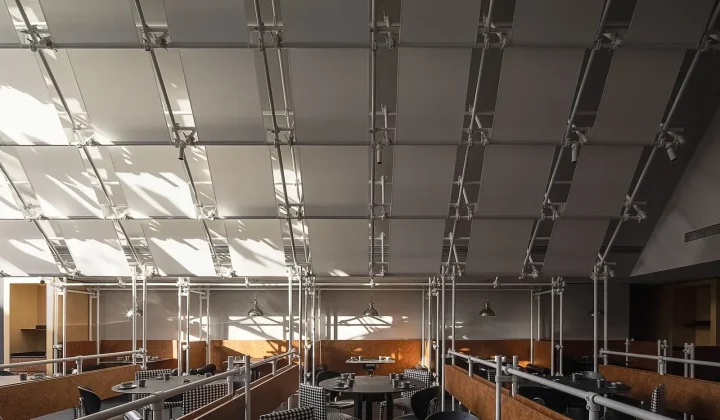
Scaffolding as Interior Architecture: Adaptable Systems Challenge the Divide Between Temporary and Permanent
A new article by Jonathan Yeung examines how modular scaffolding systems, from steel frames to Dieter Rams’ shelving, demonstrate that longevity in…
Read more
MIV Architects Proposes Wetland Pavilion That Prioritizes Non-Human Habitats Over Human Comfort
The Spanish firm’s “Nidos de Agua” concept for the Albufera natural park in Valencia aims to rebalance the relationship between building and…
Read more
Nelson Byrd Woltz Begins Construction on Restorative Eagle Courtyard at Walter Reed Medical Center
Construction has started on a redesigned Eagle Courtyard at Walter Reed National Military Medical Center, led by Nelson Byrd Woltz Landscape Architects.…
Read more
London’s listening bar boom reflects a deeper shift in hospitality design and music culture
A wave of Japanese-inspired listening bars is reshaping London’s nightlife, but owners and critics are asking whether the concept can survive commercial…
Read moreRelated wiki

Adaptive Reuse in Architecture
Reference page for reuse, retrofit, conversion, embodied carbon and design constraints.
Read more