The Thrill of “Risky Play” in Public Art and Design
Installations that invite genuine physical engagement and a sense of uncertainty, rather than pre-scripted interactions, offer a more profound experience, echoing the principles of "risky play.
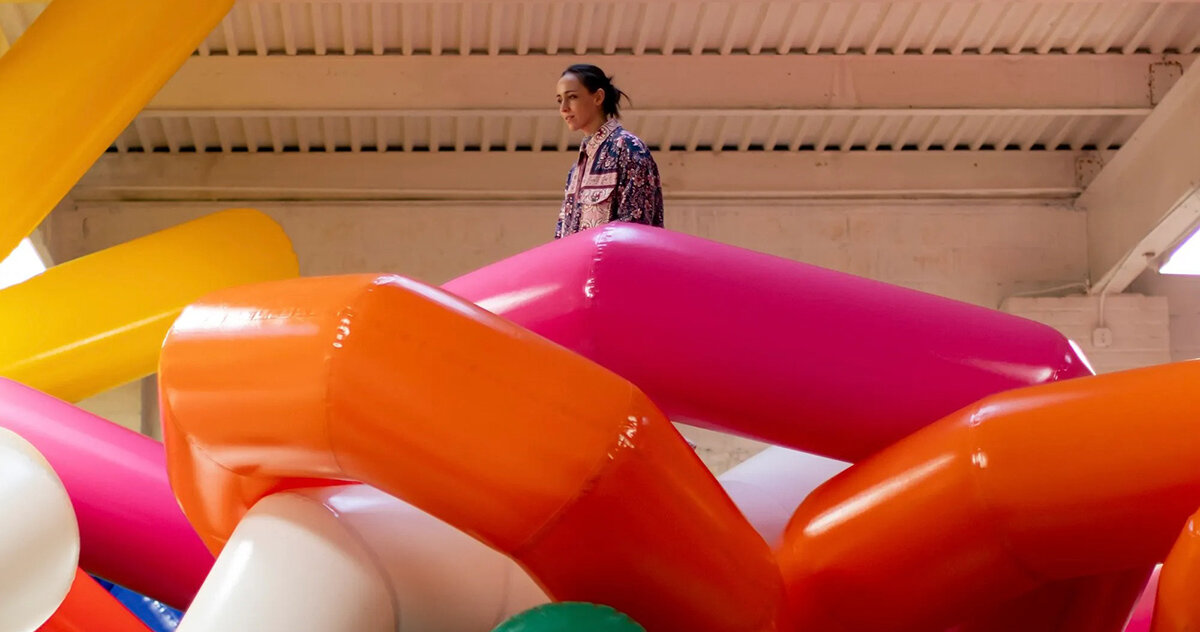
Public art and designed spaces often aim to engage visitors, but many fall short of delivering a truly thrilling experience. The author argues that the most impactful designs are those that invite genuine physical interaction and a sense of “risky play”—environments where visitors must assess their own limits and navigate uncertainty, rather than follow pre-determined paths.
A Colossal Inflatable Maze
The author recounts an experience in a Brooklyn warehouse with Cj Hendry’s “Keff Joons,” a colossal inflatable maze. Participants were given grippy socks and invited to climb the 20-foot-tall structure, which lacked railings or nets. The dynamic nature of the maze, with unexpected reverberations from other climbers, created a visceral sense of height and potential for a fall, even though the landing mats were designed to be forgiving. This “split” between logical safety and felt unease is identified as the core of thrilling experiences.
Risky Play and Its Benefits
This sensation aligns with the concept of “risky play,” defined in a 2024 study in Planning Theory & Practice as thrilling physical play involving uncertainty and the possibility of injury. The study suggests that decades of risk reduction have limited opportunities for adventurous play, yet research associates physically challenging play with stronger risk-assessment skills and greater self-confidence, particularly in children, but applicable to all ages.
Examples of Engaging Installations
Similar experiences are drawn from Tomás Saraceno’s “Free the Air: How to hear the universe in a spider/web” at The Shed, where visitors walked on suspended nets with wide enough openings to create a sense of precariousness. The interdependence of visitors on the shifting net created a shared sense of nervousness and bonding. Even a hike on Maui’s Waihe’e Ridge Trail, known for its muddy and uncertain upper sections, provided a similar thrill through manageable risks and shared experience with fellow hikers.
The Limitation of Scripted Interaction
In contrast, many “interactive” installations that simply enlarge nostalgic toys or offer limited engagement fail to capture this essence. These often serve as mere photo opportunities, providing little room for visitors to test routes, alter conditions, or influence others’ experiences. The author distinguishes between interaction and agency, noting that oversized swings or ball pits may offer visual cues of play but often result in hollow, repeatable experiences.
Designing for Agency and Uncertainty
Designs that demand more from the body, such as Sven Pfeiffer’s “Risky Playground” which could be rotated, or Numen/For Use’s tape and net environments that shift under collective weight, offer deeper engagement. These installations challenge visitors to actively participate and adapt, fostering a more dynamic and memorable experience. The key lies in creating environments that present solvable problems through movement and assessment, rather than dictating the interaction entirely.
Key facts
| Concept | Description | Impact |
|---|---|---|
| Risky Play | Thrilling physical play involving uncertainty and the possibility of injury. | Enhances risk-assessment skills and self-confidence. |
| Interactive Art | Installations designed for visitor engagement. | Can be superficial if interaction is pre-scripted. |
| Agency in Design | Allowing users to influence their experience and surroundings. | Leads to more profound and memorable engagement. |
The principle of “risky play” offers a valuable framework for architects and designers looking to create more compelling public art and spaces. By incorporating elements of controlled uncertainty and encouraging active physical and mental engagement, designers can move beyond passive observation to foster genuine thrills and deeper connections between people and their environment.
Source: https://www.designboom.com/design/public-art-keeps-inviting-us-to-play-so-why-is-so-little-of-it-actually-thrilling/
Source
Designboom Original publication: 2026-07-16T01:41:17+00:00
Related news
SIITUA III to Gather International Researchers on Territory, Urbanism, and Architecture in Lima
The third edition of the International Seminar on Research in Territory, Urbanism, and Architecture (SIITUA III) will take place in Lima, organized…
Read more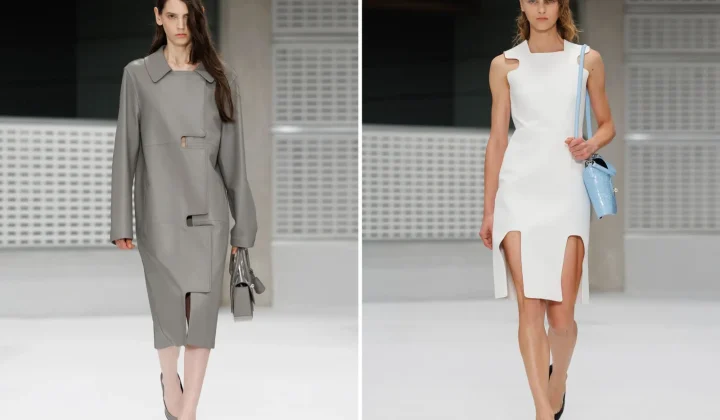
Christopher Kane brings streamlined, heritage-driven vision to Mulberry in London Fashion Week debut
The Scottish designer presented his first collection for the British leather goods house at London Fashion Week, blending sharp tailoring, archival references…
Read more
When Film Directors Become Interior Designers: Guadagnino, Lynch, Anderson and Almodóvar Step Off Screen
From Luca Guadagnino’s Zara Home collection to David Lynch’s Paris club and Wes Anderson’s train carriage, a wave of collaborations is blurring…
Read more
Jesus Mari Lazkano Examines Changing Landscapes Through Painting and Animated Film at Basque Luxury Studio
The Basque artist’s exhibition ‘Azken Natura’ brings together six large-scale paintings and a 22-minute animated film that traces the melting of the…
Read moreRelated wiki

Adaptive Reuse in Architecture
Reference page for reuse, retrofit, conversion, embodied carbon and design constraints.
Read more