
Electronic Tattoos Promise a New Era of Non-Invasive Health Monitoring
Researchers have developed a conductive ink that can be painted onto the skin, creating temporary electronic tattoos capable of monitoring vital health metrics with enhanced accuracy and comfort.
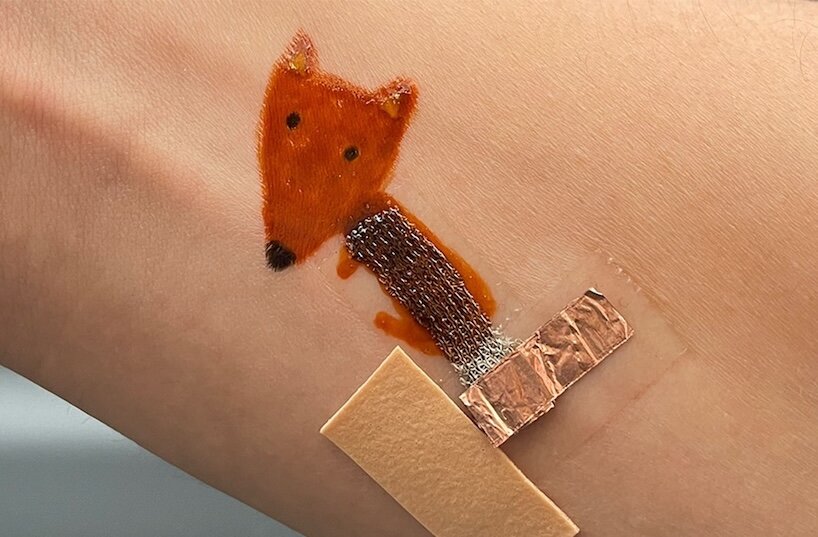
Researchers at Pennsylvania State University have unveiled a groundbreaking technology that could redefine personal health monitoring: electronic tattoos applied directly to the skin using conductive ink. This innovative approach moves beyond traditional bulky wearables, transforming body art into sophisticated biosensors capable of tracking heart, muscle, and brain activity with remarkable precision.
Paintable Health Sensors
The core of this development lies in a water-based conductive ink that dries within minutes to form a flexible electrode. Unlike conventional metal electrodes that can detach during movement or hydrogel alternatives that degrade over time, these painted sensors maintain close contact with the skin’s surface. This intimate connection minimizes the air gaps that often interfere with signal quality, leading to more accurate readings of electrocardiogram (ECG), electroencephalogram (EEG), and electromyogram (EMG) signals. The technology is detailed in a study published in the Proceedings of the National Academy of Sciences (PNAS).
Visually Expressive Technology
Beyond their functional capabilities, these e-tattoos are designed with aesthetics in mind. Researchers liken the conductive ink to face paint, allowing for a wide range of colors and graphic designs. This means health sensors can be personalized as body art, potentially making health monitoring more approachable, especially for children or individuals who find traditional medical devices intimidating. The sensors are intended to be visually expressive rather than purely clinical.
Seamless Integration with Electronics
To connect the soft, painted electrodes with rigid electronic components, the team incorporated a porous silver textile. This flexible interface allows the wet ink to penetrate and bond securely, creating a durable connection that can stretch significantly without breaking. A compact, reusable electronic module then clips onto this textile connector, wirelessly transmitting biometric data via Bluetooth. The breathable design of the textile also allows for sweat and body hair to pass through, enhancing comfort for extended wear.
Demonstrated Versatility and Future Potential
Laboratory tests have showcased the system’s robust performance. Participants successfully recorded ECG signals during twelve hours of daily activities and exercise, with the e-tattoos remaining secure and maintaining signal integrity. In a striking demonstration of its potential for human-machine interaction, muscle signals from a volunteer’s forearm were used to control a robotic prosthetic hand without any physical contact.
The researchers envision a future where the electronic module is reusable, while the painted electrodes can be easily washed off and reapplied. This approach could significantly reduce waste compared to disposable adhesive sensors. Furthermore, the team is exploring advancements that would enable these e-tattoos to detect biochemical markers like cortisol or glucose. Applications are also being considered beyond healthcare, such as conformable sensors for monitoring plant health or other irregular surfaces.
Key facts
| Feature | Description |
|---|---|
| Technology | Paint-on conductive ink electrodes for health monitoring |
| Developed by | Pennsylvania State University research team |
| Key Metrics Monitored | ECG, EEG, EMG |
| Integration | Porous silver textile connector and reusable electronic module |
| Publication | Proceedings of the National Academy of Sciences (PNAS) |
This development is significant for the architecture and design fields as it blurs the lines between technology, art, and personal well-being. The ability to integrate functional electronic components into visually appealing, temporary body art opens new avenues for design innovation in wearable technology and beyond, potentially influencing the aesthetics and user experience of future health-monitoring devices.
Source: Designboom – e-tattoos: what if a fierce shark and a shy tiger could monitor your health? – https://www.designboom.com/technology/fierce-shark-shy-tiger-tattoos-etattoos-health-paint-on/
Source
Designboom Original publication: 2026-07-18T09:11:47+00:00
Related news

Freddie Mercury’s stage costumes go on display at V&A in free 2026 exhibition
The V&A marks the 80th anniversary of Freddie Mercury’s birth with ‘Splendid Things’, a free exhibition of eight iconic looks lent by…
Read more
Armenian Designer Shushana Khachatrian Debuts ‘The Woman’s Chair,’ a Deliberately Uncomfortable Reflection on Social Structures
Armenian designer Shushana Khachatrian's 'The Woman's Chair' uses polished stainless steel and a deliberately unstable geometry to question expectations around comfort, posture,…
Read more
27 Storeys Documentary Revisits Vienna’s Alterlaa and the Utopian Promise of Collective Living
Director Bianca Gleissinger returns to her childhood home in the Alterlaa housing complex to explore how a 1970s social housing project achieved…
Read more
12 Colombian Houses Showcase the Enduring Appeal of Exposed Brick
ArchDaily highlights a dozen Colombian homes that use exposed brick as a structural and aesthetic statement, reflecting the material's deep roots in…
Read moreRelated wiki

Adaptive Reuse in Architecture
Reference page for reuse, retrofit, conversion, embodied carbon and design constraints.
Read more