Haus der Kunst Exhibit Explores Children as Collaborators in Art and Architecture
An exhibition at Munich's Haus der Kunst redefines art history by showcasing works where children act as active collaborators, influencing spaces and rules, and challenging traditional notions of authorship in design.
Munich’s Haus der Kunst is currently hosting “For Children. Art Stories since 1968,” an exhibition that re-examines the role of young audiences in artistic and architectural contexts. The show highlights a significant shift that began in the late 1960s, where artists started viewing children not merely as passive observers but as active collaborators capable of shaping artworks and influencing spatial design.
The exhibition’s premise challenges conventional ideas of authorship, focusing on how children’s engagement can redefine an artwork’s meaning and use. This approach has direct implications for architectural and urban design, suggesting that spaces can be more dynamically shaped when their youngest users are given agency.
Historical Roots of Participation
The exhibition traces its historical origins to the KEKS group, formed in 1968 around the Munich Art Academy. KEKS, an acronym for art and education with cybernetics and sociology, moved beyond traditional art education to engage with the city, using simple materials for collective experiments. Their work post-1970, including their contribution to the Venice Biennale’s first art-education initiative, culminated in the establishment of a children’s and youth center within Haus der Kunst itself. This initiative envisioned the museum as an environment that users, particularly children, could actively transform through their experiences.
Interactive Installations and Spatial Redefinition
Several key installations within the exhibition exemplify this participatory philosophy. Ei Arakawa-Nash’s “Mega Please Draw Freely” invites visitors to draw directly on the museum’s marble floor, turning the architectural surface into a collective, evolving artwork. This echoes Jirō Yoshihara’s 1956 Gutai action, which similarly invited communal drawing, bridging historical and contemporary approaches to shared creative space.
Basim Magdy’s “PINGPINPOOLPONG, or How I Learned to Laugh at Failure” presents altered game tables that blend elements of table tennis, pool, and pinball. The design deliberately makes winning difficult, encouraging participants to invent their own rules and embrace randomness. This installation underscores how user-defined rules can reshape the experience of a designed object or space.
Sensory Engagement and Material Interaction
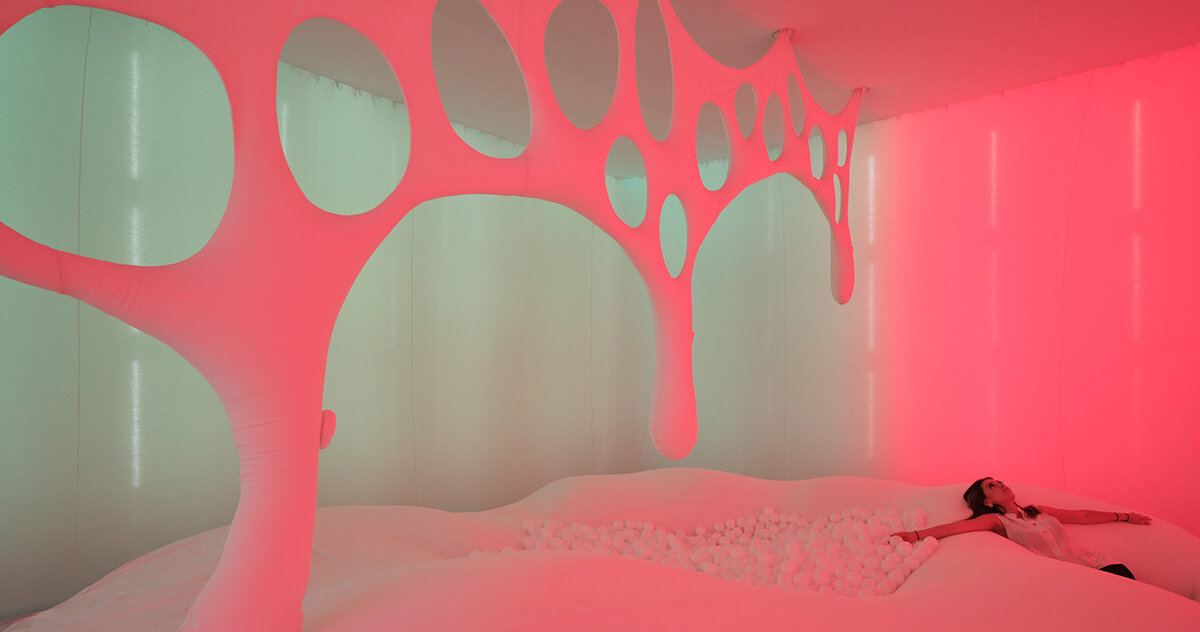
Ernesto Neto’s “Uni Verso Bebé II Lab” offers a sensory experience, creating a tent-like structure with soft fabric forms that evoke a womb-like shelter. Visitors are encouraged to remove their shoes and crawl inside, engaging with elastic membranes and padded volumes. This piece emphasizes touch and bodily awareness as forms of knowledge, suggesting that early learning about space and material interaction begins before language.
Further blurring the lines between art, architecture, and play is KOO JEONG A’s “HAUS DER MAGNET.” This outdoor sculpture becomes a public space whose form is completed through use. Its skateable curves and platforms invite interaction, with photoluminescent paint adding a dynamic visual element. The design explicitly allows users to dictate the rhythm of engagement, illustrating how architecture can be a framework for emergent activity rather than a fixed form.
Urbanism and Collective Creation
The exhibition also features works that explore urban design principles through play. Olafur Eliasson’s “The cubic structural evolution project” uses over 500 kilograms of LEGO bricks, inviting visitors to collaboratively build and dismantle a shared city on a round table. This project directly addresses questions of how a future city might be collectively constructed. Similarly, Yto Barrada’s “Lyautey Unit Blocks (Play)” uses blocks that spell “LYAUTEY,” allowing visitors to deconstruct and reconfigure the name, prompting reflection on the historical narratives embedded within urban structures.
Key facts
| Feature | Detail |
|---|---|
| Exhibition Title | For Children. Art Stories since 1968 |
| Venue | Haus der Kunst, Munich |
| Focus | Children as active collaborators in art and design |
| Notable Installations | Ei Arakawa-Nash’s “Mega Please Draw Freely”, KOO JEONG A’s “HAUS DER MAGNET” |
This exhibition offers valuable insights for architects, urban planners, and designers by demonstrating the profound impact of user participation, especially from young audiences, in shaping environments. It highlights how giving agency to the end-user can lead to more dynamic, adaptable, and meaningful spaces, fostering a design culture that values interaction and co-creation.
Source: Designboom, https://www.designboom.com/design/haus-der-kunst-history-for-children-stories-since-1968-play/
Source
Designboom Original publication: 2026-07-22T14:00:15+00:00
Related news
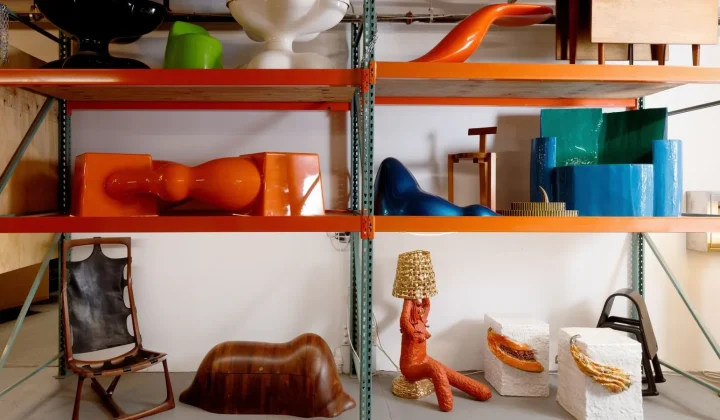
R & Company Opens Its Brooklyn Archive to the Public, Revealing 10 Rare Design Finds
The celebrated design gallery R & Company has opened its 16,000 sq ft storage facility, Building 86, in the Brooklyn Navy Yard…
Read more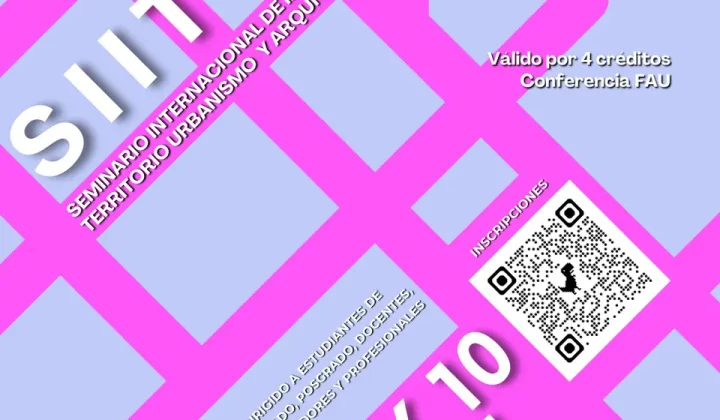
SIITUA III to Gather International Researchers on Territory, Urbanism, and Architecture in Lima
The third edition of the International Seminar on Research in Territory, Urbanism, and Architecture (SIITUA III) will take place in Lima, organized…
Read more
Christopher Kane brings streamlined, heritage-driven vision to Mulberry in London Fashion Week debut
The Scottish designer presented his first collection for the British leather goods house at London Fashion Week, blending sharp tailoring, archival references…
Read more
When Film Directors Become Interior Designers: Guadagnino, Lynch, Anderson and Almodóvar Step Off Screen
From Luca Guadagnino’s Zara Home collection to David Lynch’s Paris club and Wes Anderson’s train carriage, a wave of collaborations is blurring…
Read moreRelated wiki
Adaptive Reuse in Architecture
Reference page for reuse, retrofit, conversion, embodied carbon and design constraints.
Read more